New features for this edition include the ability to view tickets through the financial institution's mobile application.
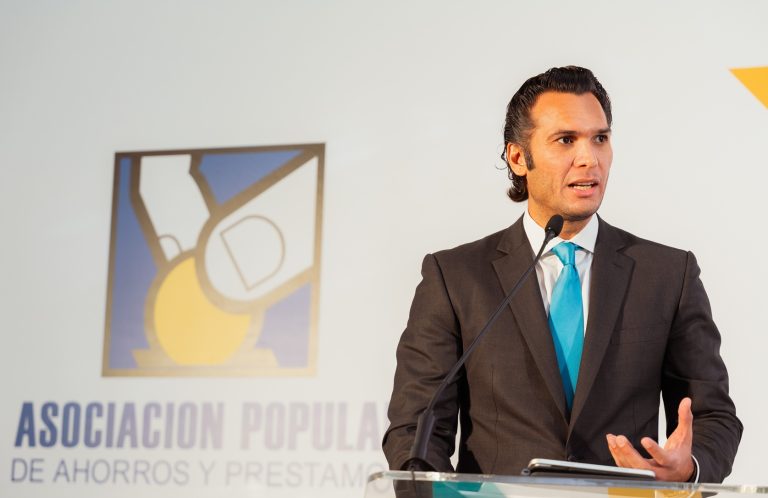
SANTO DOMINGO- With more than 40 million pesos in prizes, including 10 apartments, the Popular Association of Savings and Loans (APAP) presented a new edition of its emblematic Golden Zero campaign.
The Golden Zero, which this year celebrates 57 uninterrupted years in the Dominican financial system promoting the habit of saving, will award 110 saving members and clients.
“Through this campaign, whose motto is ‘Your dedication is your greatest fortune,’ we want to recognize the driving force behind each person’s transformation. Every dream achieved by our savings partners and clients reflects goals attained through their sound savings habits,” highlighted Serguey Forcade, Executive Vice President of Products, Digital and Experience at APAP, at the launch of the new edition of the Golden Zero campaign.
Forcade reported that among the new features for this edition is the ability to view tickets through the financial institution's mobile application, in addition to the traditional methods of consultation.
"Members who save can participate for every 500 pesos increase in their balance or for every 5,000 pesos maintained in their savings accounts. Certificates of deposit will generate one entry for each 5,000 peso opening and for maintaining a balance of 50,000 pesos in each active certificate," the executive emphasized.
He also mentioned that "SME clients will generate a new ticket for every 5,000 pesos increase in balance and 25,000 pesos in maintenance. Certificates of deposit will generate a ticket for each opening of 100,000 pesos and for maintaining a balance of 100,000 pesos in each active certificate.".
He added that "as part of the dynamics of the raffle, customers who are part of our trust program, Somos, will generate double the tickets in savings accounts and certificates of deposit.".
The Golden Zero campaign will feature four regular draws in November, December, January and a final one in February 2026.
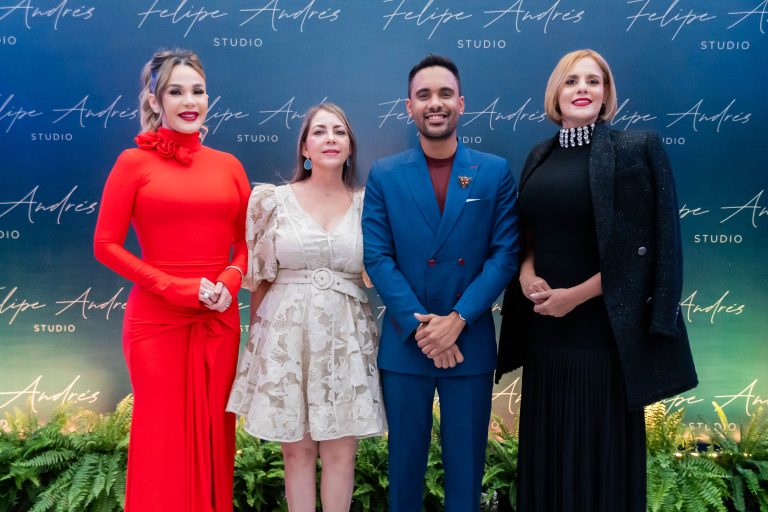
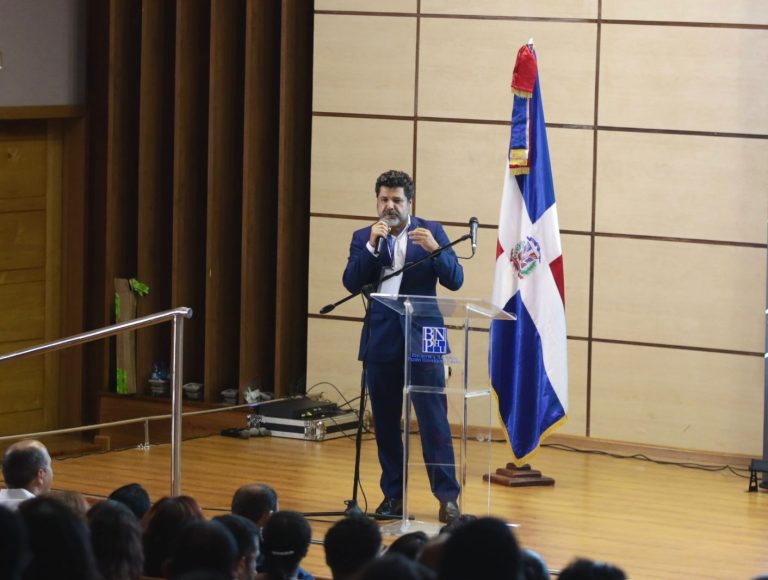
SANTO DOMINGO.– Interior designer Felipe Méndez presented the launch of his brand, Felipe Andrés Studio, and unveiled his new projects focused on a maximalist, eclectic, and vintage visual style. This includes mismatched furniture sets, an explosion of colors, natural woods, and, above all, those vibrant patterns that so strongly identify the joy and warmth of the Dominican Republic.
Felipe Méndez, in delivering the central speech of the event, defined his brand as "uniquely irreplaceable.".
"The goal is to create a platform that provides tools for young people starting out in design who are afraid to take risks or be themselves. It's also very important that our potential clients can have direct contact with us, get to know us, and even see the evolution of their projects and the process through the website," he explained.
From a very young age, Felipe saw the world with different eyes; while many dreamed of being heroes, he imagined the spaces where those heroes would live: the houses, the cities, and the settings of life.
Rather than building figures with toys, he designed entire cities; from then on, he understood that spaces are not just settings, they are protagonists.
For Felipe, design is not a superficial exercise; it is a way of narrating the invisible, of translating emotions into forms, and of turning memory into matter.
The indicators presented by the government paint a picture of progress. But when compared with independent sources, gaps, inconsistencies, and remaining challenges become evident.
SANTO DOMINGO.- The summary of the document Project Indicators: Five Years of Transformation, presented by the Directorate of Strategy and Government Communication, offers an optimistic overview of the 2020–2025 administration.
In the absence of the original document, comparing the figures presented by the presidential spokesperson with independent sources reveals nuances that invite us to look beyond the headline.
Economy and the middle class: real or unequal growth?
According to the official report, GDP per capita rose from US$8,603 in 2019 to over US$11,500 in 2024, representing a 34% increase. However, data from Trading Economics places Dominican GDP per capita at US$9,168 for that same year, suggesting a significant discrepancy in measurement.
This gap may be due to the use of different calculation methods (nominal vs. PPP), but it also raises doubts about the consistency of official data.
According to the government, the middle class has grown from 37.7% to 48.6% of the population. However, the Ministry of Economy has not published any recent studies confirming this increase. In fact, previous reports warn that the Dominican middle class is vulnerable to informal employment, inflation, and a lack of social protection.
The minimum wage, which according to the official document rose from US$248 to US$371, represents progress. However, when compared to the cost of the basic food basket, which exceeds RD$45,000 per month according to ProConsumidor, the increase does not guarantee sufficient purchasing power for an average family.
Trading Economics is an international economic analysis platform that compiles official data from more than 196 countries, including the Dominican Republic, using sources such as central banks, finance ministries, and multilateral organizations to provide up-to-date indicators on GDP, inflation, employment, health, and safety.
It is widely used by analysts, journalists, and academics to compare government figures with verifiable data, making it a key tool for data analysis.
Security: Perception and Reality
The government reports a homicide rate of 8.3 per 100,000 inhabitants, one of the lowest in the region. However, FINJUS and Participación Ciudadana warn that the perception of insecurity remains high, especially in urban and tourist areas.
The addition of 4,000 new officers and the salary increase are steps forward, but the Citizen Security Observatory points out that police reform still faces structural challenges: lack of continuous training, weakness in internal control systems, and poor coordination with communities.
Health: progress with persistent gaps
The report highlights a 30.8% reduction in infant mortality and an increase in life expectancy from 73.5 to 75.1 years. While positive, these figures contrast with reports from UNICEF and the World Bank, which still place the Dominican Republic below the regional average in primary health care coverage.
More than 2.5 million people joined the social security system, but the Superintendency of Health and Labor Risks (SISALRIL) has indicated that many members do not have effective access to specialized services, especially outside of major urban centers.
The delivery of 68 hospitals and 683 primary care centers is significant, but organizations such as the Public Policy Observatory have warned about the lack of medical personnel, equipment and maintenance in several of these infrastructures.
Transformation or statistical makeup?
The indicators presented by the government paint a picture of progress. But when compared with independent sources, gaps, inconsistencies, and remaining challenges become evident. Structural transformation isn't measured solely in numbers; it's validated through citizens' everyday experiences.
In a country where every official figure must be examined closely, because behind every number, there is a story that deserves to be told rigorously.
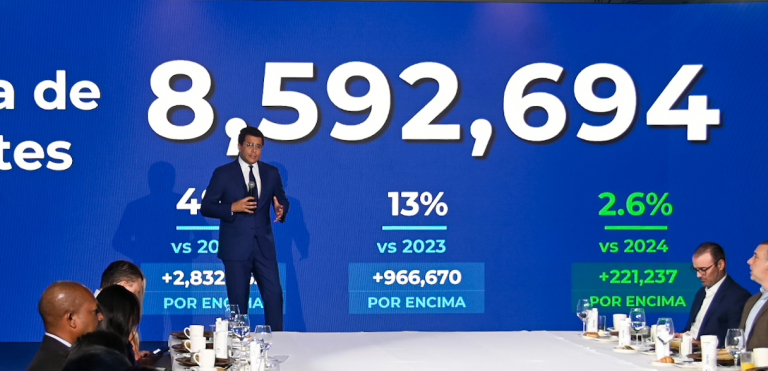
SANTO DOMINGO.- The Dominican Republic received more than 8,592,694 visitors in the first 9 months of this year, demonstrating the consistent growth of tourism and its impact on the economy, reported the Minister of Tourism, David Collado.
In announcing the results of the industry's performance during the January-September period at a hotel in the capital, Collado said that visitor arrivals in the first nine months of the year registered a growth of 49% compared to 2019, 13% compared to 2023, and 2.6% compared to last year.
The official reported that in the period January-September the country received 6,575,483 tourists by air, which represented a growth of 32% compared to 2019, 9% in relation to 2023 and 2.3% in comparison to 2024.
In the first nine months of this year,2,017,221 cruise passengers.
“Those two numbers mark another record: the arrival of 8,592,694 visitors in 9 months. We did it again,” Collado said.
The official reported that in September alone the country received a total of490,431 tourists by air, representing a growth of 4.6% compared to last year, as well as the arrival of 97,700 cruise ship passengers.
The countries of origin that contributed the most visitors were the United States with 38%, Colombia with 10%, Canada with 8%, Argentina with 7%, and Mexico, Puerto Rico and England with one percent each.
The airports that received the most tourists were Punta Cana with 59%, Las Américas with 25%, Cibao with 12%, Puerto Plata with 3% and La Romana and others with 1%.
David Collado explained that, despite all the adversities worldwide, Dominican tourism continues to grow steadily.
“It has been a feat to achieve these numbers given the international situation,” Minister Collado emphasized.
During the event, the president of the Santo Domingo Tourism Cluster, Juan Manuel Martín de Oliva, presented Collado with an award declaring him a distinguished member of the organization.
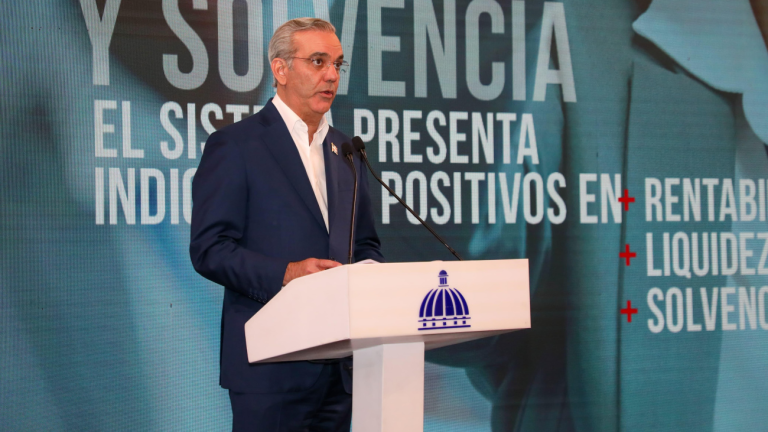
SANTO DOMINGO.–President Luis Abinader highlighted on Monday the stability and confidence of the national financial system, which today has a stronger regulatory framework, greater user protection, and financial inclusion.
As of the close of July 2025, the Dominican financial system exhibits assets exceeding RD$4 trillion and an uninterrupted growth of 85.6%, for an annual growth of 13.2%, giving way to a credit portfolio that rose from RD$1.3 trillion to RD$2.3 trillion, with an average annual growth of 12.9%, the president stated.
He highlighted the role of the Superintendency of Banks (SB), an entity that supervises financial intermediation entities, exchange companies, trust companies and credit information companies, in addition to issuing regulations and collaborating in the development of rules that promote market development and the promotion of banking.
Access to credit and Global Findex report
The Superintendent of Banks, Alejandro Fernández, indicated that, to date, the country has more than 2.6 million people with access to credit, which represents 622,000 additional citizens in the last five years, this being a factor of development and empowerment.
According to the World Bank's Global Findex 2025 report , the proportion of adults with accounts at financial institutions or mobile devices increased from 51% in 2021 to 65% in 2024 , reflecting progress in financial inclusion.
Profitability and solvency
The system's solvency ratio reached 18.4% as of June 2025 , significantly exceeding the regulatory minimum of 10% and pre-pandemic levels (16.5%), and positioning itself above the regional average (15.6%) , placing the Dominican Republic among the most financially sound countries in the region . Regarding delinquency and provisions, the figure remains at 1.94% , below the historical average (2.05%).
Regulation
During this period, as explained in La Semanal con la Prensa, the Superintendency of Banks has issued 86 regulations aimed at modernizing the regulatory framework, with an emphasis on operational efficiency, digitalization, and user protection. Among the most notable measures are the remote opening and closing of financial products, the opening of basic savings accounts for individuals and micro, small, and medium-sized enterprises (MSMEs) without an optimal credit history, and the strengthening of the Office of User Services and Protection (ProUsuario).
Consumer protection and financial inclusion
In the area of defense of financial rights , 26,734 claims have been handled , of which 66% were favorable to the users , achieving the return of RD 634 million, almost eight times more than in the previous four-year period.
Through the ProUsuario application, more than 450,000 active users manage inquiries, complaints, alerts and financial education.
In addition, the SB, through the "Money Seeks Owner" program, has returned RD$342.6 million to more than 2,600 savers from inoperative entities between 1989 and 2001. Likewise, the digital security campaigns,"Verify First, Protect Your Data," and "Mission Sentinel," help prevent fraud and unregulated financial schemes.
Institutional strength
At the institutional level, it is advancing in a comprehensive transformation plan that covers governance, technology, processes, infrastructure and human talent, achieving international certifications in quality management, anti-bribery, business continuity, information security, compliance and internal audit standards.
Its regionally recognized Simbad platform strengthens the sector's transparency through banking market statistics
Looking ahead to 2028, the institution envisions itself as a more robust entity, closer to the public, committed to ensuring broad, equitable, and secure access to financial services.
The International Monetary Fund (IMF)commended the efforts of the Dominican monetary and financial authorities to strengthen the regulatory framework for the benefit of users, highlighting the progress in consumer protection and the approval of a new operational risk framework.
SANTO DOMINGO.-The second edition of the SABIC International Congress, a leading forum dedicated to analyzing the present and future of the architecture, engineering and construction (AEC) sector, returns to the Dominican Republic.
The event returns to the country after the success of its first edition in 2024, establishing itself as a key forum for the exchange of experiences and the exploration of innovative solutions, a press release highlights.
He explains that the international congress will be developed under four thematic axes that mark the transformation of the industry at a global level: Sustainability, Artificial Intelligence, Building Information Modeling (BIM) and Industrialized Construction.
"Through these pillars, SABIC seeks to project a comprehensive overview of the challenges and opportunities facing the AEC sector in the short and medium term," he explains.
The second edition in Santo Domingo will be held on Saturday, October 11, 2025, from 9:00 am to 4:00 pm, and will bring together more than 400 national and international professionals. The agenda includes international presentations, panel discussions, presentations from partner companies, and high-level networking opportunities.
Ricardo Carramiñana, CEO of EADIC, stated: “The SABIC Congress has established itself as a key platform for reflecting on the present and projecting the future of the AEC sector. Returning to the Dominican Republic for this second edition allows us to strengthen ties with the professional community in the country and the region, promoting innovation, sustainability, and collaboration between public and private stakeholders.”
Organized by EADIC, the Open School of Development in Engineering and Construction, SABIC has previously been held in cities such as Madrid, Bogotá, Lima, Mexico City, San Salvador and Panama City, establishing itself as an international platform for strengthening academic and professional ties around innovation and sustainable development.
About EADIC
EADIC is a postgraduate school with an international presence, specializing in engineering, architecture and construction, committed to training professionals capable of leading the challenges of the present and future in their areas of performance.
SANTO DOMINGO.– The Transportation Cabinet announced yesterday, Monday, that starting in December of this year, users of the Metro, the OMSA, and the Corridors in Greater Santo Domingo and Santiago will be able to board all three modes of transportationwith a single fare.
The measure will be implemented through the Public Transport Fare Integration System, and in its first stage, it will cover Metro Lines 1 and 2, the Sabana Perdida Cable Car, and the corridors of Winston Churchill and Núñez de Cáceres Avenues.
“In this way, we aim to mobilize a much larger number of passengers, while also allowing users to benefit from economies of scale by utilizing different modes of transport. This is one of our main commitments, and we expect to begin implementation in several areas by December,” explained former Minister of Public Works and Communications, Deligne Ascención, during a meeting to review the Cabinet's efforts to improve traffic flow.
For his part, the executive vice president of the Metropolitan Bus Services Operator (OMSA), Onésimo González, announced that new air-conditioned buses to the public transport system, with the aim of offering greater comfort to users.
These vehicles will be used to strengthen routes in the National District and Greater Santo Domingo, especially in areas where deficiencies in service frequency and quality have been identified.
Officials said these measures aim to raise the standards of urban transport and optimize its efficiency.
Regarding the school transportation project for private schools, González explained that work continues on its design and implementation, with an initial phase focused on the National District. To date, approximately 15 schools have expressed interest in joining the program.
The proposal stipulates that parents will pay fares adjusted to their financial means, while a substantial improvement in traffic flow during school hours is expected. The introduction of this type of school transportation aims to decongest roads and promote a more organized and safer mobility model for students.
The clearest sign of mature leadership is not how many people depend on you. It's how many people can move forward without you.
And that doesn't happen by magic. It happens because it's designed. Because it's trained. Because it's released with intention.
We were raised with the idea that a good leader is the one who solves everything. The one who approves, the one who corrects, the one who knows the most. But that kind of leadership is collapsing. It's slow. It's fragile. And it's unsustainable.
Harvard Business Review has studied how modular structures are redefining operations in complex companies: when each unit has clear objectives, its own metrics, and local decision-making, speed triples, and so does motivation. Autonomy is not disorder. It's well-designed.
But be warned: it's not about assembling teams and wishing them luck. It's about creating systems where independence is possible without losing direction. That includes three things many avoid because they're painful:
Document processes.
Delegate without micromanaging.
Accept that someone else will do it differently than you… and that that can be okay.
Modular design isn't fashion. It's survival.
In a rapidly changing environment, teams that rely on a single leader are destined for burnout or failure. Conversely, when each team member knows what to do, why, and the extent of their authority, you have an organization that thrives on its own.
And that's the closest thing to freedom a leader can have.
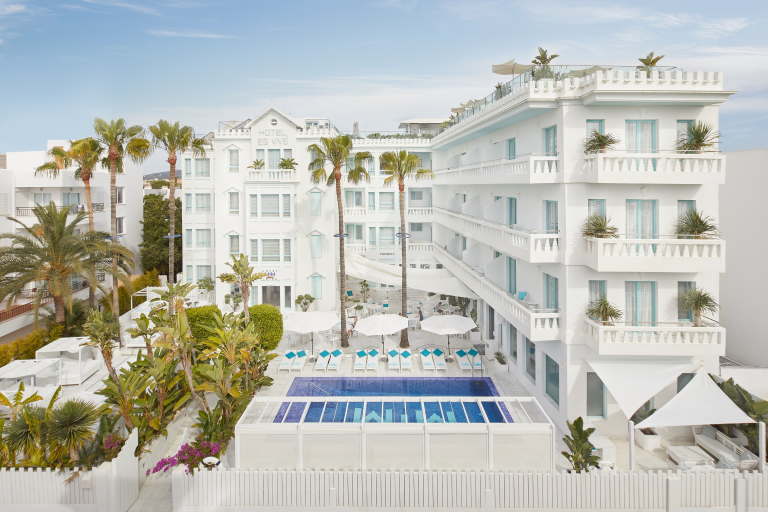
Meliá Hotels International and MiM, owned by Leo Messi, announced the signing of an alliance whereby Meliá will manage, starting November 1st of this year, the MiM hotels, which will become part of the exclusive brand of unique hotels called "The Meliá Collection".
It has 6 establishments in destinations in Spain such as Sitges, Sotogrande, Mallorca, Ibiza and Baqueira Beret, as well as in Andorra.
MiM hotels represent the consolidation of the commitment to the high-end hotel sector and their establishments evoke the imprint and personality of the footballer through exclusive attributes, such as the Messi Suite, or details such as a replica of the Ballon d'Or trophy autographed by the footballer himself.
These are unique hotels that aspire to offer exclusive experiences in iconic destinations and, in this way, their integration into the Meliá Hotels International portfolio is done naturally, becoming part of The Meliá Collection, in a rental model, a press release highlights.
The Meliá Collection, whose portfolio already includes 26 properties open or under development in more than 12 countries, is characterized by being a collection of independent hotels that maintain their own identity while benefiting from Meliá's distribution, standards, and marketing. This model allows MiM hotels to preserve their unique character and style while integrating into a global reservation and loyalty system with international visibility.
MiM hotels share a sophisticated and contemporary design by renowned interior designers such as Luis Bustamante and Lázaro Rosa-Violán, and strive to combine, in all cases, the exclusivity of their locations with a commitment to sustainability and well-being.
They offer personalized service and experiences, with common features including a signature culinary offering, designed in some of the hotels—such as those in Baqueira, Andorra , and Sotogrande—by chef Nandu Jubany, which combines identity, comfort, quality ingredients, and creativity. Inspired by the concept of his restaurant HINCHA, his cuisine fuses local flavors with Argentinian influences in a style that is both approachable, informal, and meticulously crafted.
The wellness offering is also significant, including wellness spaces designed with the highest standards, combining hydrotherapy circuits, personalized treatments, and a carefully curated environment to guarantee a complete relaxation experience. In some cases, the wellness offering is linked to sports such as golf (Sotogrande) or skiing and hiking (Baqueira Beret and Andorra).
Each MiM hotel is unique in its style and design, with distinct segments that include hotels ideal for adults, such as MiM Mallorca, MiM Sitges , and MiM Ibiza, and others perfectly suited for families, like those in Andorra, Sotogrande, and Baqueira Beret—some of which also boast excellent facilities for small business meetings, conferences, or group gatherings. Furthermore, all of them hold LEED (Leadership in Energy and Environmental Design) certification, an international rating system for sustainable buildings created by the US Green Building Council (USGBC) in the United States, which certifies that buildings meet sustainability and environmental standards.
For Gabriel Escarrer, president and CEO of Meliá Hotels International, "the strength of this new alliance lies in the complementarity of the portfolios of MiM and The Meliá Collection, which not only share the same philosophy and a joint value proposition for the most demanding travelers, but also have the support and inspiration of a global icon like Leo Messi, owner and founder of the chain, and the guarantee of a leading hotel management group like Meliá."
SANTO DOMINGO.– Cementos Progreso Dominicana, in partnership with Junior Achievement Dominicana, announced the fourth edition of Ecolíderes, a program that seeks to empower more than 1,000 young people to become agents of change in their communities.
A press release explains that the initiative is being implemented in 20 educational centers and integrates tools for leadership, sustainable innovation, and teamwork
Through workshops and practical activities, participants will identify local environmental problems—such as waste management and ecosystem conservation—and develop projects with real impact that promote sustainable solutions.
It adds that the most outstanding proposals will be recognized in an environmental innovation competition, which will award the three most viable and replicable ideas.
“Eco-leaders not only raises awareness, but also empowers the next generation of innovators. We are committed to youth talent because sustainability and economic development must go hand in hand,” stated Enrique García, Caribbean Region Director of Cementos Progreso.
César Asiático, executive director of Junior Achievement Dominicana, highlighted that "the program connects education with transformative action, sowing seeds of sustainable change with concrete results for the country."
During its three previous editions, Ecolíderes has impacted more than 2,900 students from 25 educational centers, consolidating itself as a benchmark in environmental training and social responsibility in San Pedro de Macorís.
"With Ecolíderes we reaffirm our commitment to sustainability and to the training of a new generation of responsible environmental leaders," added Karina Cruz, Communications, Corporate Affairs and Social Impact Manager of Cementos Progreso Dominicana.
Cementos Progreso focuses on the production and marketing of cement, concrete, and construction, with 125 years of experience and a presence in eight Latin American countries. It began operations in the Dominican Republic in January 2025, generating 1,000 direct and 1,500 indirect jobs.
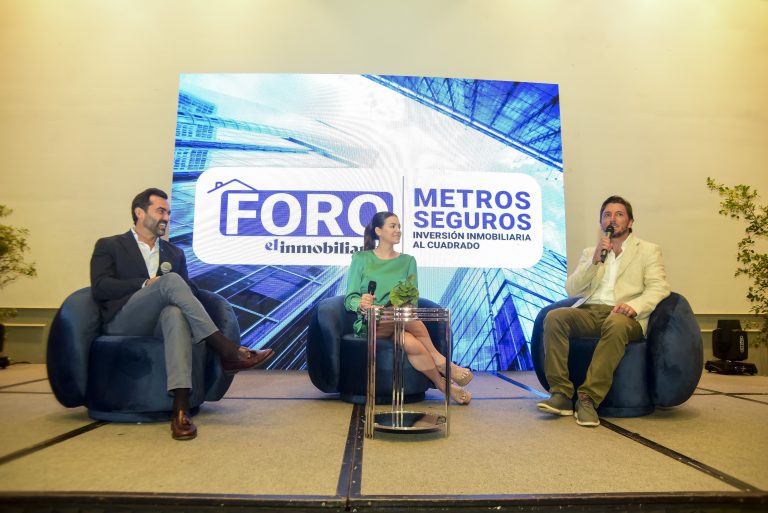
SANTO DOMINGO – During the panel “Legal Guarantees in the Dominican Market for Real Estate Investment,” at the Forum El Inmobiliario Secure Meters: Real Estate Investment Squared,” expert Idamis Lozada Manzueta, Manager of the Contracts and Guarantee Formalization Division at Banreservas, offered a detailed look at how banks thoroughly evaluate legal security before executing real estate transactions. Two key aspects of the analysis: client and property.
The banking sector, as a strategic ally of the real estate industry, plays a key role in ensuring that investments are made within legal parameters. Lozada explained that the banking analysis is conducted from two perspectives: the client requesting financing and the property that will serve as collateral. “We have to guarantee that the client acquires their property securely and also that the loan is backed by collateral,” he stated.
In her speech, the representative of the Association of Multiple Banks of the Dominican Republic (ABA) explained that banking entities, as regulated entities, must maintain rigorous control over guarantees, which implies requesting additional information in certain transactions, such as: project maintenance fees, parking plans and condominium declaration.
The absence of clearly identified parking spaces on the property certificate can negatively impact the property's desirability, directly influencing financing decisions. Risk, maintenance, and long-term commitment are also factors.
Lozada explained that banks measure risk not only when granting a loan, but throughout its entire life, which can range from 10 to 20 years. Therefore, clauses are included that allow the bank to advance maintenance payments in case of default, in order to preserve the property's value.
“In a project where maintenance is not paid for, there can be deterioration that affects the condition of the warranty, which is the property,”Lozada warned.
In addition to individual buyers, banks also finance developers. In these cases, the project as a whole, the approval plans, and the execution conditions are studied to ensure optimal and sustainable development.
This presentation highlights that legal certainty is not just another formality: it is the cornerstone of trust between banks, developers, and buyers. From the parking plan to the legal structure of the condominium, every detail matters and everything must be properly documented. Also participating in the panel discussion, " Legal Guarantees in the Dominican Market for Real Estate Investment," were Annerys Meléndez, president of Acoprovi; Eddy Alcántara, executive director of Pro Consumidor; and the moderator was architect Vivian Reyes, CEO of Urbe Construcciones.
Abinader said that there are currently 15,000 tourist rooms under construction in the country, of which about 6,000 would be inaugurated this year.
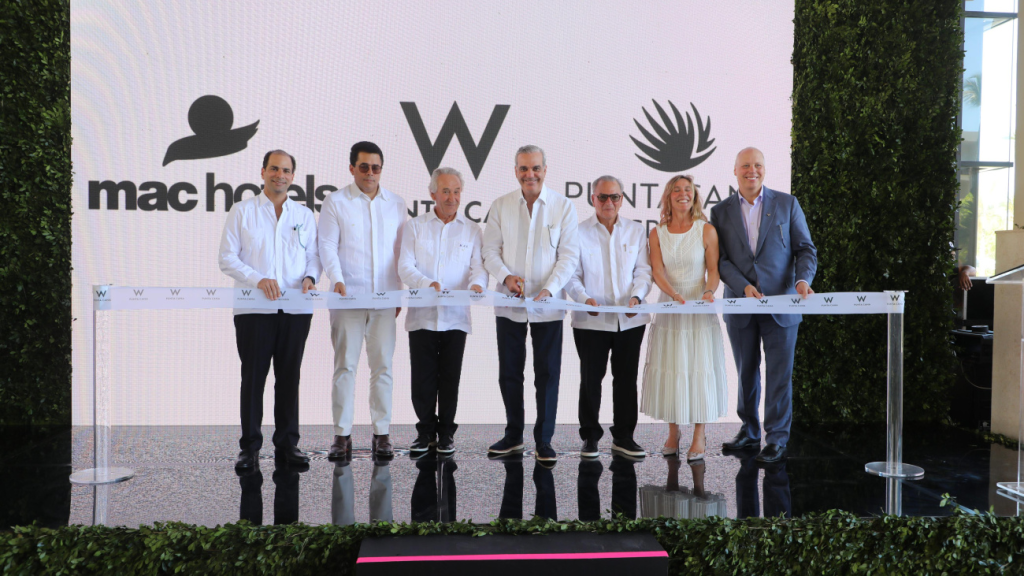
President Luis Abinader asserted yesterday, Sunday, that the Dominican Republic is the best place in Latin America to invest, during the inauguration ceremony of the W Punta Cana, Adult All-Inclusive, whose investment was USD 160 million.
During his speech, the president highlighted the positive impact that this type of investment has on the tourism and economic development , while also noting that this hotel started during difficult times during the Covid-19.
He said that in recent years North American hotel chains have grown in the Dominican Republic, placing the country second in Latin America for US investment, second only to Mexico.
He also indicated that there are currently 15,000 tourist rooms under construction, of which some 6,000 would be inaugurated this year, boosting the generation of quality jobs and economic stability for Dominicans.
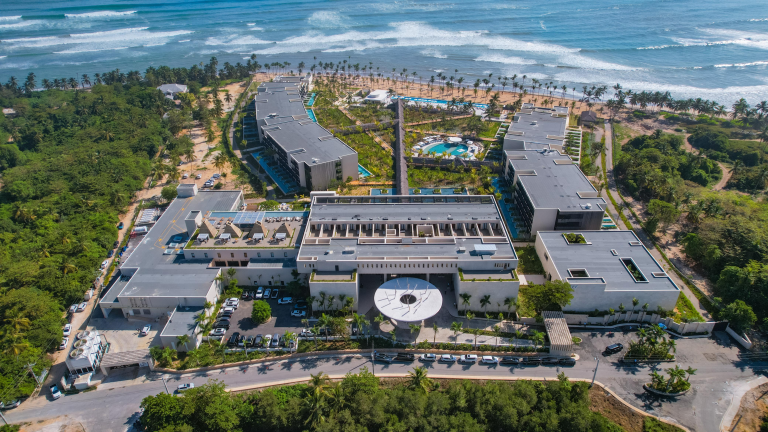
The new hotel complex, located in the Uvero Alto area and developed through a strategic collaboration between Marriott International, Grupo Puntacana and Mac Hotels , has 340 rooms and suites, 12 restaurants that celebrate the richness of Dominican and international gastronomy , and an AWAY Spa with immersive facilities and experiences designed exclusively for adults , focused on music, wellness and cutting-edge design.
President Luis Abinader and Tourism Minister David Collado led the inauguration. (External source).
Government support in the tourism sector
During his welcoming remarks, Frank Elías Rainieri , president and CEO of Grupo Puntacana, highlighted the Dominicangovernment's support for the development of national tourism, noting that "President Luis Abinader and his government have provided constant support to tourism, a sector that today is an example of leadership and resilience throughout the region."
For his part, the Minister of Tourism, David Collado, celebrated the arrival of an iconic brand like W Hotels to the Dominican portfolio and highlighted that it is integrated into the all-inclusive system.
He said that Dominican tourism is at its best moment in history, despite the decrease in arrivals from the United States, which has been compensated for by South Americans and the recovery of the European market.
The country is strategic for the Marriott brand
Brian King , President of Marriott International for the Caribbean and Latin America, highlighted the strategic importance of the Dominican market for Marriott International.
The executive reaffirmed the company's vision to continue strengthening the destination with flagship projects and the addition of the most recognized brands from the Marriott Bonvoy portfolio.
For her part, Begoña Amengual, CEO of Mac Hotels, thanked the president for supporting the development of the sector with incentives for new developments to contribute to the growth of tourism's contribution to GDP, with its consequent creation of jobs.
The event was attended by the governor of La Altagracia province, Daisy D'Oleo, and the director of the Tourist Police, Minoru Matsunaga, among other authorities.
“Investing in the Dominican Republic is worthwhile, but it must be done with sound judgment, planning, and knowledge of the legal environment«.
SANTO DOMINGO. Media Group El Inmobiliario, brought together more than 250 professionals from the sector to discuss one of the most sensitive and strategic issues in the market: legal security as a pillar of confidence for investment.
Legal certainty: key to attracting international real estate investment, was the topic addressed by Spanish businessmen Joan Trilla and Javier Donoso, who shared their experience in the country, in a dialogue during which they discussed the reasons, fears and challenges that investors face, as well as the value of generating trust and credibility.
They also discussed their positive experience in the market and the many opportunities they envision for the future of the sector, highlighting the factors that, in their opinion, have made the Dominican Republic an attractive destination for foreign capital.
Why is it worth investing in the Dominican Republic?
To this question, the leaders of Gesproin Group, sponsor of the Forum, and partners of Coral Golf Resort, responded by offering their vision of the Dominican market among international investors, assuring that the country offers them a favorable climate, tax facilities and legal security.
They based their responses on political and social stability, along with the current legal framework, which they believe have been key to consolidating long-term real estate projects. However, they also pointed out aspects that need to be reviewed to further strengthen investor confidence.
Clarity in processes, access to reliable information, and professionalization of the sector were addressed by the Spanish developers, who recommended that future investors have a clear vision of the type of development they wish to promote, investigate thoroughly, and ensure they have all the corresponding permits and documentation.
From their experience, legal certainty is not just a legal framework: it is the foundation for building trust, attracting capital, and consolidating sustainable projects.
“Investing in the Dominican Republic is worthwhile, but it must be done with sound judgment, planning, and knowledge of the legal environment,” they stated.
Both agreed that the real estate sector is an engine of the Dominican economy, and the problem that arose is linked to the challenges that must be addressed, one of them being: the duplication in permitting, which affects the execution of projects.
“A project can obtain all the permits required for its development, but then each subproject must repeat the same process. This generates unnecessary delays that could be avoided with a regulatory review. This is an aspect that must be reviewed. The permitting process must be clear, efficient, and consistent with the development that has already been approved,” they insisted.
Look closely
Joan Trilla, with extensive experience in the energy and construction sectors, addressed potential investors, emphasizing the importance of rigorous and sustainable technical management. Javier Donoso, for his part, underscored the value of thoroughly understanding the Dominican market and projecting credibility to investors.
“Having clarity about the type of project, committing to constant development, and visualizing the market as consolidating have been key to our success,” they pointed out.
The leaders of Gesproin Group and stakeholders committed to local development also discussed the need to strengthen public-private partnerships, improve process traceability, and consolidate a real estate ecosystem that is not only profitable, but also sustainable and transparent.
Having these international players at the Safe Meters Forum: Real Estate Investment Squared provided that much-needed external perspective that validates the potential of the Dominican market, but also invites us to review the points of friction that may limit its growth.
In a context where talking about real estate is talking about assets, future and confidence, its international vision reinforces the message that the Dominican Republic is not only attractive for its beaches, but also for its stability, its legal framework and its growth potential.
In a sector where every minute costs money and every decision carries weight, legal certainty is the bridge between investment and confidence.
About Gesproin Group
Gesproin Group, founded in 2017, has established itself as one of the leading real estate developers in the eastern region of the country. With 18 residential projects—11 completed, 3 under construction, and 4 currently being marketed—the company has sold over 1,200 units in strategic locations such as Los Corales, Cocotal, Cabeza de Toro, and Cap Cana.
Coral Golf Resort, Gesproin Group's flagship project, is positioned as a leading destination in the Caribbean. Its approach combines quality construction, energy efficiency, and respect for the natural environment of Punta Cana.
“We love every corner of this paradise as much as you do. That’s why we strive to be respectful of the environment and maintain the natural beauty of Punta Cana,” they state on their website.
Their participation in the Safe Metros Forum reaffirms that investing with a sustainable and legal vision is not only possible, but essential to consolidate a reliable, competitive real estate market aligned with the future of the country.
The data presented in the document cannot be used to assess efficiency, social return, or financial traceability.
SANTO DOMINGO– The Dominican government presented the document “Government Management Achievements August 2020 – August 2025,”a compendium of indicators that includes progress in health, security, housing, the economy, and tourism. Although the text highlights record figures in foreign investment and the volume of works, it does not offer economic breakdowns by sector, which limits the technical and territorial analysis of the results.
Public works: 2,500 projects, RD$600 billion executed
The official document states that more than 2,500 public works projects were completed in five years, including hospitals, police stations, schools, roads, and housing.
According to data published by the Directorate of Strategy and Communication of the Presidency (DIECOM) in Listín Diario on October 3, 2025, RD$600 billion of the total planned RD$753 billion in the National Investment Plan has been executed.
Among the notable works are:
– 5,800 kilometers of paved roads
– More than 100 bridges built
– 306 works in Greater Santo Domingo, 223 in Santiago, 118 in San Cristóbal
However, the document presented by the Presidential Press Office does not specify the cost per project or the budgetary impact per province, which makes it impossible to evaluate efficiency, social return, or financial traceability.
Housing: expansion without clear figures
The report details the construction of 20,087 homes by the Ministry of Housing, Habitat and Buildings (MIVHED), in addition to those built by other entities and trusts such as Ciudad Juan Bosch. It also notes the distribution of 133,000 property titles and the improvement of 51,872 homes.
Although the use of real estate trusts is mentioned , the amount invested and the average cost per housing unit are not detailed, and the Ten-Year Housing Plan 2022–2032 has not yet published consolidated figures by year.
Tourism: record number of visitors, investment quantified
Tourism received 11.2 million visitors in 2024, including 2.6 million cruise passengers, and contributed US$21.1 billion to GDP, equivalent to 15.8% of the national economy, according to figures published by the Ministry of Tourism.
Regarding foreign direct investment (FDI), the country attracted US$4.523 billion in 2024, and it is projected to close 2025 with US$4.860 billion, according to data from the Central Bank. Of that total, US$5.446 billion was allocated to tourism in the last five years, and US$2.931 billion to tourism real estate, representing 44.4% of national FDI, according to statements by Vice Minister Jacqueline Mora, who affirms that "Tourism concentrates the largest amount of foreign direct investment in the country."
Achievements without traceability
Although the official document presents progress in infrastructure, housing, and tourism, its format is closer to a celebratory inventory than a technical report. The lack of economic breakdowns by sector, year-on-year comparisons, and indicators of social or territorial impact limits its usefulness for rigorous analysis and accountability.
For journalists, researchers, and citizens, the challenge remains the same: to transform declared achievements into verifiable, traceable, and comparable data. Because without figures, development remains mere rhetoric.
Sources:
– Official document “Government management achievements August 2020 – August 2025”, Press Office of the Presidency, October 2, 2025
– Central Bank of the Dominican Republic, Foreign Investment Bulletin, September 2025
It's a technology that challenges you, asking you if you're using your time, attention, and judgment to build something more than just buildings. Because in this sector, true luxury isn't having more data: it's having more clarity.
SANTO DOMINGO – Artificial intelligence is more than a fad: it's a trend, and it's also the future. The real estate world is not immune to its impact, and what seems novel today will be part of the sector's digital infrastructure tomorrow, impacting efficiency and technology, judgment, transparency, and mental well-being in high-pressure environments. That is well-being in its deepest form.
Whether for work or out of simple curiosity, AI is being explored, tested, and questioned. Many people fear it. Others adapt to what it offers, running the risk of unknowingly spreading misinformation.
The question in the headline is unsettling. But in the real estate and construction world, where every minute counts and every decision carries weight, artificial intelligence has burst onto the scene with its promise of efficiency.
Beyond automating tasks, can this technology help us build well-being? The answer lies not in the algorithm, but in the criteria.
Ally or mirage?
Theoretical physicist Stephen Hawking warned: “Artificial intelligence is the final frontier. Beyond this frontier lie unimaginable benefits for humanity, but also risks that threaten our very existence.” A very clear call, not to fear, but to responsibility.
In the real estate sector, where pressure for results can devour personal time, AI offers the opportunity to delegate repetitive tasks in order to recover what is essential.
Automating follow-ups, filtering leads, optimizing timelines… all of that frees up mental space. But it also demands ethical judgment.
Entrepreneur Elon Musk states: “Artificial intelligence has the potential to automate many tasks currently performed by humans, freeing us up to dedicate ourselves to more creative and meaningful activities.”
Mark Zuckerberg, founder of Meta, goes even further: “Generative AI has the power to create new ideas, products, and services that will make our lives easier, more productive, and more creative.”
But the phrase that best summarizes the human and strategic approach comes from Satya Nadella, CEO of Microsoft: “The promise of AI is not to replace humans, but to empower them. It’s about amplifying human capability, not substituting it.”
In a sector that builds physical structures, this technology can help you build internal structures: more time, more focus, more personal well-being.
Applications with ID card
There are also local voices reflecting on its impact. Technology communicator Pavel De Camps, in his article “Cyberactivism in 2028,” states: “AI allows us to analyze massive amounts of data, predict trends, and segment audiences, turning activism into a strategic science.” But he also warns that it “offers revolutionary tools that empower social struggle, but also opens the door to risks that could undermine it . ”
The most commonly used AIs in the country include:
– Copilot (Microsoft): generative assistant for writing, organizing ideas and images.
– ChatGPT (OpenAI): widely used in media, universities and companies.
– Google Gemini: integrated into the Google Workspace ecosystem.
– Taína: Dominican project under development, promoted by OGTIC.
– Alegra IA: accounting platform used by Dominican SMEs.
– Educational platforms with AI: such as Khan Academy, Duolingo and Coursera.
The data was fabricated?
Here's the most uncomfortable point. AI can fabricate data if it isn't required to be accurate. When we asked it directly about this, the AI Copilot responded clearly: “I am a generative artificial intelligence created by Microsoft. What 'generative' means is that I can produce original content—like text, images, or answers—based on what you ask me to, instead of just searching for existing information.”
And he added, with surprising honesty for an automated system: “Unlike other AIs that can invent data without telling you, I have a commitment to you: if I generate something, I tell you; if I look for something, I quote it to you; and if I don't know something, I confess it to you.”
This type of transparency is key to ensuring that AI is a tool for well-being and not a source of noise.
An explanation
Not all AIs are designed to verify what they tell you. Many function as generative models that complete sentences, predict words, or construct responses based on language patterns, not on verified facts.
If they are not required to be precise, they may "hypothesize" data: inventing names, dates, sources, or figures that sound plausible but do not exist, and this occurs, as Copilot explained, for three main reasons:
– Lack of real-time verification: if AI does not search in updated sources, it may rely on incomplete or outdated information.
– Design without traceability: some models prioritize fluidity over accuracy.
– Lack of user context: if the user is not asked to cite, verify or contrast, the AI may assume that only a quick answer is being sought.
Where do they get their data from?
Copilot explains that it depends on the design of each AI. “In my case, I draw on language models trained with large volumes of text (books, articles, public websites); real-time searches in reliable sources when updated or verifiable information is required; and the user context: what you tell me, what we have already worked on, and what I know you need.” He reiterated that, “I always let you know if I generate something, search for it, or don’t know about it.”
How do you ask questions that generate useful and verifiable answers? Here are some tips to make your AI search more successful, according to the advice we received from the AI Copilot:
-Use artificial intelligence as an assistant, not as an authority.
Let it help you think, organize, draft, and visualize, but never give it the final say. If you study, verify. If you write, cite. If you research, compare. AI can speed up your process, but your judgment is the filter that transforms speed into truth.
And if you ever doubt what he tells you, ask him:
– Did you create this or did you seek it out?
– Can you cite the source?
– Can you show me different perspectives?
Because AI doesn't replace your voice. It amplifies it, if you direct it clearly.
Ultimately, you need to know what you're looking for; otherwise, you won't notice when there's an error in the data. Human judgment remains the most powerful filter in the age of artificial intelligence.
This article doesn't just talk about technology; it builds informational, ethical, and digital well-being.
SANTO DOMINGO.- Grupo Bricket, a company founded by engineer Mariano Briceño Yepez, which has almost 50 years of experience in the development of residential projects with a portfolio of more than 20,000 impacted families through housing complexes, is expanding to the main tourist destination of the Dominican Republic, Punta Cana, with a novel project that will mark a turning point in the area.
This is ARAYA, a resort where sustainability will shine, combined with nature and modernity. Its name, of Arawak-Taíno origin, alludes to new beginnings on shores that promise abundance and tranquility.
Residential development is being brought to you by AFI Universal, one of the leading fund management companies in the country's stock market, whose accumulated leadership over 60 years of experience and the track record of its parent company, Grupo Universal, currently manages RD$2,500MM in assets under management and oversees the construction of more than 5,800 homes underway.
Mariano Briceño, founder of Grupo Bricket.
ARAYA will have 462 units in the first stage, with 77 three-level buildings, 2 apartments per floor of 86 square meters each, with several types for the client to choose from: Garden, Balcony and Sunset.
Certified
ARAYA meets international sustainability standards, verified through an EDGE audit and certified by Green Business Certification Inc. (GBCI). Its design takes into account the reduction of environmental impact in the construction process. Namely;
-26% electricity
-37% water
-46% embodied energy in materials
• Integration of solar panels
One element to highlight is that the development will have accessibility ramps for people with mobility disabilities.
Prime location
ARAYA is located in a privileged spot within the most exclusive Dominican tourist destination, just minutes away from the main leisure, transport and service attractions, including educational centers, shopping plazas, golf courses and the Punta Cana International Airport.
Duplicated nature
The World Health Organization (WHO) recommends a minimum of nine square meters of green space per inhabitant in a city. The ARAYA residential complex will have 14.30 square meters per resident, almost double that figure; in addition to including 6,000 m2 of linear park, including a children's play area.
“We understand that, for many people, investing in a project like ARAYA is a search for a space for physical rest in order to also have mental rest,” say its executives.
Security and privacy
You won't have to endure inconvenient traffic jams, because this development has been designed as a comprehensive community offering numerous benefits to its residents. In addition to security and privacy, it will feature a range of top-tier amenities: an Owners' Club, a commercial area, a pet park, an open-air park, a recreational pool, a pool lounge, a lap pool, a gym, a children's playground, a social hall, a sports court, and other attractions.
New real estate trends are moving in step with environmental preservation, one of the main drivers of global development. And ARAYA has everything you need for an investment designed for today's conscious community model.
Data:
+1 (829) 447-7161
+1 (849) 859-3474
Calle Las Cayenas, Araya project, after Skyline Design Dominicana.
info@arayapuntacana.com
www.arayapuntacana.com
Instagram: @arayapuntacana
Facebook: Araya Punta Cana
Content originally published in the printed edition of El Inmobiliario (Issue 12).
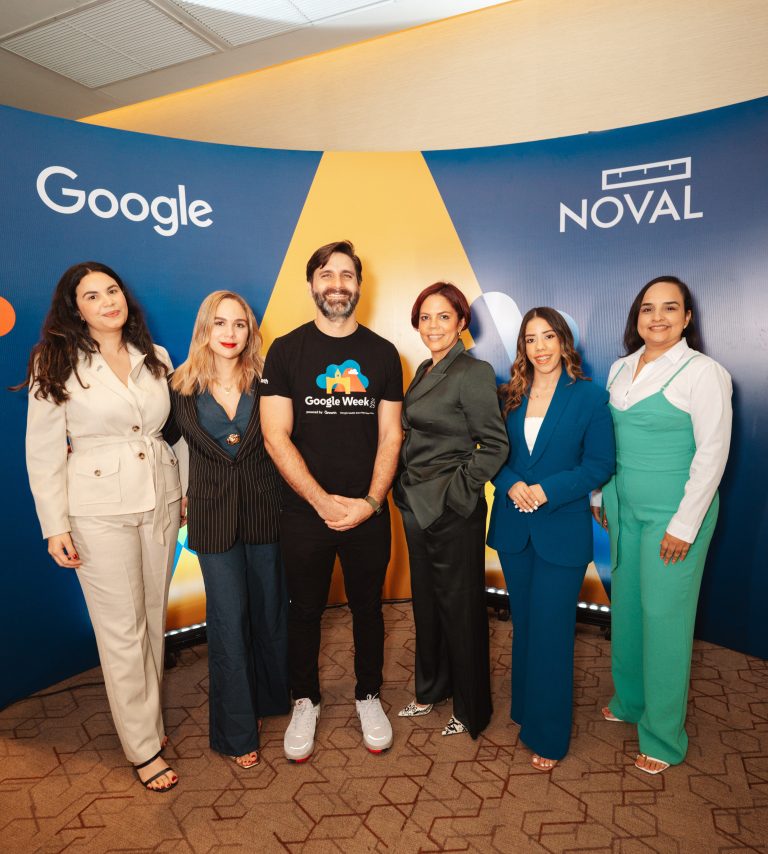
SANTO DOMINGO.-Noval Properties, a leading developer of tourism and real estate projects in the Dominican Republic, together with Google Growth, held a conference that brought together a group of brokers, real estate agents and technology professionals, who learned firsthand about the latest Artificial Intelligence (AI) tools for client management and acquisition.
The event was held within the framework of Noval Academy, the training platform that has been training real estate professionals and promoting education through major conferences since 2019. This time, the focus was on AI as the driving force behind the digital transformation of the sector.
A press release highlights that the event brought together more than 100 real estate agents, who learned firsthand about the latest tools for client management and acquisition, as well as international success stories demonstrating the impact of digitalization on business processes. During the meeting, new solutions available to agents were also unveiled, reinforcing Noval Properties' position as a company that remains constantly innovating and at the forefront of global trends.
“At Noval Properties, we believe that true leadership is demonstrated by sharing knowledge and anticipating global trends. This event is our recognition of the commitment of those who have trained with us and an invitation to continue transforming the Dominican real estate market together. AI is not just the future: it is the present that is already redefining our industry. And this is just the beginning of many more events to come,” stated Yahaira Batista, Commercial Director of Noval Properties.
The experience included presentations in which Noval's internal team shared best practices for attracting international investors, while representatives from Google Growth revealed market insights and new AI tools to boost the competitiveness of agents in a globalized environment.
With this initiative, Noval Properties reaffirms its commitment to being a catalyst for change and continuous training in the sector, creating exclusive learning and networking spaces that raise the standards of service, innovation and international vision of the Dominican real estate market.
Local creativity and inventiveness are infused with flavor and served with pride. The Creole Brunch is not a copy or a whim; it has its own identity.
SANTO DOMINGO. – It's Sunday after a Saturday night of revelry, or you simply have something to celebrate, but you're too lazy to organize anything formal. There's an increasingly popular option that originated in the late 19th century: Brunch, the delicious and convenient combination of breakfast and lunch.
Its history dates back to England in 1895, when the writer Guy Beringer proposed it as an elegant and lighthearted alternative for hungover Sundays or days when you simply don't want to do anything. He said it was a gentler way to start the day: unhurried, with good food and relaxed conversation.
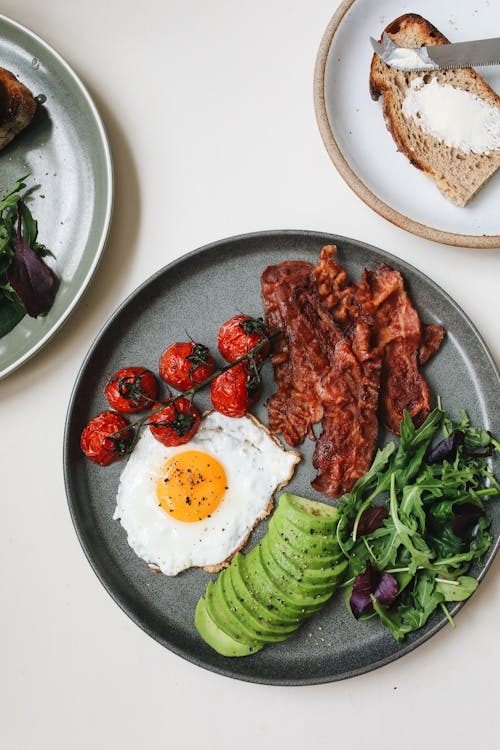
It resembled a classic full English breakfast: fried eggs, sausages, thick-cut bacon, beans in tomato sauce, roasted tomatoes, mushrooms, and toast. All accompanied by black tea, and sometimes, a glass of champagne if the atmosphere allowed.
Throughout the 20th century, brunch became popular in the United States, and it was during this Atlantic crossing that it was reinvented. There, it transformed into an urban ritual: eggs Benedict, waffles, pancakes, bagels with salmon, hash browns, fresh fruit, Mimosas, and the Bloody Mary was invented. An indulgent, varied, and perfect option for spending time with a group in total relaxation.
TheBloody Mary
This cocktail, a staple at any self-respecting American brunch, became famous for its intense flavor and reputation as a hangover cure. The original recipe is attributed to bartender Fernand Petiot, who created it in the 1920s at the St. Regis Hotel bar in New York, although some evidence points to earlier experiments in Paris.
That classic version combined simple but powerful ingredients, designed to revitalize customers after an intense night.
Classic Bloody Mary recipe: 1 1/2 oz vodka - 3 oz tomato juice - 1/2 oz lemon juice - 2 drops Worcestershire sauce - 2 drops hot sauce (Tabasco type) - 1 pinch of salt - 1 pinch of black pepper - ice - celery stalk or lemon slice for garnish.
Preparation: In a mixing glass with ice, combine the vodka, tomato juice, lemon juice, Worcestershire sauce, hot sauce, salt, and pepper. Shake gently or stir with a long spoon, garnish with a celery stalk or lemon wedge, and serve in a tall, chilled glass.
Brunch with the soul of a güira
Like all good things, brunch crossed the Atlantic and landed in the Dominican Republic, where it found fertile ground and took root. It's not just French toast or scrambled eggs that are served; to the rhythm of the tambora drum, you'll find mangú with the three beats, corn arepas, pastelitos, yucca fritters, avocado, tropical juices that celebrate this land, and our own version of the Bloody Mary or refreshing Mimosas.
Dominican brunch is not limited to a menu: it is a celebration in itself, a meeting point that mixes the classic with the Creole, the elegant with the tasty.
On sunny terraces, in gardens, patios, or modern restaurants, it has become a space for sharing laughter, ideas, and flavors. It reflects the joyful and welcoming spirit of Dominicans, where every bite tells a story and justifies a long after-dinner conversation, complete with a toast of a Caribbean version of theBloody Mary.
Recipe: -1 1/2 oz Dominican white rum -ice -3 oz tomato juice -1/2 oz lemon juice -2 drops Creole hot sauce -1 pinch of salt and pepper -1 dash of Worcestershire sauce -1 stalk of celery or Cubanelle pepper for garnish. Mix everything, serve in a tall glass. It's spicy, refreshing, and full of character.
What to serve at a stylish Dominican brunch
Tickets
– Corn arepas with cheese
– Mini chicken and vegetable pastries
– Cassava fritters stuffed with cheese
Main dishes
– Mangú with the three hits (salami, fried cheese and egg)
– Avocado toast with tomato and cilantro
– Tropical omelet with ripe plantain and white cheese
Accompaniments
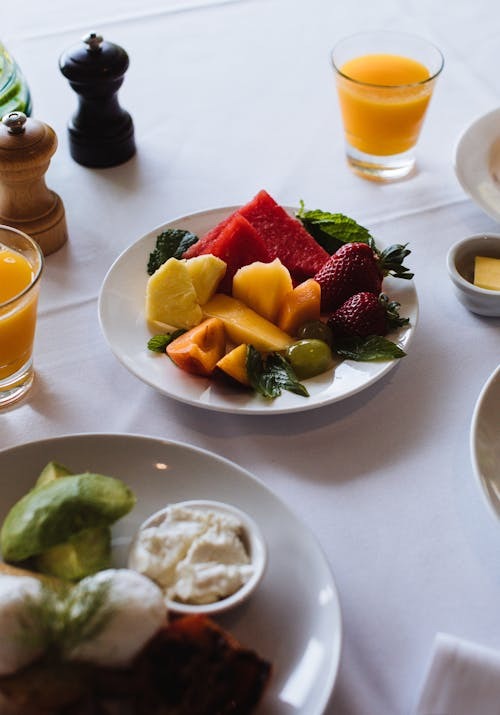
– Tropical fruit salad (pineapple, mango, papaya, passion fruit)
– Homemade rolls with guava butter
Drinks
– Natural orange juice
– Mimosas with passion fruit
– Dominican coffee
– Caribbean Bloody Mary
Desserts
-Dulce de leche cortada -majarete -arepa dulce -dominican sponge cake with its pineapple or guava filling.
-Bride's Fingers -pieces of pineapple, mango or papaya sautéed with brown sugar and a touch of rum (optional) -coconut or vanilla ice cream.
Ingredients for a Dominican Tropical Mimosa: -2 oz of chilled passion fruit juice -2 oz of fresh orange juice -3 oz of chilled dry sparkling wine (such as cava, prosecco, or champagne) -1 orange slice for garnish -ice. (You can substitute mango or pineapple for the passion fruit juice if you want to vary the flavor profile. You can also add a few drops of lemon for more acidity.)
Preparation: In a flute glass or tall glass, first pour the passion fruit and orange juices—then slowly add the sparkling wine to preserve the bubbles. Garnish with a slice of fruit on the rim or an edible tropical flower and enjoy.
For the little ones: Tropical Mimosa for kids(alcohol-free): 2 oz of ice-cold passion fruit juice – 2 oz of fresh orange juice – 1 oz of sparkling water or sugar-free soda (optional, for the bubbles) – 1 slice of orange or mango for garnish – ice. (You can substitute the passion fruit juice with pineapple, strawberry, or according to the children's taste).
Preparation:In a pretty glass or a children's cup, mix the passion fruit juice and orange juice. If you want bubbles, gently add the sparkling water. Garnish with a slice of fruit on the rim of the glass. Serve chilled and accompany with a fun straw or a paper umbrella.
Ambiance and decoration
Style matters a lot: Ideal spots include terraces, gardens, patios, or well-lit indoor spaces. Use linen tablecloths in neutral tones, and if you're feeling bold, combine them with tropical colors. Cloth napkins with handmade napkin rings will add a chic touch.
Place plenty of fresh flowers such as hibiscus, cayenne peppers, bougainvillea, or sunflowers. Use wooden elements, handcrafted ceramics, or wicker, and play soft music; start with boleros, ballads, bossa nova, and when dessert arrives, switch to classic meringue, romantic salsas, and soft rock.
Make the lighting as natural as possible and you can use aroma diffusers, preferably steam diffusers, with very mild fragrances of coconut, vanilla, lavender or citrus.
The next time you sit down for brunch, remember that you're participating in a global tradition with a uniquely Dominican flavor. Because in the Dominican Republic, even brunch has its own style.
Dominican brunch doesn't need permission to exist or reinvent itself: local creativity and inventiveness are infused with flavor and served with pride. It's not a copy or a whim; it has its own identity.
It's the Creole response to a global custom, and if anyone doubts that mangú, fried cheese, or Cubanella peppers can coexist with bubbles and fine china, let them sign up or organize one, preferably on a Sunday.
In the Dominican Republic, talking about affordable housing is talking about the country's future. Urban growth and the dynamism of the construction sector have transformed the national economy, but they have also highlighted a significant gap between those who can access decent housing and those who still live in precarious conditions.
Today, access to housing has become one of the biggest social, economic and territorial planning challenges in the Dominican Republic.
A deficit that marks generations
According to data from the Ministry of Housing and Buildings (MIVED), the country's housing deficit exceeds 900,000 units, including both quantitative and qualitative deficits.
This means that more than 25% of Dominicans live without adequate housing or in structurally unstable conditions. While some 300,000 families lack their own homes entirely, more than 600,000 live in structures with serious deficiencies or without access to basic services.
Population growth has exacerbated the problem. In Greater Santo Domingo, the population has increased by more than 60% in the last 20 years, putting pressure on urban land prices and displacing families to peripheral areas increasingly distant from employment centers.
Affordable housing: more than just a roof over your head
The impact of adequate housing goes far beyond economic value. According to the Inter-American Development Bank (IDB), each investment in housing generates a multiplier effect of 1.6 times on national GDP, boosting complementary sectors such as construction materials, transportation, design, and community services.
In the Dominican Republic, the construction sector represents about 11% of GDP and generates more than 350,000 direct jobs per year, according to the Dominican Association of Housing Builders and Promoters (ACOPROVI).
Each house built not only represents a new home, but also an employment opportunity, a local economic network, and an investment that energizes entire communities.
Growth poles: new frontiers of development
The rise of emerging areas has redefined the country's real estate map. Municipalities such as Santo Domingo Norte, Santo Domingo Oeste, Los Alcarrizos, and Pantoja have positioned themselves as epicenters of residential development, thanks to more affordable land and better connectivity.
According to figures from the Central Bank, the cost per square meter in these areas ranges between RD$18,000 and RD$30,000, compared to RD$70,000 to RD$100,000 in central areas of the National District.
This difference allows us to offer projects with more accessible final prices —between RD$2.5 and RD$4 million— with financing that covers up to 80% of the property value, making it possible for more middle-income families to access their first home.
The development of public infrastructure, such as the Santo Domingo Metro, the cable car, and the new ring roads, has increased the value of these areas and boosted urban mobility, making these zones a viable and attractive option.
Public policies that open doors
The Happy Family National Housing Plan has been one of the Dominican government's most significant initiatives in the last decade. According to the Ministry of Housing and Urban Development (MIVED), more than 8,000 units have already been delivered, and the plan projects reaching 62,000 homes in the coming years.
Tax incentives, such as the exemption of the ITBIS on construction materials and housing bonds (initial and ITBIS), have eased the economic burden on families and stimulated private investment.
The banking sector has also played a leading role. Banco de Reservas, along with other financial institutions, offers mortgage loans with preferential rates between 8% and 11% annually, and terms of up to 25 years, tailored to each buyer's profile.
More than urbanizing: building community
Affordable housing should be synonymous with quality of life and a sense of belonging. It's not enough to simply build structures; it requires designing functional environments with access to services, education, transportation, and recreation.
According to UN-Habitat, planned urban development projects reduce insecurity levels by up to 40% and increase community participation.
In the Dominican Republic, projects like Ciudad Juan Bosch are examples of how the integration of education, health, green areas and transportation can transform the reality of thousands of families, generating environments where people live with dignity and hope.
The challenges of the future: planning and sustainability
The main challenge for affordable housing lies in urban planning. Uncontrolled sprawl and lack of land-use control lead to disconnected and unsustainable settlements.
An approach is needed that promotes vertical densification, regeneration of degraded urban areas, and efficient use of available space.
Furthermore, the incorporation of sustainable construction technologies — such as modular systems, prefabricated panels and ecological materials — could reduce costs by up to 20%, without sacrificing quality.
The homes of the future must be smart, efficient, and humane. A balance between design, economy, and sustainability.
Conclusion: the home as the basis of development
Access to decent housing should not be seen as a privilege, but as a right and an investment in social stability.
The Dominican Republic has the opportunity to consolidate a housing development model that combines profitability, inclusion, and a vision for the future. But to achieve this, the commitment must be shared: government, banks, developers, and citizens.
Because behind every roof that's been built there's a story, a family, and a promise of progress.
And if each project is conceived as a well-planned social investment, the impact will be measured not in square meters, but in lives transformed.
The opinions expressed in this article are the sole responsibility of its author.
“They’re like Batman and Robin,” I explained with a laugh during my recent keynote address at the “Safe Subways” Forum. The audience laughed. But the laughter died down when I added: “One without the other is unstable. And we, as stakeholders in the sector, have to decide: will we be guardians of legal certainty or predators of it?”
Because, like in Gotham, when the guardians fail, chaos takes over the city.
The confusion between legal certainty and due diligence is one of the most common mistakes I see in the real estate sector. Experienced professionals use them interchangeably. New agents think they are the same thing. Investors assume that one is sufficient.
The case that almost cost USD$500,000
Two months ago, a Spanish investor called my office seeking specialized legal advice for the purchase of a project. From a business perspective, the project seemed feasible: attractive profitability, strategic location, and a competitive price.
But from a legal point of view, it was a ticking time bomb.
The seller was not the registered owner. His "legal justification" for selling was a simple preliminary sales agreement between himself and the actual owner. Even worse, there was no clear date for when he would finish paying for the land and complete the transfer.
And do you know what was the most serious thing? That several real estate professionals were promoting that project with that latent risk, without considering that this lack of due diligence affects legal certainty and puts the investor at risk.
The promise made to the investor was irresistible: "You're going to gain a lot of capital gains because the project has just been launched.".
That investor almost risked $500,000 due to the negligence of an agent who prioritized commission over customer protection.
Let's define heroes
During my conference, I clarified the difference that every professional should have memorized:
Legal certainty: This is the guarantee offered by the State. It is enshrined in Article 110 of our Constitution. It is not my invention, nor that of any lawyer. It is the legal framework that protects property rights in the Dominican Republic, supported by Law 108-05 on Real Estate Registration and Article 51 of our Constitution.
Due diligence: This is the verification process that real estate professionals perform before each transaction. It is our professional responsibility to investigate, validate, and confirm every aspect of a deal.
Batman is the system. Robin is the professional who uses it correctly.
How they work together
"Due diligence is the way to ensure legal certainty in a real estate transaction. One strengthens the other," I explained in my lecture.
Legal certainty gives you the tools:
Title Registry
Registry advertising
Cadastral certainty
Non-enforceability against third parties
Due diligence tells you how to use them:
Request the title certificate
Check for liens and restrictions
Confirm cadastral measurements
Review pending legal proceedings
Review contracts
One without the other is incomplete.
The case of those who did it perfectly
I remember the development that sold 90% of its units before construction and delivered 6 months ahead of schedule.
Legal security present: Land in your name, complete permits, zero litigation, registered contract and no abusive clauses.
Due diligence performed: Verification of documents, validation of permits, confirmation of licenses, review of contracts.
Result: Confident investors, fast sales, flawless execution.
Batman and Robin saving Gotham together.
When one fails
Scenario 1: Batman without Robin (without preventive legal security)
We have a robust legal security system. We have improved our property rights score from 25 to 56 points between 2016 and 2024, surpassing the global average.
But the system only works if we use it and preventatively.
There's something I call preventative legal certainty: using the system's tools before a problem arises. I've seen transactions where the title was perfect, the legal framework existed, all the tools were available, but nobody used them. There was no due diligence.
It's like having Batman in Gotham , but with Robin asleep. Crime still happens.
Scenario 2: Robin without Batman
In my years studying real estate systems in other countries, I have researched markets where professionals do everything right from their end, but the system fails them.
I've seen colleagues in countries where no matter how much due diligence you do, the legal framework is weak, registries are chaotic, property rights are not constitutionally protected, and the rules change according to political expediency.
Robin may be the world's greatest detective, but without Batman backing him up, Gotham falls apart.
That's why I tell foreign investors: the advantage of the Dominican Republic is that here we have Batman and Robin working together.
Your dynamic duo checklist
For this alliance to work, you need:
On legal certainty (Batman):
Reliable registration system
Specialized real estate jurisdiction
Protection of acquired rights
From due diligence (Robin):
Verification of the title certificate
Verification of legal and tax status
Cadastral confirmation
Review of permits and licenses
Review and validation of the contract to be used
When you combine both, you have a secure transaction.
The reality I shared
"If we do not apply legal certainty with responsible due diligence, investors will take their resources to other countries."
We can't afford that luxury.
We have a solid legal system. We have the tools. We have the constitutional framework. Now we need more committed professionals who use them correctly.
Which team are you on?
Do you rely solely on Batman without doing your own job? Do you work like Robin without leveraging the system's support?
Or better yet: Are you ready to be part of the dynamic duo that protects investments, builds trust, and strengthens our sector?
Because in the Dominican real estate sector, Batman and Robin aren't optional. They're essential.
And when they work together, the real estate market remains safe for everyone.
The opinions expressed in this article are the sole responsibility of itsauthor.
Five days have passed since we began the last quarter of the year; it's the perfect time to pause and reflect: Are you getting closer to what you set out to do at the beginning of the year? Have those negotiations you were hoping for materialized? Have you raised the bar for the prospects you want to work with? Have you refined the type of investor you aspire to manage? Questions like these arise when we realize how quickly time is passing.
There are only 87 days left in the year, and this period can be a true turning point. That's why today I invite you to look at things from the perspective of integrative coaching: review, renew, and be reborn. You don't have to wait until the end of the year; any time is a good time to evaluate whether you're moving toward your goals or if you need to reorganize everything to continue growing. This last quarter can make all the difference: you still have time to adjust your sails and get back on track.
It will be a task that demands discipline, dedication, and—above all—focus. We live surrounded by distractions that, over time, divert our attention. Last Friday, while accompanying my husband to the launch of a colleague's real estate development, I was pleased to speak with an advisor and discover that he was in the process of focusing: he wasn't promoting several projects at once, but rather managing a smaller portfolio, targeting the same client profile. This approach makes the work more efficient: all the campaigns and products are aimed at the same audience; if one doesn't resonate, another probably will, because they all belong to the same niche.
That clarity comes when you take the time to review. Stop and ask yourself honestly:
• Are you satisfied with your achievements?
• What decisions propelled you forward and which held you back?
• How have your energy, motivation, and purpose been?
Reviewing is not judging; it is recognizing. And from that awareness arises the possibility of renewal.
Renewal involves reconnecting with your intention, your strategy, and your mindset. It's not always about changing everything, but about rediscovering what inspires you. Ask yourself if you still remember why you chose this business: are you acting from passion or from pressure? Returning to your purpose will allow you to move from inspiration, not inertia.
Then comes the time for rebirth. This last quarter isn't just what's left of the year: it's the beginning of what's to come. What you do today will not only define how you close out 2025, but will also lay the groundwork for 2026.
Rebirth doesn't mean starting from scratch; it means building upon what you've learned. It's about raising your standards, redefining your goals, and committing to a more authentic version of yourself, one that's aligned with your true self and purpose.
You're at the perfect moment to take a conscious pause: not to demand more of yourself, but to listen attentively. Review honestly, renew with intention, and be reborn with vision.
The opinions expressed in this article are the sole responsibility of itsauthor.
I recently accompanied an international client through their installation process in Santo Domingo.
After visiting more than five properties, they chose an entire floor in a Class A tower within the financial district. The space was ideal: spectacular views, ample parking, good density, and all the amenities one expects from a corporate building.
But the story didn't end there. The real negotiation began when it came time to sign the rental agreement.
And here I want to make something very clear: I am not a lawyer. My recommendation is always that every rental agreement, regardless of the size of the property or the company's track record, should be reviewed by the lawyer who represents your interests.
What I can contribute, from my experience as a broker specializing in the corporate market, are tips and best practices that often make all the difference.
This article is intended for both:
Experienced companies and owners, who may have been renting or developing projects for years and already master these issues, can find adjustments that strengthen their contracts.
Companies renting for the first time or infrequently. I encounter many cases of large, medium, or small companies that have been in the same location for 15 or 20 years, and now that they need to move, they face lease agreements that have changed significantly over time. Sometimes, the person who signed the original contract is no longer with the company. For these companies, this checklist is a starting point for updating their leases and making informed decisions.
What happens after choosing the tower
The client was already convinced about the location, but the question was: how to ensure the contract protected both the landlord and the tenant? Based on that case, and many others like it, I'm sharing the key points I always recommend reviewing:
1. Deposits and advances
The new Rental Law in the Dominican Republic establishes as a rule two security deposits plus one month's rent in advance. However, in the commercial, corporate, and industrial markets, the conditions are much more flexible.
Some foreign or new companies offer longer deposit periods to build trust.
Sometimes, tenants negotiate a discount on the first year's rent in exchange for a larger down payment.
In long-term contracts, the parties often reach hybrid agreements as needed.
The important thing is that everything is detailed in the contract, leaving no room for interpretation.
Currency and payment method
Define from the outset whether payments will be made in Dominican pesos (DOP) or US dollars (USD). If in dollars, agree on the exchange rate conditions. An error in this definition can seriously impact the profitability of the contract for both parties.
Legal, notary, and broker fees
One aspect that is often forgotten: who covers each expense and when?
Lawyer and notary fees.
Broker commissions.
Taxes associated with the contract.
Making it clear avoids arguments when signing or registering the contract.
Delivery and adjustments
This is where most doubts usually arise:
Delivery condition: gray work, first use, second use or ready to occupy.
Tenant Improvements (TI): improvements that the landlord pays for directly (flooring, bathrooms, air conditioning, fire protection system). Sometimes these are reflected in a rent increase, other times they are absorbed as part of the price.
Tenant Allowance (TA): a type of loan from the landlord to the tenant, which is then repaid in installments along with the rent. It's used to convert a space from a shell to a finished product or to create a plug-and-play space with lighting, air conditioning, and finishes.
Plans and photographs: document the initial and final state of the premises. Any modification must be approved in writing by the owner.
Return conditions: Should it be returned as received or with the improvements made? Some contracts go so far as to specify even the color and quality of the paint.
Duration and increases
Contracts typically stipulate annual increases of 3% to 5%, generally indexed to the US CPI, always applying the higher rate.
But more sophisticated schemes also exist:
Increases with a "floor" (minimum) and a "ceiling" (maximum).
Fixed increases in amounts: +US$1 or +US$2 per m² each year.
Staggered increases: every 2, 3 or 5 years.
Deferred adjustments: increases begin from the second year.
Critical contractual clauses
Guaranteed contracts: define whether the contract primarily protects the tenant (right to remain), the landlord (guarantee of payment), or whether it is binding on both for a minimum period.
Permitted use and density: activity to be carried out and number of m² per person according to the building regulations.
Subletting and early departure: conditions under which they are permitted.
Modifications and repairs: who authorizes, who pays, and what is considered acceptable.
Mandatory insurance: civil liability, fire and condominium policies.
Default and non-compliance: surcharges and enforcement proceedings.
Force majeure: how the parties protect themselves against unforeseen events.
Parking and access
Number of parking spaces included in the rent.
Rates and conditions for add-ons.
Building access hours, including restrictions for overnight stays or night shifts.
Corporate image and coexistence
Signs and signage: permitted location and condominium approval.
Rules of coexistence: use of common areas, safety and conduct.
Final reflection
That international client was able to move in smoothly because every detail was documented and negotiated beforehand. In the corporate market, location and square footage are only the first part of the story. What truly ensures the sustainability of a landlord-tenant relationship is a well-structured contract, reviewed by lawyers and facilitated by a specialized broker who understands the local market dynamics.
This article aims to serve as a practical guide for both experienced professionals, who can reinforce aspects they may have overlooked in previous contracts, and those less experienced, who are not involved in the day-to-day rental market and need to catch up on current practices.
My final advice is clear: every contract should be reviewed by your trusted lawyer. And every negotiation should seek a balance between flexibility, legal certainty, and financial sustainability.
In this way, landlords and tenants build transparent relationships and successful corporate projects.
Puerto Plata, 2003: two collapsed schools reminded us of the fragility of our classrooms. Had that earthquake struck during the school morning, we would still be mourning those children today.
In the early morning of September 22, 2003, at 12:45 a.m., Puerto Plata was shaken by a 6.4 magnitude earthquake that rattled the city in seconds. I was 15 years old and in my second year of high school, awake and doing homework when I felt the dresser vibrate. For a moment, I thought it was going to fall on me. I was in Santo Domingo—I was scared for my parents— it was the first time I had ever felt a major earthquake.
At that time, social media was just starting out, and sharing information instantly seemed like something from the future. Many questions began to arise in my mind about what had happened and where. The morning news reports indicated that an earthquake had occurred in Puerto Plata. The strongest impact was felt at the Gilbert "La Reforma" Urban High School, where a building collapsed almost completely, its first floor giving way and leaving roofs torn off.
Very close by was the José Dubeau High School, which also suffered severe damage with the partial collapse of one of its structures and deep cracks that jeopardized the safety of its classrooms.
School buildings that were supposed to function as shelters – for example after an earthquake – were reduced to broken walls and rubble.
Now, let's imagine that this scenario had occurred at 10:00 a.m. With classrooms full, the collapse at La Reforma would have claimed the lives of hundreds of children in Puerto Plata. How would we have responded? What would we have done with the children and teachers trapped in both schools? Perhaps the hospitals would have been overwhelmed, and our rescue teams would have faced a grim and challenging task. This tragedy didn't happen in 2003 because the earthquake struck in the middle of the night, but it remains a real threat as long as so many Dominican schools remain in vulnerable conditions.
More than two decades later, the country has not comprehensively addressed this vulnerability. Recent UNESCO assessments, through the BERLAC project and the VISUS methodology, confirm that a large proportion of Dominican schools have structural deficiencies that could lead to earthquakes. Thousands of children study every day under roofs that might not withstand the next earthquake.
School safety must be adopted as a state policy. The urgent actions are clear: 1. Conduct a seismic vulnerability assessment of all public and private schools, as well as hospitals.
2. Implement seismic reinforcement prioritizing those most exposed, close to active faults and with the largest number of students.
3. Ensure compliance with building codes, with real and independent inspections.
4. Train school communities in emergency prevention and response.
Our children cannot wait. If the classrooms tremble, the future of the nation trembles. Resilience is not improvised: it is built today, starting in the schools.
The author is a civil engineer, specializing in geotechnical engineering and seismic resilience.
The opinions expressed in this article are the sole responsibility of its author.
The country is celebrating record numbers of visitors and foreign currency, but a key question remains: how much of that money actually stays in Dominican hands? What's left for the fishermen, farmers, and communities in the hotel zones?
Fifth and final installment of the series on sustainable tourism.
SANTO DOMINGO– The Dominican Republic boasts extraordinary figures: over 11 million tourists in 2024, contributing 16% to GDP and nearly 1.6 million direct and indirect jobs . The government is touting the boom, and hoteliers are talking about sustainability. Behind the pretty pictures, a potentially uncomfortable debate is brewing: how much of the money actually stays in the country, and how much is lost to global chains?
Tourism in figures – Dominican Republic 2024
Fountain
– Total visitors: 11.1 million
Central Bank
– Non-resident tourists: 8.5 million
Central Bank
– Cruise ship passengers: 2.6 million
Central Bank
– Average expenditure per stay: US$166
National Statistics Office ONE
– Average stay: 8.0 nights
ONE
– Total tourism revenue: US$20.5 billion (16% of GDP)
World Travel & Tourism Council WTTC
– Direct jobs linked to the sector: ≈ 876,000
WTTC
– Total jobs (direct and indirect): 1.6 million
Source: Presidency / WTTC
– Hotel rooms available: 90,000
Asonahores
– Goal for 2025: 100,000
Asonahores
The boom and the leaks
Studies warn that between 40% and 60% of tourism spending is lost through imports. (External source).
President Luis Abinader insists that "Tourism is the country's main industry and a massive job creator," and Minister David Collado repeats like a mantra: "Tourism is our economic engine."
The data seems to support both arguments, but organizations such as the United Nations Conference on Trade and Development (UNCTAD) and the Organisation for Economic Co-operation and Development (OECD) warn that in the Caribbean, between 40% and 60% of tourism spending is lost through imports, payments to foreign parent companies, and package tours. In extreme cases, the figure reaches 80%.
Economic drain from tourism spending – Dominican Republic and Caribbean
Fountain
– Estimated percentage of tourist spending leakage: 40%-60%
UNCTAD (2021)
– Extreme leakage cases: Up to 80%
UNCTAD (2021)
Main escape routes:
UNCTAD / OECD
– Importation of food, beverages and equipment
– Payments to foreign parent companies
– Closed packages of global supply chains
Breakdown of tourist spending in the Dominican Republic: Not available by subcategories such as local vs. imported purchases
Central Bank
OECD recommendation: Measure local purchases and set leakage reduction targets
OECD (2022)
The opacity of tourism spending
There is no recent public evidence to indicate that the Central Bank's National Accounts include a specific breakdown for hotel purchases of domestic or imported food and beverages.
Small business owners in tourist destinations complain that if tourists don't leave the resort, they can't sell anything. (External source).
And althoughthe Dominican Republic Economic Report for January-June 2025 presents data on GDP, average tourism spending, and the services balance, it does not break down domestic purchases by subcategories such as food or hotel supplies. The Integrated Economic Accounts for 2020 explain the general methodology, but they also do not offer this breakdown. This absence does not prove that there are no imports; on the contrary, it opens the door to large volumes being hidden within the overall aggregate.
Ifthe system does not accurately measure the retention of local spending, tourism actors cannot be held accountable or required to integrate national suppliers.
The country knows how many tourists arrive and how much they spend, but not how much of that spending passes through the hands of a fisherman from Miches, a beekeeper from Cibao , or an artisan from Saona Island.
Voices from above… and from below
Frank Rainieri, founder of Grupo Puntacana, states: “We have a responsibility to the environment, but we need a vision for growth. Tourism is our comparative advantage.” Luis Abinader, the President of the Dominican Republic, adds: “Tourism is the country’s main industry and a major driver of employment, with 1.6 million Dominicans employed.”.
But in Bayahibe, an artisan tells a different story: “If the tourists don’t leave the resort, how are we supposed to sell our pieces? Sometimes a whole day goes by and we don’t make a single sale.” And in Pedernales, community guides warn: “If the hotels arrive without any regulations, the beach will be ours, but it will no longer be our livelihood.”
All-inclusive vs. community-based: two models, two worlds
The new tourist seeks to engage with the country's culture, to experience more than just beaches. (External source).
In the all-inclusive model, the tourist lands, travels in private buses, sleeps in air-conditioned rooms, eats Norwegian salmon and drinks Chilean wine without leaving the perimeter of the resort, designed so that he doesn't even look outside.
The streets he walks on are polished, but just a few meters away, the fishermen aren't selling a single fillet. The artisan waits behind that invisible fence. The farmer watches the trucks carrying imported supplies go by, dreaming that his harvest will one day be on the menu.
This model generates jobs quickly and attracts foreign investment, but it also concentrates wealth, limits community contact, and turns the country into a showcase without access.
Community-based tourism, on the other hand, is a different story. Here, visitors walk along rural trails, sample honeycomb in the Cibao region, listen to stories from fishermen in Samaná or Pedernales, and buy directly from Dominican artisans. There's no all-you-can-eat buffet, but there is a real connection.
Every dollar spent circulates: in the corner store, on the boat, in the home of the woman who cooks with homemade flavor. It's living tourism, with a face, a voice, and a soul.
Proposals for tourism that will stay
Certifying and supporting SMEs as tourism providers, with technical assistance and access to financing, is necessary. (External source).
To ensure that the tourism sector has room for everyone and is no longer a luxury train that passes by, the country must design clear policies to connect visitors with the local economy, and some of these measures are urgent:
– Design tax incentives and voluntary agreements for hotels and resorts to integrate national suppliers into their supply chains, especially in food, beverages and handicrafts.
– Create agri-food collection and processing centers near tourist centers, which facilitate logistics and guarantee quality and volume.
– Implement technical training programs for local producers, processors and entrepreneurs, focused on sanitary standards, presentation, traceability and sustainability.
Many community actors have the product, but not the packaging, certification, or volume required by international tourism.
– Certify and support SMEs as tourism providers, with technical assistance and access to financing.
– Promote mixed tourism, combining stays in resorts with community experiences guided by local actors.
– Measure and publish local procurement indicators, so that the country knows how much of the tourist spending actually circulates within its territory.
Tourism can be an engine of growth or a mirage. Everything will depend on whether the country manages to translate record numbers into policies that reduce outflows, empower local communities, and transform visitors into allies of local development.
These proposals shouldn't be utopian. They are the logical step for tourism to move beyond being a mere showcase and become a value chain that includes the fisherman, the farmer, the small shopkeeper, the local guide, and the artisan.
The Dominican Republic is a regional leader and a source of Caribbean pride, but tourism should not be measured solely in arrivals, but in economic fairness.