


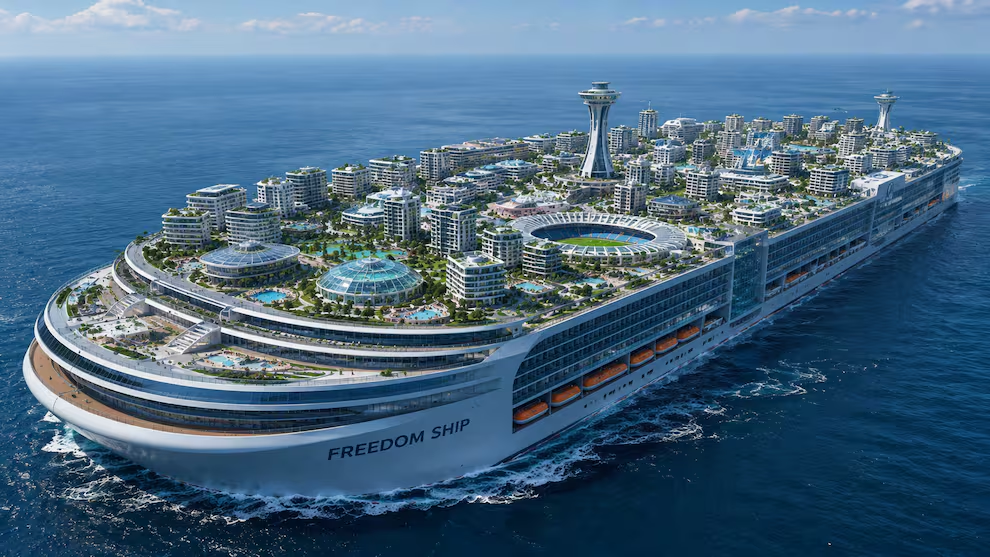
Although it has not yet been built, the initiative remains one of the most ambitious visions of maritime urbanism worldwide
SANTO DOMINGO– The idea of living in a city that sails the oceans seems like something out of a science fiction novel, but for years a project has been working to make that concept a reality. It's called Freedom Ship, a proposal to build a gigantic floating city capable of housing up to 80,000 people, including residents, workers, and visitors.
According to a publication by the Argentine media outlet El Cronista, the project envisions a structure capable of bringing together housing, educational centers, hospitals, hotels, shops, parks, sports facilities and cultural spaces, creating a virtually self-sufficient community on the sea.
Although the initiative has not yet begun construction, it continues to generate interest due to the possibilities it presents for the future of cities and urban expansion beyond traditional spaces.
A city sailing around the world
Unlike conventional cruise ships, Freedom Ship was conceived as a permanent community. Its promoters envision the structure constantly moving around the globe, making stops at different destinations without losing its status as an inhabited city.
The proposal seeks to offer its residents the possibility of living, working, studying and accessing essential services without having to leave the ship, a concept that combines elements of urban planning, tourist infrastructure and real estate development.
Housing, services and public spaces
The plans disclosed for Freedom Ship include thousands of residential units, in addition to a wide network of services designed to guarantee the daily life of its inhabitants.
The planned facilities include schools, hospitals, hotels, restaurants, markets, shopping centers, museums, concert halls, and recreational areas spread across multiple decks.
The project also includes parks and green spaces, a sports stadium with capacity for thousands of spectators, and internal transport systems to facilitate mobility within the structure.
A project that looks to the future
Beyond its architectural dimension, Freedom Ship has been presented as a response to some of the challenges facing modern cities, including population growth, pressure on urban land, and the need to explore new forms of human settlement.
The proposal joins other international initiatives that seek to take advantage of maritime spaces for urban development, a trend that has gained visibility in recent years as interest in alternative housing and infrastructure solutions increases.
The big challenge: making it happen
Despite the attention it has garnered for years, Freedom Ship remains a conceptual project. According to information gathered by the media outlet, the initiative still needs to secure the necessary funding to move into the construction phase.
Its promoters maintain that, once the resources are obtained, the project would require several years of development before receiving its first residents.
For now, the largest floating city ever conceived remains a vision of the future. However, its dimensions and scope make it one of the most ambitious maritime urban development projects ever proposed.
Recommended readings:







