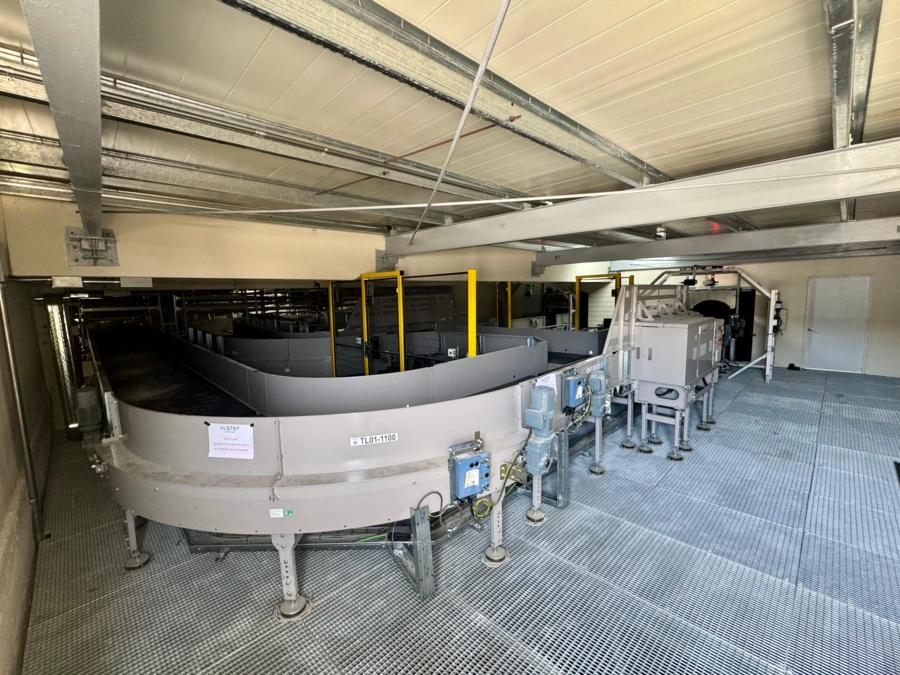
SANTO DOMINGO – Aeropuertos Dominicanos Siglo XXI (Aerodom) announced the launch of the first phase of its new Automated Baggage Handling System at Las Américas International Airport, José Francisco Peña Gómez (AILA). Following this announcement, a question has arisen among passengers: what does this system entail, and how might it benefit them?
This new automated mechanism, which is already operating at AILA, works in the southern area of the air terminal and would help to speed up the processing of suitcases, reduce the risk of delays and decrease the chances of lost luggage.
Benefits of the BHS system for passengers
Faster
Users could experience greater efficiency in the processing of their belongings, from the check-in counters to their subsequent transfer to the aircraft.
Greater capacity
In addition, the system would allow for an increase in the number of suitcases processed per hour, facilitating the handling of a larger volume of luggage.
Advanced security
Another benefit would be the strengthening of security controls during baggage checks, as well as greater traceability of items carried by travelers.
In that context, computed tomography scans and 360-degree label reading systems would be used to reduce human error and improve tracking of each piece throughout the entire process.
Fewer problems with luggage
Automation would also minimize operational failures through constant monitoring, which could translate into fewer inconveniences related to handling and subsequent collection of luggage.
What does the BHS system implemented at Las Américas Airport consist of?
The Baggage Handling System (BHS) consists of an automated logistics network made up of conveyor belts, scanners, and computer programs.
This technology is used in airports to track, transport, inspect, and classify passenger belongings, from the check-in counter to the aircraft and vice versa.
How does the BHS work?
Billing (check-in)
The process begins when the passenger's suitcase enters the conveyor belt system from the check-in counter, after receiving an identification tag with a barcode or other tracking technology.
Transport and reading of luggage
After completing the check-in process, sensors and readers identify the route that each piece must follow through the conveyor belts until it reaches the corresponding area.
Safety inspection
Subsequently, the luggage passes through various automated controls and inspection equipment, including tomographs, with the aim of detecting possible explosives or prohibited items.
Suitcase and makeup sorting
Finally, the luggage is sorted and grouped in the so-called flight formation or makeup areas, from where the personnel in charge move it to be placed on the aircraft.
Recommended readings: