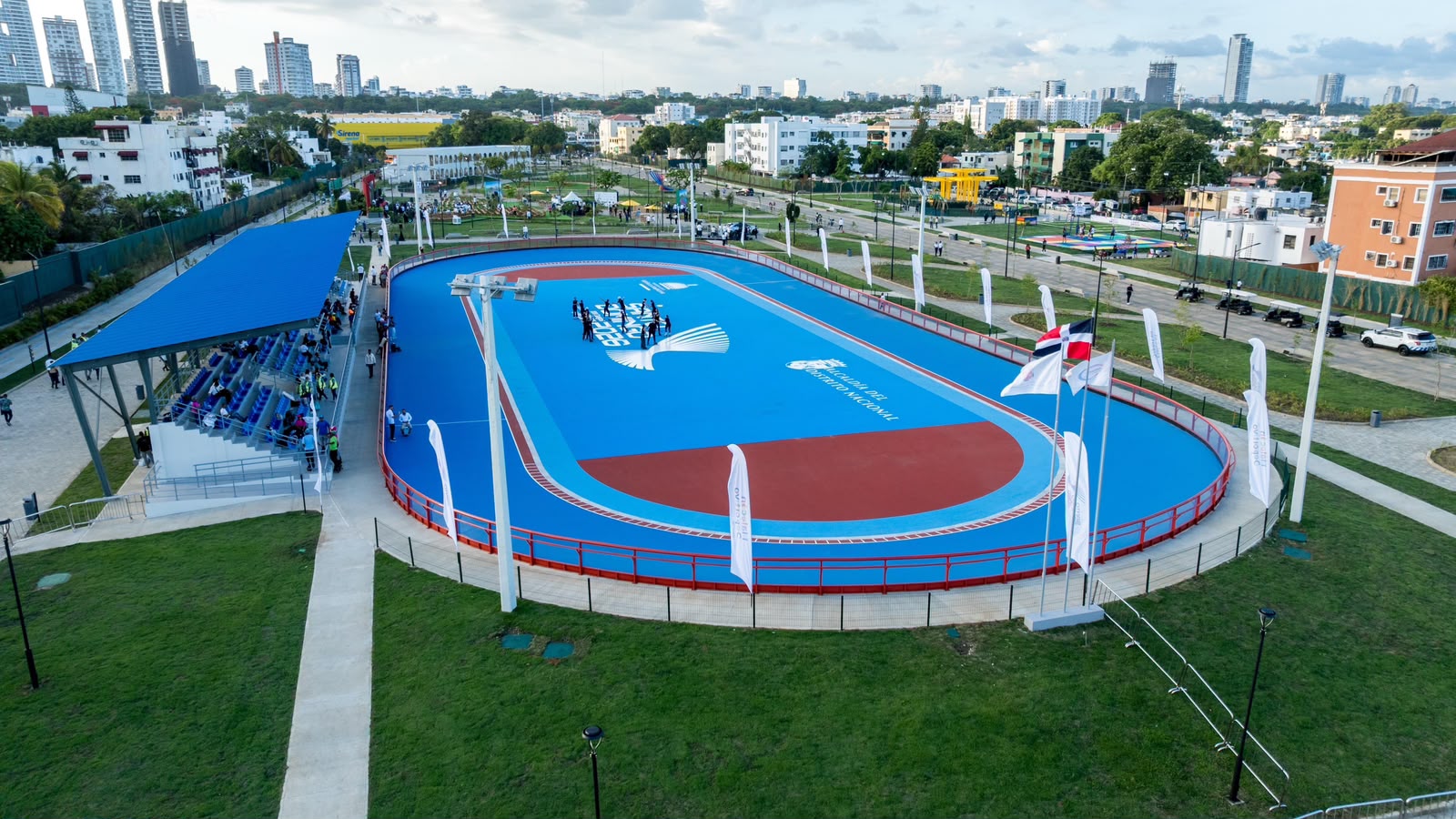
The former abandoned site where the Maharishi School operated was transformed into Paseo 30 de Mayo, a sports and recreational complex in the National District
SANTO DOMINGO – For years, kilometer 8 of the 30 de Mayo highway was synonymous with neglect. Behind the seawall and very close to the sea, a large plot of land that once housed the Maharishi School remained for three decades in ruins, overgrown with weeds, and illegally occupied.
That landscape changed yesterday, Thursday the 18th, with the inauguration of the Paseo 30 de Mayo, an urban intervention that returns more than 50,000 square meters to public use and seeks to turn the area into one of the main recreation and sports spaces of the National District.
The information was released by the Presidency of the Republic, which highlighted that the project was developed jointly between the Government and the Mayor's Office of the National District.
During the opening ceremony, led by President Luis Abinader and Mayor Carolina Mejía, the authorities agreed that the recovery of the space represents a commitment to a more humane city with more green areas.
From ruins and abandonment to a new urban space
The history of the site dates back to the 1980s and 1990s, when the Maharishi School operated on the land. After the school closed in 1994, the area was abandoned and, over time, became a site of urban decay.
According to the Presidency, one of the project's distinctive features was the preservation of part of the original structures. The iconic semicircular ruins of the old school were restored and adapted to house commercial spaces, restaurants, and services for visitors.
“Before, this was just ruins and urban decay. Today, it is a space for encounter and hope,” said the Minister of the Presidency, José Ignacio Paliza.
A park designed for sport and community life
The project includes a professional skating rink that will serve as the official venue for skating competitions during the 2026 Central American and Caribbean Games.
In addition, it features a bike path, pedestrian walkways, an outdoor gym, green areas, LED lighting, Wi-Fi connection and a parking building, in a proposal that seeks to integrate sport, mobility and recreation.
Carolina Mejía highlighted that the Paseo 30 de Mayo represents the second largest recreational space in the National District and affirmed that each of its areas was conceived to improve the quality of life of the population.
“We are building a better city and putting people at the center of public policy,” the mayor said.
More than 24,000 square meters of trees
The environmental component plays a central role in the project. The work incorporates over 24,000 square meters of tree planting with native and endemic species such as mahogany, mangrove, flamboyant, and oak, with the aim of generating natural shade and contributing to the ecological recovery of the area.
For residents of areas such as Honduras, Tropical, Miramar, El Cacique and the Centro de los Héroes, the new Paseo 30 de Mayo represents more than just a park.
Thirty years after falling silent, one of the most forgotten plots of land on the Santo Domingo coastline is reopening. This time, not as a school or an abandoned space, but as a place designed for walking, playing sports, meeting up, and once again gazing out to sea.
Recommended readings: