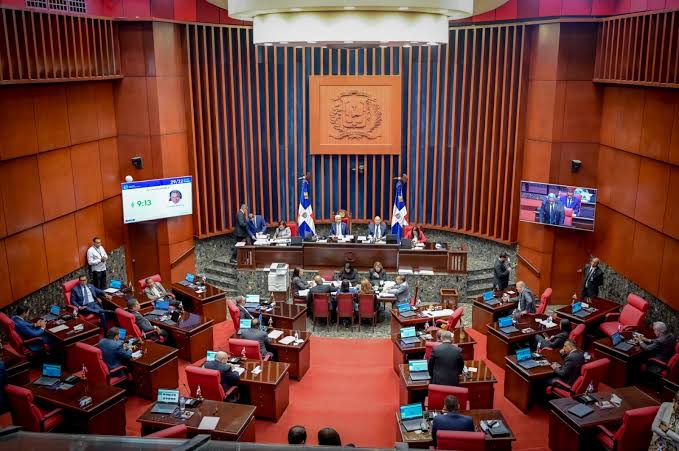
SANTO DOMINGO.- The Chamber of Deputies approved this Thursday, in its first discussion, the bill of measures for economic growth, tax simplification and mitigation of the international crisis, a piece promoted by the Government with the objective of increasing the State's income and facing the pressures derived from the international context.
The information was followed through the live broadcast of the Chamber of Deputies, where the initiative received the support of the ruling majority and allied parties, while opposition legislators expressed reservations and presented proposals for modification.
During the debates, some opposition members of parliament proposed changes related to the tax on bank transfers, salary indexation, and the elimination of advance payments for small businesses, among other measures. However, these proposals failed to gain traction due to the majority held by the Modern Revolutionary Party (PRM) and its allies.
The Speaker of the House of Representatives, Alfredo Pacheco, defended the need for the initiative and considered that it responds to the economic difficulties accumulated by the various international crises recorded in recent years.
For his part, Deputy Francisco Javier Paulino, vice president of the commission, argued that most of the provisions favor the population and concentrate greater burdens on larger taxpayers.
From the opposition, Rafael Castillo, spokesperson for the People's Force party, questioned the speed with which the bill was passed and argued that other structural reforms had been postponed. Meanwhile, Representative Carlos de Pérez attributed the need for new revenue to increased current spending and criticized the growth of certain budget items.
Measures included in the proposal
The initiative includes the elimination of advance payments for micro-enterprises, the creation of an amnesty for tax debts, and the reduction of the capital gains tax on the sale of real estate, which would go from 25% to 10%.
It also proposes indexing the minimum exemption from Income Tax, increasing the deduction for educational expenses from 25% to 30%, returning the selective tax on ethyl alcohol used for medicines, and temporarily raising the corporate income tax rate for large taxpayers to 30%.
Following its approval in the first reading, the bill must undergo a second debate in the Chamber of Deputies before completing its legislative process. Once approved by both chambers, President Luis Abinader will decide whether to enact it or veto it.
Recommended readings: