


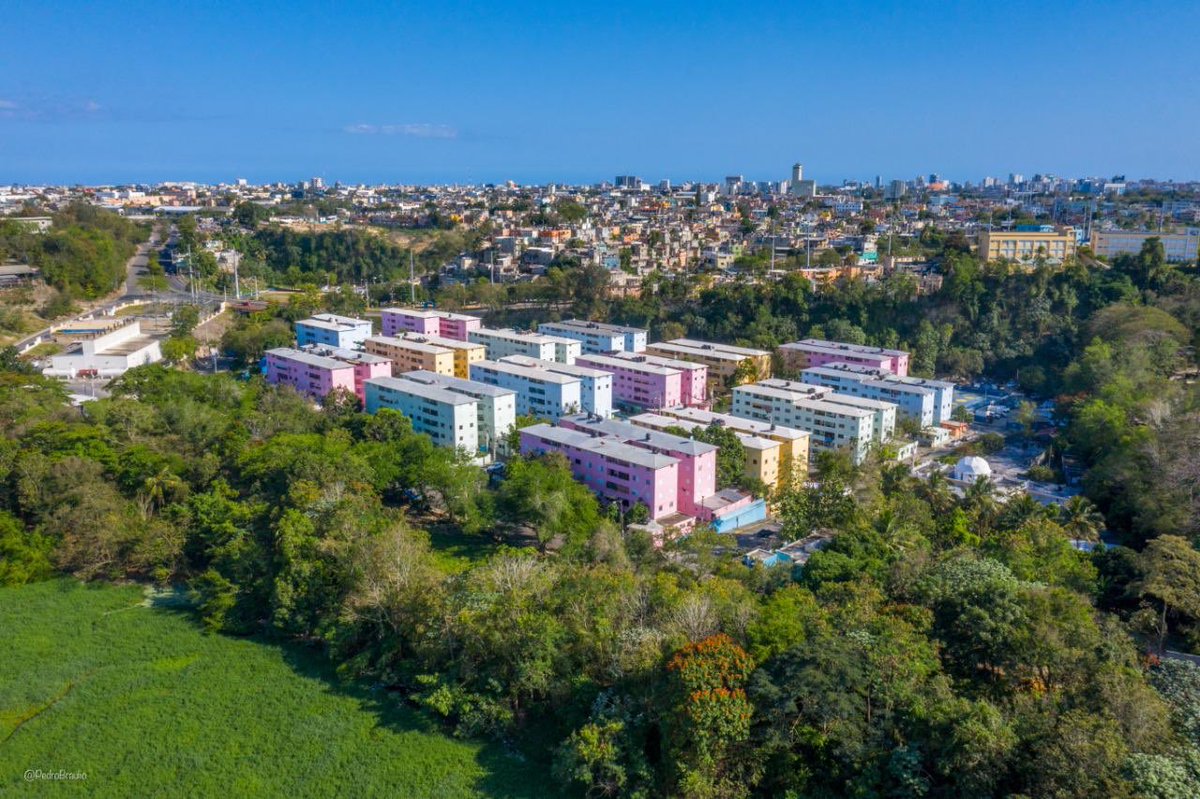
Until December 1988, the Comptroller General of the Republic registered 5,558 housing units inaugurated, and journalist Ramón Núñez Ramírez, in a note published in the Listín Diario in September 1989, established that these investments did not cover even 15% of the housing deficit
SANTO DOMINGO. – On August 16, 1986, Joaquín Balaguer assumed the presidency of the Dominican Republic for the fifth time, at 79 years old, legally blind and after eight years out of power.
The two governments of the Dominican Revolutionary Party that preceded it, that of Antonio Guzmán (1978-1982), and that of Salvador Jorge Blanco (1982-1986), had reduced public investment in infrastructure and opted for an induced demand model, based on the increase of employment and wages.
The situation was that the construction industry had largely passed into the private sector, the northern area of Santo Domingo had accumulated densely populated neighborhoods, state lands were informally occupied, and thousands of families lacked property titles.
Balaguer returned with the same conviction that had characterized his entire previous administration: to govern was to build. And the question at that moment was not whether there would be public works, but where, how, and at what pace. The answers came before the year was out.
The evictions begin
Two months after taking office, the government launched the urban renewal program that would define the face of Santo Domingo for the next decade. In October 1986, 800 families were evicted from Hoyo de Chulín.
According to architect Andrés Navarro García, whose thesis “Neighborhoods in Anxiety”, presented at the National Autonomous University of Mexico in 2014, constitutes the most exhaustive study of the period, that same month hundreds of homes were also marked in Villa Duarte and Los Ríos.
In November, 700 families in San Carlos received the same notification; between December 1986 and January 1987, the evictions continued in Maquitería, Villa Faro, Simonico, Los Tres Ojos, and La Isabelita: some 1,800 more families. The government was acting quickly. It didn't yet have a plan, although one arrived five months later.
In March and April of 1987, a team of eight foreign and eleven national technicians worked for two months to produce the document that would formalize the program. The Indicative Plan for the Development of the Northern Zone of Santo Domingo, known by its acronym PIZN, was coordinated by Christopher Lewin of the German Technical Cooperation (GTZ) and officially presented in May of 1987.
Its stated objective was to provide some 15,000 housing solutions for more than 70,000 low-income residents in the period 1988-1990, and to identify guidelines for the urban development of the area in the short, medium and long term, as ambitious as until the year 2030.
The architect Rafael Tomás Hernández, supervisor of State Works, had summarized the logic of the intervention before the plan even existed. As documented by Navarro García, Hernández declared to the press: “It is better to act without a plan than to do nothing and allow the city to become a slum.” This statement takes on its full significance when one considers that the evictions began in October 1986 and the Plan was not presented until May 1987: the program had already been underway for seven months when its technical foundations were formalized.
The PIZN established three housing access options: 40-year lease of a 125-square-meter urbanized lot, with a monthly payment equivalent to 6% of the current minimum wage, that is, RD$15; purchase of a minimum 24-square-meter home, with a monthly payment of 24% of the minimum wage for 12 years, that is, RD$60; and purchase of a medium-sized 40-square-meter home, with a monthly payment of 32.8% of the minimum wage, equivalent to RD$82. A monthly maintenance fee of RD$10 was added to these amounts.
The Plan's own sources revealed the contradiction. A study by the National Housing Institute conducted between 1986 and 1987 in low-income neighborhoods established that 40% of families received less than the monthly minimum wage. A 1986 Central Bank survey indicated that 8.6% of families in Santo Domingo, more than 23,454 households, earned less than the minimum wage.
Most of the families surveyed by the Plan's own technicians paid less than RD$40 per month in rent, and the plan required them to pay between RD$70 and RD$92.
The classification of neighborhoods
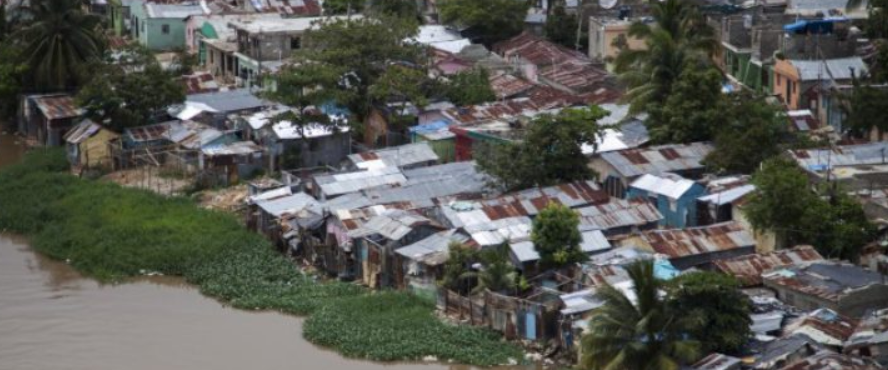
The PIZN classified the neighborhoods in the northern zone into two categories: neighborhoods to be remodeled, meaning demolished and rebuilt, and neighborhoods to be improved. The list of neighborhoods designated for remodeling included: La Zurza, Capotillo, Simón Bolívar, 24 de Abril, Gualey, Los Guandules, Guachupita, Maquiteria, Simonico, Los Mameyes, El Hoyo de Chulín, La Cuarenta, El Caliche, San Carlos, and Villa Francisca.
The areas classified for improvement were: Los Mina Norte, Sabana Perdida, Guaricano, Herrera, Los Alcarrizos, Cristo Rey, Villas Agrícolas, Villa Juana and Villa Consuelo.
Navarro García pointed out a revealing contradiction in that classification in his research. Guaricano, one of the city's most precarious settlements in terms of infrastructure, services, and housing, was placed in the improvement category, while San Carlos, a central neighborhood with a long urban tradition and architectural pieces of historical value, was placed in the renewal category.
The explanation, according to the researcher, was the rationality of capital: central lands like San Carlos offered greater profitability than peripheral ones.
The PIZN text itself laid out the economic logic of the Inner Ring Road: "the urban planning concept of the Inner Ring Road provides for two sets of traffic lanes, separated by an average width of 150 meters, forming a commercial and service axis. This design allows for the production of land with high commercial value, enabling the Government to incorporate the added value caused by the project.".
The Plan did not clarify that most of the affected land did not belong to the State, but to private owners. The Inner Ring Road would be 2.5 kilometers long; the Outer Ring Road, 28 kilometers.
Researcher Laura Faxas also identified three structural consequences of the program in an analysis published in 2007: the return to an economic policy based on the construction of large works; the destructuring effects on the neighborhoods of the northern zone, a bastion of popular opposition to the regime; and the capitalist revaluation of the land linked to the tourist projects of the Fifth Centenary of the Discovery of America in 1992.
On the other hand, historian Amparo Chantada, in her doctoral thesis presented at the Polytechnic University of Madrid in 1998, had identified the symbolic framework of the entire program: to project Santo Domingo as the "Athens of the New World" in anticipation of that anniversary.
The budget and the projects
Data from the National Budget Office, compiled by Andrés Navarro, shows the increase from the first year. In 1986, government spending on construction projects was RD$180,271,385, equivalent to 8% of the total budget.
In 1987, that amount jumped to RD$785,052,326, 23.8% of the budget, a fourfold increase in a single year, reflecting the priority that the Presidency of the Republic assigned to the program from its inception.
The first housing project of the period was inaugurated in December 1987: La Yuca-Los Ríos, with 240 units. General supervision of the developments was the responsibility of the State Coordinating and Oversight Office for Public Works, a direct branch of the Presidency.
Its main official was the architect Rafael Tomás Hernández, who, as documented by Navarro García, simultaneously presided over Urbanizaciones Nacionales, C. por A., the private company that would receive the most important contracts of the period.
In 1988, four housing projects were inaugurated. In May, Parque del Este, with 462 units, and Puerto Isabela, formerly Hoyo de Chulín, with 560 units, the latter developed by Urbanizaciones Nacionales, were opened. In September, Los Farallones, with 471 units, was inaugurated. In November, Hainamosa, with 726 units, was opened. State spending on construction that year reached RD$1,300,369,906, representing 26.7% of the national budget.
The Comptroller General of the Republic registered 5,558 housing units inaugurated up to December 1988. Journalist Ramón Núñez Ramírez, in a note published in the Listín Diario in September 1989, established that these investments did not cover even 15% of the housing deficit, which continued to grow rapidly.
The deficit was real and its magnitude documented. A study by researcher Anselmo Silverio, cited by Navarro García, estimated that there were 546,900 uninhabitable homes throughout the country: the roofs of some 2,684,500 Dominicans.
The Institute for Population and Development Studies projected 581,000 new households between 1985 and 2000; added to the accumulated deficit, the requirements at the end of the century reached 981,900 units. To meet this demand, 78,504 homes would have to be built per year: 218 per day.
June 13, 1988: Virgilio Suero
Among the data on the program and its human consequences, Navarro García documented the case of Virgilio Suero. On June 13, 1988, demolitions began near his home on José Martí Street, almost at the corner of Padre Castellanos Avenue.
Suero had built his two-story house 25 years earlier, and according to his wife's account, reported by the press at the time, when he heard the sledgehammer blows begin, he repeatedly went up and down the stairs, then lay down. When she went to check on him, he had already died: a heart attack. His wife was evicted shortly afterward.
Sources: Navarro García, Andrés. Neighborhoods in Turmoil: State and Popular Organizations in Urban Renewal in Santo Domingo, 1986-1990. Master's thesis, UNAM, 2014. | Lewin, Christopher. Indicative Plan for the Development of the Northern Zone of Santo Domingo (PIZN), ONPLAN/ADN/GTZ, May 1987. | Faxas, Laurent, 2007. | Chantada, Amparo. From the Urbanization Process to Urban Planning in Santo Domingo (1986-1992). Doctoral dissertation, Polytechnic University of Madrid, 1998. | González Mueses, Evelyn Vanessa. On Dominican Social Housing in the 20th Century: The Case of Santo Domingo. Master's thesis, MAAPUD 5, Polytechnic University of Valencia, 2014. | National Budget Office, Budget Execution Report 1989. Listín Diario, various issues 1987-1989.
Series: History of social housing in the Dominican Republic. (Chapter XVIII)
Recommended readings:







