


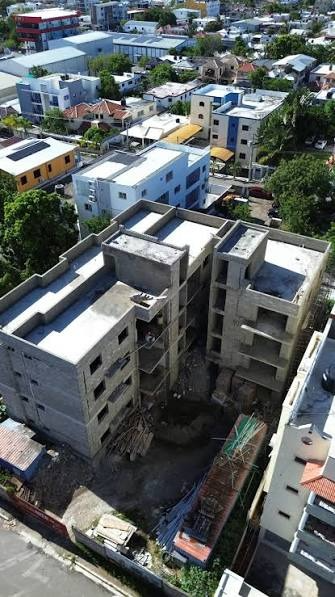
The new president inherited a bankrupt state, an overcrowded city, and a housing agenda drawn up by the previous administration. What he built, and how he financed it, defines one of the most complex periods in Dominican housing policy
SANTO DOMINGO.- On August 16, 1982, Salvador Jorge Blanco assumed the presidency of the Republic with a diagnosis without euphemisms: the Dominican State was bankrupt and he warned of this in his inaugural address.
It was not mere rhetoric: the Central Bank's reserves were depleted, the international price of sugar, which still accounted for half of foreign trade revenues, had collapsed, the mining markets for bauxite, ferronickel, gold and silver were in crisis, and the country did not have the resources to even pay the interest on its external debt.
Santo Domingo was also a city in turmoil, which went from 668,507 inhabitants in 1970 to 1,297,892 in 1981, according to the censuses of the National Statistics Office cited by the geographer Christian Girault, in his article “Santo Domingo: The trajectory of urban development and metropolitan expansion (1970-2022)”, published in the ECOS UASD Magazine in 2024.
This means that in eleven years Santo Domingo absorbed 629,385 new people, almost double its 1970 population. The internal migration flow, which demographer Francisco Cáceres Ureña estimates at about 50% of the total volume of rural-urban migration in the country, was essentially directed towards Greater Santo Domingo, and the northern provinces, those of the Cibao, were the main sources of emigration.
This uncontrolled growth had specific physical consequences that Girault describes as a “disorderly and exclusionary” urbanization: migrants who could not access the formal housing market occupied marginal areas.
According to sociological studies cited by the French geographer, 80% of the population of the slums was immigrant, and they built shacks on the banks of the Ozama River and on the riverbanks, in the neighborhoods of La Zurza and Guachupita.
The central area was becoming densely populated with overcrowded tenements, so the housing deficit that Jorge Blanco inherited was not just a problem of numbers: it was also the visible landscape of the capital.
According to data collected by Girault, the informal sector represents 58% of total employment in the country. In 1982, that proportion was even higher. The families in need of housing were mostly those whose income was insufficient to afford the formal construction market.
That was the legacy: a city that already had more than a million inhabitants and was growing at a rate that no housing program had managed to keep up with.
The promise and the mechanism
Despite this situation, Jorge Blanco came to power with a housing promise of historic scope. During his campaign, according to media reports at the time, he pledged to build 25,000 homes annually, a figure no Dominican government had ever achieved, as evidenced by the INVI (National Housing Institute) records.
To put it in perspective: the 1981 INVI Annual Report records that, throughout that year—the last of Guzmán's administration and the best of the decade—3,224 units were delivered. Jorge Blanco promised seven times that number, every year of his term.
Based on that promise, a technical team designed the program. As documented by Fanny Sánchez, widow of Bonilla, who participated in the process through her husband, engineer Pedro Bonilla Mejía, in a “letter to the editor” published in Acento on June 10, 2020, and in El Nuevo Diario on June 12, 2020, that team was made up of architect Manuel Salvador Gautier, engineer Francisco Méndez, Dr. Darío Fernández, and engineer Bonilla Mejía himself.
The program defined different types of housing units according to the geographical location and the beneficiaries' ability to pay.
In this project, the financing mechanism was innovative: the Tax Credit Certificate. Dr. Darío Fernández and engineer Bonilla drafted the corresponding bill, which was supported by the then-President of the Senate, Jacobo Majluta, and approved by the Secretary of Finance, José Rafael Abinader.
Approximately 60 billion pesos in certificates were issued, used for tax payments, the exchange of construction materials with hardware stores, and payment to construction engineers. Companies such as Casa Hache, Hormigones Moya, and Hoyo de Lima Industrial were among those that implemented the program.
What was built: the projects
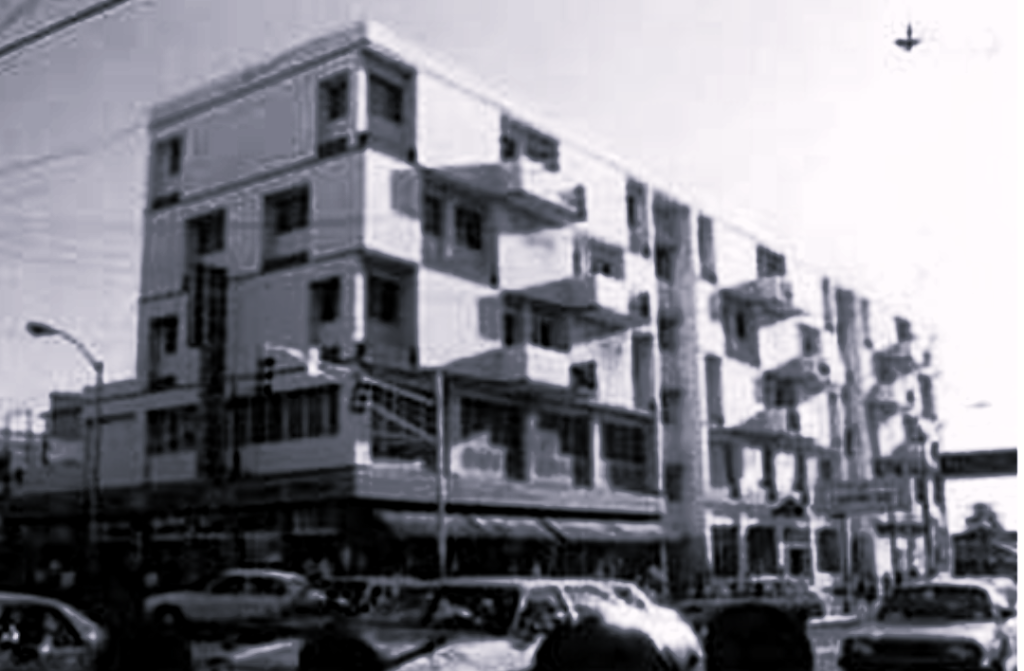
Jorge Blanco's program had one feature that distinguished it from all the previous ones in this series: national geographic reach. While Balaguer's and Guzmán's programs focused primarily on Santo Domingo, Jorge Blanco promoted projects in several provinces. Those identified in the available sources are the following:
- Invivienda Santo Domingo: the largest project, with 8,000 planned housing units. It was conceived in 1978 by architect Manuel Salvador Gautier and was underway during the Guzmán administration when it was partially halted. Jorge Blanco revived the project and advanced its construction.
The first phase was fully completed; other units were delivered in a shell condition. The project, however, would not be completed during his term. In “The Marks of Housing Policy” by Ciudad Alternativa, 2000-2016, it states that the large projects originally conceived remained more than 80% unfinished because they were halted by the adjustments implemented during this period following the 1984 agreement with the IMF. Upon returning to power in 1986, Balaguer did not schedule its completion, and it was the government of Hipólito Mejía that finally shut it down, leaving 429 already occupied units unfinished.
- Invivienda Santiago: 4,000 homes, completed entirely during Jorge Blanco's term. It was the largest housing project fully completed in an inland city up to that time.
- Invi-CEA San Luis, in San Pedro de Macorís: 3,000 homes completed.
- Caracol Project, in the Monseñor Noel province: completed.
- The Salomé Ureña Project, in the National District: completed and inaugurated by President Jorge Blanco himself. The 1981 INVI Annual Report already listed it as being under construction with 558 units, for a budget of 6.66 million pesos.
- The Mutual Aid and Self-Help Project and the Lots and Services Project, in Santo Domingo East: planned with advice from the Inter-American Development Bank. Conceived as very low-cost programs for low-income families, where the State provided infrastructure and the beneficiaries themselves participated in the construction.
- Affordable housing in Los Alcarrizos: with low construction costs and accessible installments for beneficiaries.
- Jobo-Bonito Project, in San Miguel, Santo Domingo: about 30 units that Balaguer, upon returning to power, left unfinished.
Sources: Christian Girault, “Santo Domingo: The Trajectory of Urban Development and Metropolitan Expansion (1970-2022)”, ECOS UASD Journal, Year XXXI, Vol. 2, No. 28, July-December 2024, pp. 111-127. Fanny Sánchez, widow of Bonilla, letter to the editor, Acento, June 10, 2020 / El Nuevo Diario, June 12, 2020. National Housing Institute (INVI), INVI Annual Report 1981, Invivienda Magazine No. 3, Santo Domingo, 1981. Natalia Ulloa Cáceres, Social Housing in Santo Domingo: Opportunities for Recycling the Existing Housing Stock, doctoral thesis, 2017.
Series: History of social housing in the Dominican Republic. (Chapter XVI)
Recommended readings:







