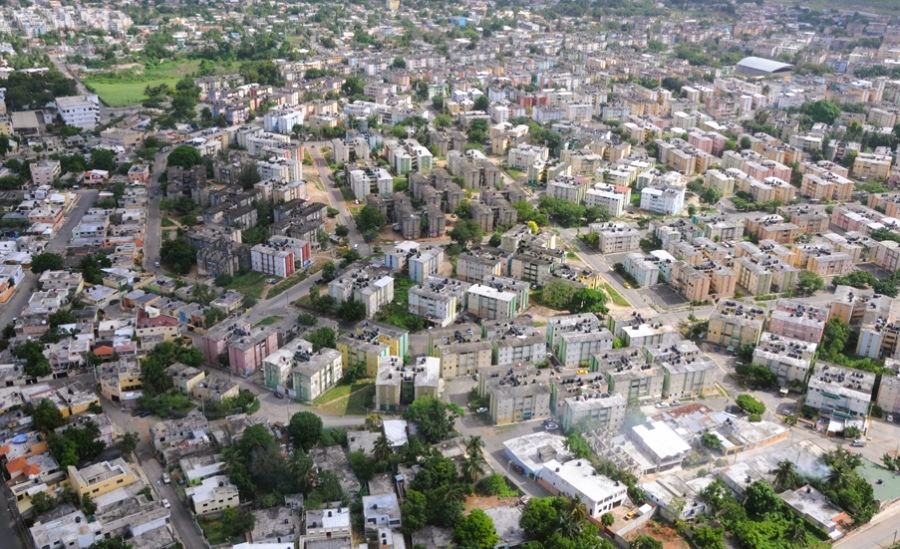
The starting point for Dominican social housing policy in the new century was the country inherited by Hipólito Mejía: booming private construction, an INVI (National Housing Institute) almost four decades old, an unresolved deficit of 700,000 units, and the Invivienda project, which had been passed from government to government for 18 years
SANTO DOMINGO. – On August 16, 2000, Hipólito Mejía was sworn in as president of the Dominican Republic before the National Congress, after an electoral victory of more than 1.4 million votes compared to the approximately 785,000 obtained by the PLD candidate, Danilo Medina.
In his inaugural address, which had little technical input according to a later analysis by the Acento website, Mejía pledged to govern "from a glass house" and described the inherited poverty as a burden that providence had placed on his shoulders.
Three months later, in his hundred-day accountability speech on November 6, 2000, he formalized that narrative with an expression that would become recurrent in Dominican politics: the "cursed inheritance," with which he blamed the outgoing government for a public sector deficit of 7.246 billion pesos between January and August of that year.
That same accountability speech didn't stop at fiscal figures. He said he also inherited, albeit with less rhetorical fanfare, the oldest and most troublesome housing case in Dominican public administration: that of Invivienda, a case that four governments failed to close.
The Cinderella of governments
The Invivienda project, initiated in 1982 by Salvador Jorge Blanco under the promise of building 25,000 homes per year, a figure that no Dominican government has ever reached, already had 18 years of history when Mejía assumed power.
Jorge Blanco failed to complete it between 1987 and 1993; under Joaquín Balaguer only 1,500 of those apartments were delivered, and Leonel Fernández, according to press archives of the time, delivered an additional 2,000 units during his government, but he also did not have enough time to complete the project or to fulfill his promises to all the buyers who had been paying their installments for years.
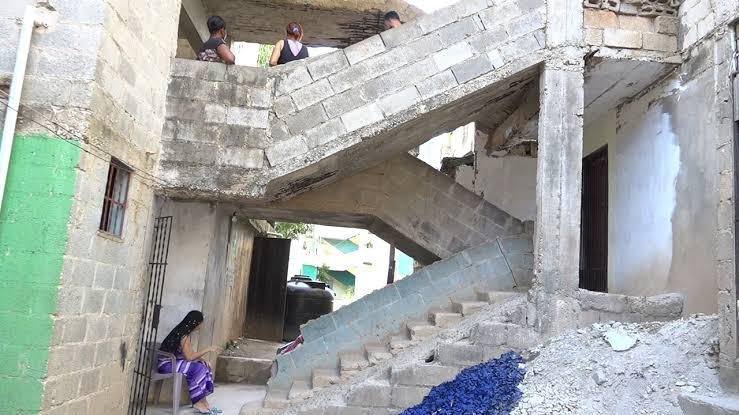
Invivienda then passed, for the fourth consecutive time, into the hands of a new administration. Mejía's own government would ultimately be the one to administratively close the program, although leaving 429 units unfinished, which by then were already occupied irregularly by families who "had no other alternative.".
Over the years, the project would earn the nickname "the Cinderella of governments," and as late as 2016, a report by Listín Diario documented that nearly 35,000 families continued to live in subhuman conditions inside INVI apartments that were never completed.
That thread, which runs through four governments of different political leanings between 1982 and 2000, illustrates the nature of the Dominican housing problem more accurately than any presidential speech: it is not that each government failed to design a housing policy, it is that no government managed, within its own four-year constitutional period, to close what the previous one had left open.
What was resolved, and what was left unfinished
Not all of the housing portfolio that Fernández handed over to Mejía was unfinished. The Los Barrancones project, originally built for the victims of Hurricane David in 1979, had been announced as nearing completion in the presidential address of 1998.
The mega-reconstruction projects following Hurricane Georges, particularly El Tamarindo in the capital, and the developments in San Juan de la Maguana and Bonao, were in different phases of execution at the time of the change of government, without the available speeches of the period specifying their exact degree of completion by August 2000.
The housing bond program, which INVI and the National Housing Bank had initiated in 1998 and 1999 as a mechanism of public facilitation and private execution, also left no explicit indicators of continuity in the available documentation of the change of government.
Its immediate fate under the new administration is unclear in the sources consulted, although the underlying model, demand subsidy instead of direct construction, would conceptually survive until it was formalized in Law No. 189-11 of 2011, already under later governments.
And above all those specific issues, there remained the figure that no government of the period managed to substantially change: the housing deficit, estimated at more than 700,000 homes at the end of the 1990s, and which would continue to grow with the natural increase in population and the formation of new households during Mejía's four-year term and those that followed.
Mejía's institutional response to this general picture of inherited poverty was the creation of the National Program to Combat Poverty (PNLP), announced in the same speech of the hundred days of government as part of a broader strategy that combined austerity in public spending with an increase in the tax burden, in order to finance both the fight against poverty and his second great campaign promise, the fight against corruption.
The PNLP was not, in its original design, a specifically housing program, but a broader social investment umbrella, which suggests that, at least in the opening discourse of the new government, housing ceased to have the prominence it had in Fernández's closing speeches, to be integrated into a generic social agenda against poverty.
Same book, different teachers
An analysis published by Listín Diario in 2021 summarized, in its headline, the logic behind this entire series: "each government has its own playbook" for reducing the housing deficit. Invivienda, Ciudad Juan Bosch, La Nueva Barquita, Las Caobas, the Batalla La Estrelleta Military Housing Complex, and Guaricano are, according to that account, just some of the projects with which successive governments, regardless of party or decade, have attempted to leave their own mark on the Dominican housing problem, generally without fully inheriting or resolving what the previous administration left behind.
The rhetoric of the "cursed inheritance" with which Hipólito Mejía opened his government in fiscal matters has, in that sense, an almost exact echo in the housing field, although without the same discursive display.
Mejía inherited a country with private construction booming, a housing institute with almost four decades of institutional continuity, a deficit of 700,000 unresolved units, and a flagship project, Invivienda, which had been passing from government to government for 18 years without any of them managing to close it completely.
That would be, to a large extent, the real starting point of Dominican social housing policy in the new century.
Sources: Accountability speeches by President Leonel Fernández before the National Assembly (February 27, 1998, 1999 and 2000), published in The Modernization of the Dominican Republic: Memoirs of an Administration 1996-2000; inaugural address and accountability report of the first hundred days of President Hipólito Mejía; Listín Diario, “Each government has its own ‘little book’ to reduce the housing deficit” (February 5, 2021); El Inmobiliario, series History of Social Housing in the Dominican Republic, chapter on the government of Salvador Jorge Blanco.
Recommended readings: