


The housing bond that INVI and the National Housing Bank tested between 1998 and 1999 would take more than a decade to become law
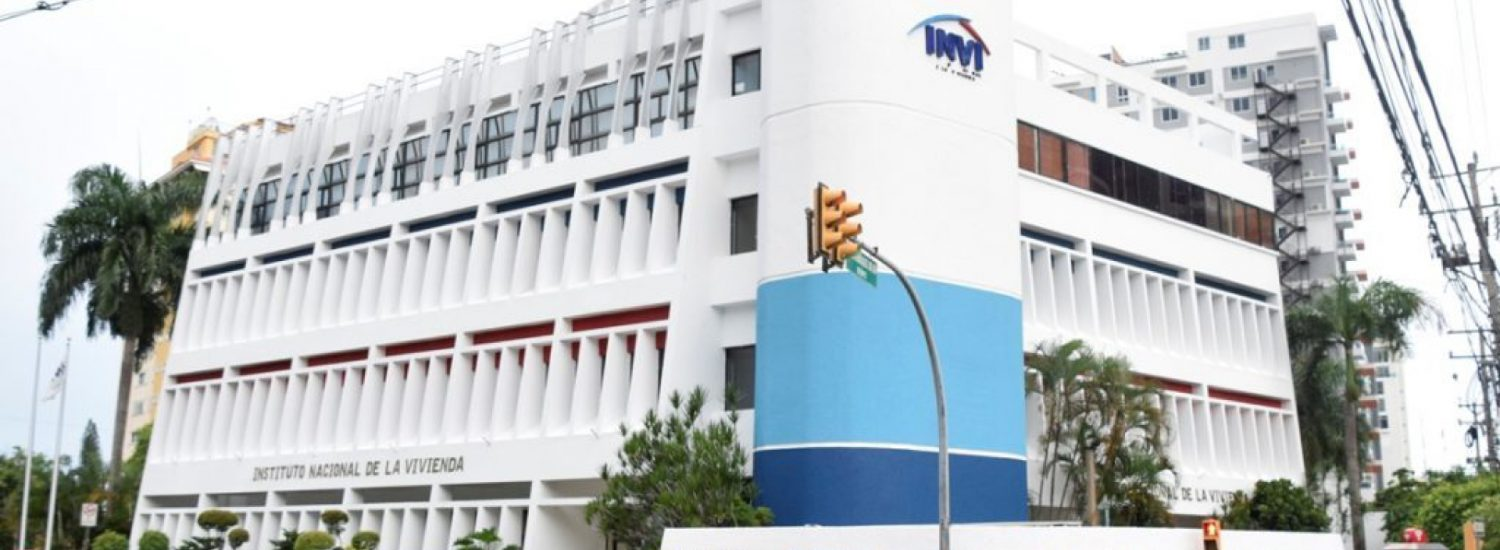
SANTO DOMINGO – For 36 years, since its inception, the Dominican social housing model had followed a relatively simple logic: the State built. The National Housing Institute (INVI), reorganized on May 10, 1962, by Law No. 5892 as an autonomous body intended to solve the housing problem through the direct construction of social housing, was the central actor in that model, and the National Housing Bank (BNV), created that same month by Law No. 5894, was the financial component that was to mobilize resources toward the sector through savings and loan associations.
This scheme, documented by researcher Natalia Ulloa Cáceres as part of the institutional evolution of Dominican social housing, functioned for more than three decades with variations in emphasis depending on the government in power, but without altering its basic logic: the State as a direct builder, financed with public resources and, to a lesser extent, with the savings captured by the specialized banking system.
A short announcement, a long implication
In his accountability speech on February 27, 1999, President Leonel Fernández mentioned, in just one paragraph, a change that would turn out to be more relevant than its brevity suggested.
"The INVI and the National Housing Bank successfully launched the housing bonus program," he told the National Assembly, "which advocates for the union of efforts between the public sector, from a facilitator's perspective, and the private sector as the implementing entity, both in its role as financier and producer of housing.".
This formula can be read as follows: The State ceased to see itself as the builder and began to define itself as the facilitator. The private sector, until then a secondary actor in social housing, became the executor, financier, and producer.
It was, in essence, the same shift towards demand-side subsidies that multilateral financial institutions had been promoting in several countries in the region since the 1990s, applied explicitly for the first time to the Dominican case.
A decade to become law
The 1998-1999 housing bond program did not leave, in subsequent presidential speeches, a clear trace of continuity or coverage figures.
It was not until the enactment of Law No. 189-11, on the Development of the Mortgage Market and the Trust, in 2011, that the Dominican Republic formalized by law an equivalent and now fully institutionalized mechanism: the Low Cost Housing Bond, a compensation of the tax on the transfer of industrialized goods and services (Itebis), paid during the construction of low cost housing projects, developed under the figure of the trust and intended to complete the initial payment of the housing or reduce the outstanding capital of the mortgage loan of the buyer.
This mechanism, still in effect today and administered by the General Directorate of Internal Taxes (DGII), in coordination with INVI, requires that the project be classified as low-cost housing, with a sale price subject to a cap that is adjusted annually for inflation, and that the buyer is purchasing a first and only home.
The gap between the 1999 announcement and the 2011 law suggests that the bond idea did not originate from a well-considered law, but from an immediate need in those years: to support reconstruction after Hurricane Georges, without doubling the entire financial burden on the INVI budget, and that it took more than a decade to consolidate into a permanent legal instrument.
The other twist: from housing bank to second-floor bank
The National Housing Bank itself, INVI's partner in the 1998-1999 program, did not survive the new century without transformations. Law No. 183-02, the Monetary and Financial Law, enacted on November 21, 2002, substantially changed its objectives.
The BNV became a second-tier financial institution, dedicated to promoting the secondary mortgage market and channeling resources to productive sectors, and absorbed the Central Bank's Project Financing Department (Definpro), along with its loan portfolio. Years later, Law No. 6-04 transformed it into the National Housing and Production Development Bank, and Law No. 126-15 finally converted it into the current National Export Bank (Bandex).
In just 16 years, the institution that was created in 1962 specifically to promote savings for housing stopped having the word "housing" in its name.
This institutional journey, which extends beyond the 1996-2000 period but begins precisely in those years with the bond experiment, illustrates the shift in Dominican housing policy from a model of specialized housing banking to one of a general mortgage market, in which social housing ends up competing for resources with the promotion of exports and production.
Even so, there was no solution
The 1999 speech itself was explicit about the limitations of the new mechanism: the bond was announced as a successful program without offering figures for units benefited or amounts disbursed, unlike the meticulousness with which the same speech reported the 21,538 housing solutions completed by INVI that year.
The absence of these figures, in a government that used to quantify every last penny of its programs, suggests that the 1998-1999 bond was, rather than a consolidated policy, a pilot program that responded to the immediate emergency of Georges and the need to involve the private sector in the reconstruction, without the State having to assume the entire fiscal cost.
The shift towards the market that this pilot project represented would, however, mark the course of Dominican housing policy for the next 25 years.
Ciudad Alternativa's research on the marks of housing policy between 2000 and 2016 documents how that model of state facilitation and private execution, barely outlined by Leonel Fernández at the end of the 20th century, would become the axis of the social housing programs of subsequent governments, long after the National Housing Bank itself had ceased to exist under that name.
Sources: Accountability speech by President Leonel Fernández before the National Assembly, February 27, 1999, published in The Modernization of the Dominican Republic: Memoirs of an Administration 1996-2000; Law No. 5892 and Law No. 5894, of May 10 and 12, 1962, on the reorganization of INVI and the creation of the National Housing Bank; Law No. 183-02, Monetary and Financial Law; Law No. 189-11, on the Development of the Mortgage Market and Trusts; General Directorate of Internal Taxes (DGII), taxpayer guide on the Low-Cost Housing Bond; Natalia Ulloa Cáceres, Social Housing in Santo Domingo (doctoral thesis, Polytechnic University of Valencia, 2013); Alternative City, The Marks of Housing Policy 2000-2016.
Recommended readings:







