


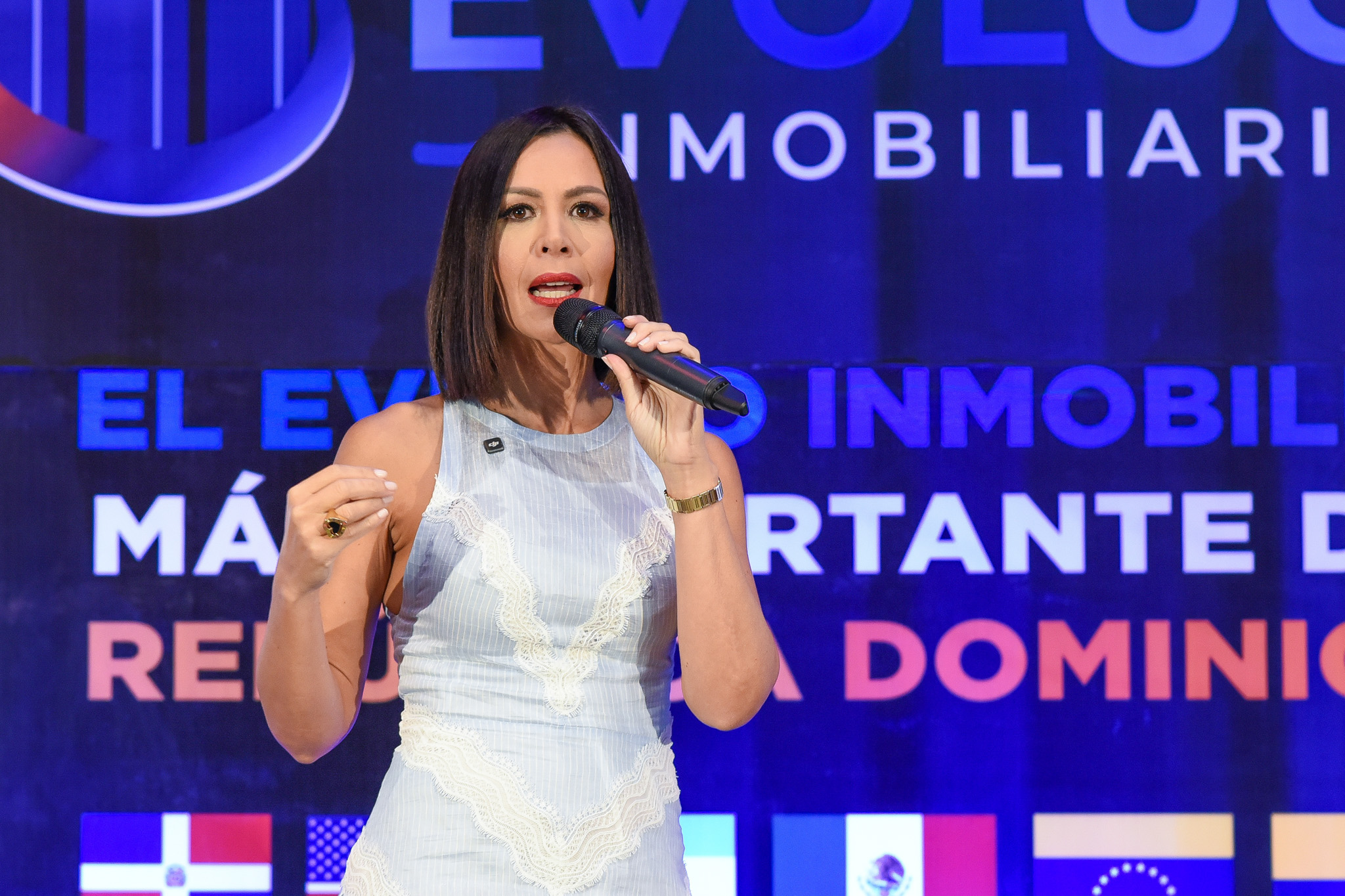
The architect and businesswoman warned, during the VII AEI International Congress 2026, that the transactional model between developers and sellers no longer responds to a market where every click of the buyer is traceable
SANTO DOMINGO. – During the VII International Congress of the Association of Real Estate Agents and Companies (AEI), “Digital Real Estate Evolution 2026”, architect and businesswoman Yermys Peña called for a shift away from the purely transactional relationship between developers and sales agents, and instead the construction of trust-based alliances that, she said, are what ultimately produce the best projects.
Peña, who is the CEO of the construction company Construger and founder of the international studio Studio YP, began her speech by debunking a widespread idea among salespeople in the sector that all the contacts or “leads” generated by a campaign end up falling, without further ado, into the hands of the salesperson.
“Is it true that all the leads that come in go directly to the salesperson's phone? No, because nowadays most construction and development companies have had to go out into the market and have had to run campaigns. That's the way it is,” he stated.
The professional explained that the journey of each potential buyer is now recorded from beginning to end thanks to digital tracking tools like the pixel: “You can see it because every click you make while browsing is trackable. They came in here, from there they went to another page, from that other page they wrote here, they called, and finally they arrived,” she detailed, emphasizing that this data disproves the perception that the sales work falls solely on the agent at the final point of sale.
An “internal war” that must end
For Peña, the tension between the marketing teams of the developers and the sales network, each claiming credit and control of the contacts, functions like a divorce that is never finalized.
“That internal war is like getting a divorce without actually getting divorced. It has to stop,” he argued, adding that, in his experience, “the best projects, in the end, are born from that table of unity” between both parties.
The businesswoman explained that, although a developer can't physically seat hundreds of potential buyers around a decision-making table, they can have them represented through their sales force. “I can't have 300 buyers sitting down together today, but I have them represented by my star agent. And he gives me a sense of the market, and tells me when clients need something, when they don't. It's a relationship of trust,” she said, equating the importance of this relationship with the bond a developer maintains with the financial institution backing their projects.
“Two paths”: the final message
Peña concluded his participation with what he defined as a commitment to the sector: to overcome purely transactional relationships, in which the developer demands sales targets, for example, 50 units per month, without first involving the agent or knowing their needs to achieve them, nor the market about the design of the project itself.
“Many times I arrive and simply deliver a finished project and you didn’t know. And you tell me: 'if I had known, we would have added this, we would have used it in another way,' but I didn’t involve you. And yet I still demand that you sell me 50 units a month,” he exemplified.
“Either we become that transactional group, or we begin to be human beings who differentiate ourselves, who have value, who contribute, and who create lasting bonds with clients and developers. And in doing so, we all protect our sector. If you agree, that is the commitment I leave you with today,” he concluded, in a speech that was met with applause from representatives of developers, construction companies, and real estate agencies present at the congress.
Focus on digital transformation
Peña's intervention took place at the seventh edition of the AEI international congress, a meeting that this year had as its motto "Digital Real Estate Evolution 2026" and that brought together professionals, entrepreneurs, agents and real estate agencies to analyze "the challenges, trends and opportunities that will define the future of the industry.
Peña, with more than twenty years of experience in architecture and real estate development, manages a portfolio of projects valued at more than 120 million dollars through Construger and has been recognized, among others, with the “Quisqueyanos por el Mundo” award from the Ministry of Foreign Affairs and as “Entrepreneur and Visionary Architect” by Latin Wall Street Miami in 2024, among many other recognitions.
Recommended readings:







