


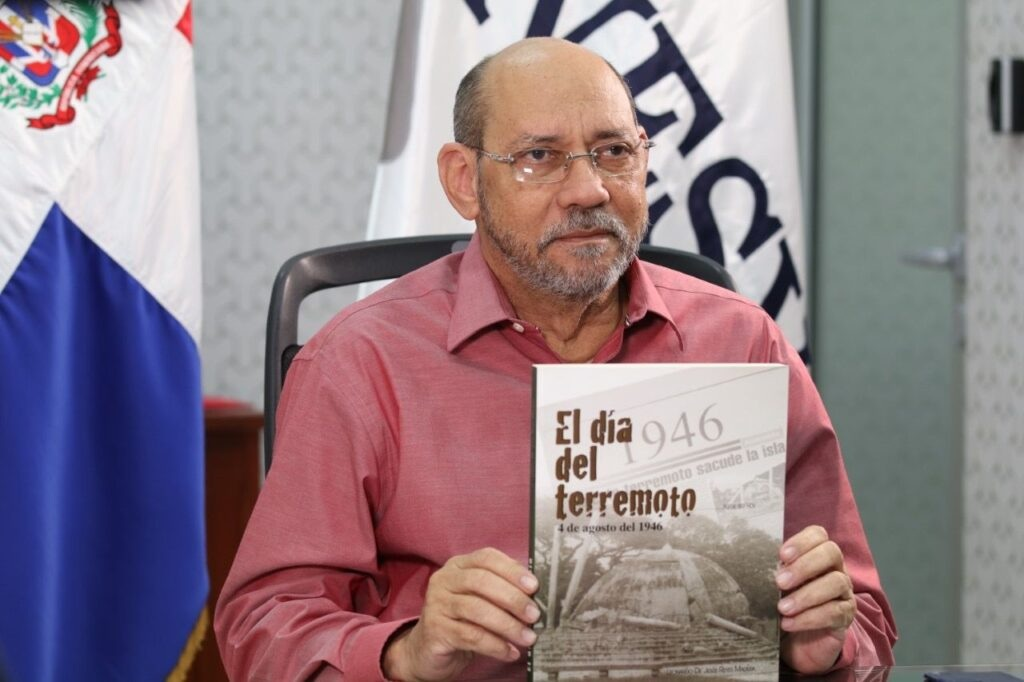
SANTO DOMINGO – On August 4, the 80th anniversary of the 1946 earthquake that struck the northeast coast of the Dominican Republic, the National Office of Seismic Evaluation and Vulnerability of Infrastructure and Buildings (Onesvie) urged the public and institutions responsible for public and private infrastructure to strengthen a culture of prevention, compliance with earthquake-resistant standards, and the evaluation of strategic buildings to reduce vulnerability to future seismic events.
The general director of Onesvie, engineer Leonardo de Jesús Reyes Madera, recalled that the earthquake, recorded on August 4, 1946, reached a magnitude of 8.1 and generated a tsunami with waves approximately 16 feet high, causing human losses, serious material damage and one of the most significant disasters in the history of the country.
On the occasion of this commemoration, Reyes Madera stressed that the memory of this event should serve to strengthen preventive awareness and continue promoting actions that allow us to minimize the impact on the country.
"The Dominican Republic still has time to evaluate its buildings, infrastructure, and lifelines to identify vulnerabilities and develop interventions that will improve its performance in the event of a major earthquake," he said.
The official pointed out that compliance with earthquake-resistant design and construction standards is a shared responsibility between the public and private sectors, while also warning about the importance of avoiding practices that compromise structural safety under the false perception that a large-scale event will not occur.
He also emphasized the need to continue strengthening the resilience of essential infrastructure such as educational centers, hospitals, public buildings, bridges, ports, docks, power stations and other strategic facilities, whose operation is fundamental to serving the population during and after an earthquake.
Invest in reduction
Reyes Madera explained that investing in reducing structural vulnerability represents a protective measure for people's lives and helps to lessen the economic and social impact that a large earthquake could generate.
"The seismic code must not only protect the lives of building occupants; it must also ensure that structures remain functional after an earthquake, especially those that provide essential services," he stated.
He also highlighted that the country has made significant progress in seismic risk management, including strengthening scientific knowledge about geological faults, developing earthquake-resistant regulations, training specialized professionals, and creating the institution as the body responsible for assessing the vulnerability of buildings and infrastructure to contribute to disaster risk reduction.
Finally, he reiterated the call to citizens to strengthen the culture of prevention and promote compliance with building codes, emphasizing that respect for life is built through prevention, the rigorous application of earthquake-resistant standards, and the strengthening of the resilience of our buildings and infrastructure.
Recommended readings:







