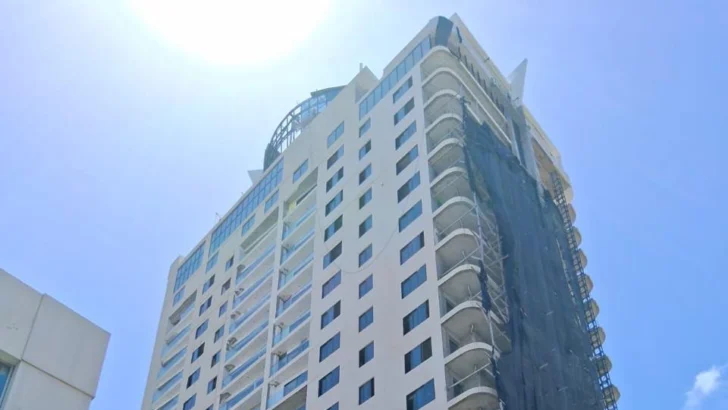
SANTO DOMINGO.– The decision by the Superior Administrative Court (TSA) that annulled the main urban planning permits for the Everest Tower project generated a statement yesterday, Friday, from the Dominican Association of Housing Builders and Developers (ACOPROVI), which placed the discussion on a broader level: the legal certainty on which real estate investments rest when the permits have been granted by the public administration itself.
In an official statement, the association clarified that it would not comment on the merits of the legal proceedings, as this matter falls under the jurisdiction of the courts. However, it deemed it appropriate to address the potential implications for the sector of the annulment of permits and certifications that were evaluated, approved, and renewed by the relevant authorities during various stages of a project.
According to the association, when these administrative acts are subsequently revoked, the scenario transcends the specific case and raises questions about the legal security offered by the Dominican State to those who make investments within the current regulatory framework.
Permits as collateral for investment
The association maintained that those who develop real estate projects in good faith, comply with the established requirements and obtain the corresponding authorizations structure their investments on the trust generated by the administrative acts issued by the competent institutions.
That trust, he noted, is one of the pillars on which projects involving significant economic resources, financing, hiring of personnel, acquisition of materials, and commitments to buyers and investors are planned.
In that context, he expressed that while the review and correction of administrative actions is part of institutional strengthening and the proper functioning of the Public Administration, it is important to ensure that its effects do not fall years later on projects that are already underway.
Strengthen the process from the granting of permits
As part of its institutional position, ACOPROVI reiterated the need to continue strengthening the processes by which authorities evaluate and approve construction permits, considering that legal certainty begins with the granting of the authorizations that allow an investment to begin.
She also indicated that she will continue to be attentive to the strict respect for both administrative legality and the constitutional principle of legal certainty, understanding that both constitute essential elements to preserve the legitimate trust of those who invest in the country's real estate development.
The TSA ruling
The union's position comes two days after it was revealed that the Fourth Chamber of the Superior Administrative Court declared the nullity of the main urban planning permits issued for the Everest Tower project, located in the Piantini sector.
The ruling concluded that the authorizations granted by the National District City Council deviated from the municipal provisions on land use, housing density, building height and minimum setbacks established for that area, and therefore invalidated the urban planning certificates that supported the development.
After the decision was announced, Grupo Choroni and Constructora Armando Toros, responsible for the project, reported that the sentence is not final and assured that they will continue to exercise the legal actions they deem appropriate, while indicating that the work is close to 90% complete.
Recommended readings:
- Grupo Choroni maintains that Everest Tower "continues to move forward" even though a court ruling annuls its permits
- Court annuls permits for Everest Tower project and sets precedent on the limits of urban development in Piantini
- Construction company calls the fuss "induced hype," Piantini residents complain about the Grand Everest tower