


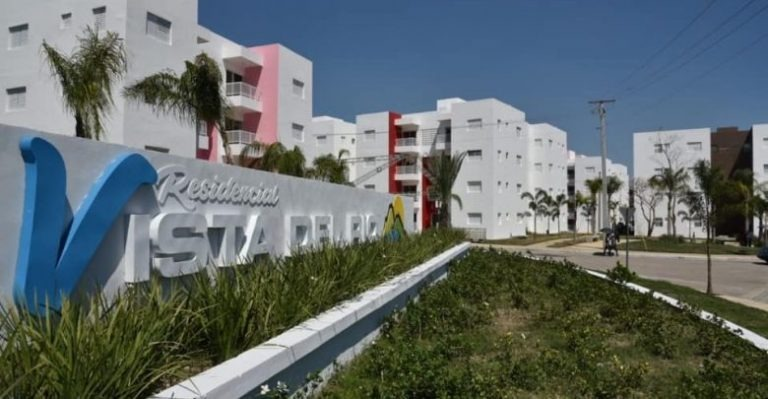
Hurricane Georges, in September 1998, tested almost seven decades of Dominican housing policy at the height of the construction boom
SANTO DOMINGO. – In 96 years of documented meteorological history, only three major hurricanes have directly hit the Dominican Republic, and the Dominican Institute of Meteorology (Indomet) has them recorded: San Zenón, in 1930; David, in 1979; and Georges, in 1998.
The three have more in common than their magnitude: each one, in its time, struck the homes of Dominicans with a force that no other atmospheric phenomenon has repeated in the country, and each one generated political situations for the governments in power.
San Zenón served as a propaganda platform for a regime that was just beginning, that of Rafael Leónidas Trujillo, who turned the reconstruction of Santo Domingo into the founding narrative of his dictatorship. David, in 1979, left behind emergency housing projects, such as Los Barrancones, which remained unfinished almost 20 years later. And Georges, in 1998, found a country still burdened by that outstanding debt, amidst an economy growing at an unprecedented rate.
A hurricane on the least expected route
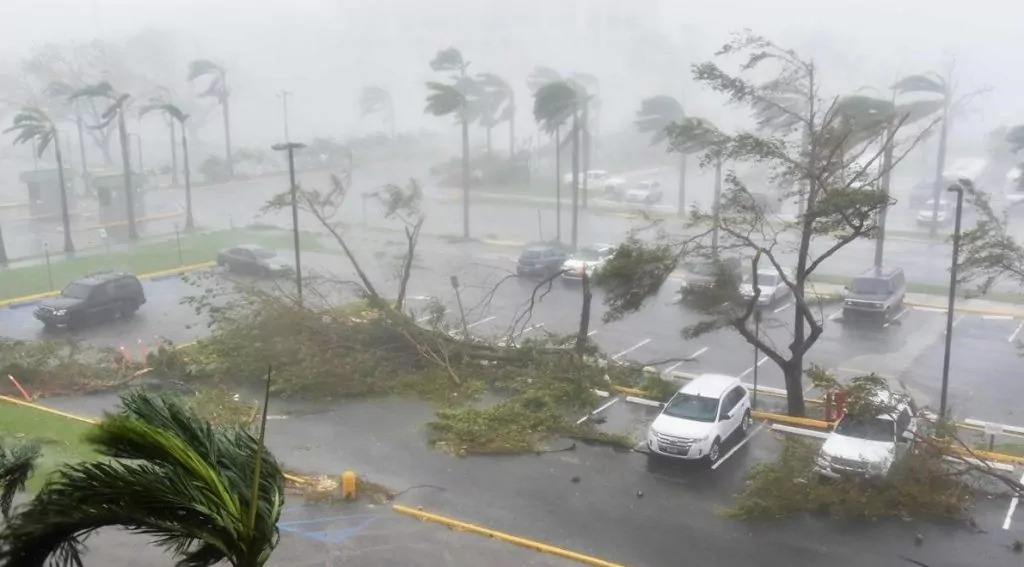
Cyclone Georges produced 12-foot waves and a minimum pressure of 971 millibars, according to records from Indomet. (Photo/AGN).
Georges formed as a tropical wave in mid-September 1998 and followed a path that crossed the Lesser Antilles on September 21 as a major hurricane. The following day, as a Category 3 hurricane with sustained winds of up to 200 kilometers per hour, it made landfall in the Dominican Republic in the province of La Altagracia, near Boca de Yuma and Saona Island, encompassing San Pedro de Macorís, La Romana, Monte Plata, El Seibo, Hato Mayor, Santo Domingo, San Cristóbal, Peravia, San Juan, Barahona, and Elías Piña, before exiting the country through the border with Haiti.
The phenomenon produced 12-foot waves and a minimum pressure of 971 millibars, according to Indomet records.
The Economic Commission for Latin America and the Caribbean (ECLAC) later estimated the total amount of damage at US$2.193 billion. Death tolls vary depending on the source, ranging from 283 to more than 600 people, mostly due to flooding and landslides in mountainous areas.
A Category 3 hurricane, on the Saffir-Simpson scale, should not by itself explain such a level of housing destruction, but the explanation lies, to a large extent, in the built fabric on which the phenomenon acted: a housing stock where, as documented by academic research on the subject, most of the country's housing solutions are built outside of any formal construction standards.
That same structural vulnerability, more than the force of the wind, was what made Georges the third major housing collapse of the century.
120,000 homes affected
The impact on the Dominican housing stock was recorded in President Leonel Fernández's own accountability speech before the National Assembly on February 27, 1999. According to that speech, 120,000 homes were affected by the hurricane.
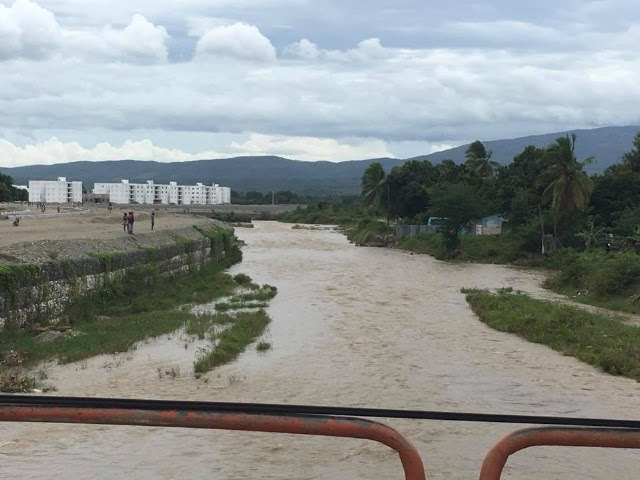
In 2017, residents of "La Mesopotamia" in San Juan de la Maguana were still demanding the completion of the apartments built after Hurricane Georges devastated the province. Source: Bohechío Digital.
The government reported, by that date, the repair of more than 80,000 of them and the construction of 4,488 temporary shelters for families whose homes were destroyed, distributed in Santo Domingo, San Juan de la Maguana, Azua, Bonao, San Cristóbal and La Romana.
The number of homeless people, according to later records, reached 185,000, of whom about 100,000 remained in shelters until mid-October of that year, while electricity and drinking water services were being restored.
The housing emergency was not the only front the government had to address simultaneously. The same 1999 speech details that the Agricultural Bank granted loans for more than 2.359 billion pesos during 1998, an 88% increase compared to the previous year, and that the Monetary Board declared a six-month moratorium on DEFINPRO loan payments for the affected productive sectors.
The president himself assured the population, in the days following the hurricane, that there would be no hunger in the country, and according to that same official account, that was indeed the case. In the weeks following Georges, addressing the housing crisis competed with the need to sustain agricultural production and prevent a food crisis.
Prefabricated houses and "megaprojects for the poor"
The government's housing response combined two speeds. The first, an immediate emergency measure: 10,000 low-cost homes built using a prefabricated system for rapid construction, designed and manufactured in Florida and North Carolina, intended for the same number of families who had lost their homes.
The second, medium-term reconstruction: the projects that the presidential speech of 2000 itself christened as "megaprojects for the poor", thousands of homes built in El Tamarindo, in the capital, and in San Juan de la Maguana and Bonao, for the direct benefit of the victims of Georges.
These megaprojects were also inserted into a time of historic expansion of the construction sector, which grew 18.2% during 1999, the year immediately following the hurricane.
The paradox of the period is thus clearly stated: while private capital was building towers and tourist projects at a rate that took the Dominican Republic to first place in per capita cement consumption in Latin America and the Caribbean, the State was building, with prefabricated panels brought from the United States, emergency housing for 10,000 families who had lost everything.
The debt Georges inherited and the debt he left behind
When Georges struck the country, the National Housing Institute (INVI) had still not closed the files opened by David two decades earlier. The Los Barrancones project, initiated in 1979 for the victims of that hurricane, was only announced as "near completion" in the 1998 presidential address, months before Georges added a new layer of housing emergency to an infrastructure already burdened by unresolved issues.
That pattern, each major hurricane leaving a stock of emergency housing that the next administration inherits half-built, is perhaps the most persistent thread in the Dominican housing history of the 20th century.
San Zenón left behind a Ciudad Trujillo rebuilt according to the dictator's narrative. David left behind Los Barrancones. Georges left behind El Tamarindo and the 10,000 prefabricated homes, whose medium- and long-term durability as a permanent housing solution, beyond the initial emergency, is not part of the official assessment in any subsequent speech.
With Georges, the country closed the 20th century confirming a structural vulnerability that no cycle of economic growth, however vigorous, managed to resolve: that of social housing that is built, mostly, as a response to catastrophe, and not as a sustained policy of prevention.
That diagnosis, and the shift towards new market mechanisms that Leonel Fernández's own government introduced during those years, is the subject of the next report in this series.
Sources: Accountability speeches by President Leonel Fernández before the National Assembly (February 27, 1999 and 2000), published in The Modernization of the Dominican Republic: Memoirs of a Management 1996-2000; Dominican Institute of Meteorology (Indomet), statements by its director Gloria Ceballos cited by Diario Libre and El Nacional; Economic Commission for Latin America and the Caribbean (ECLAC), damage estimate of Hurricane Georges.
Recommended readings:







