


SANTO DOMINGO.- In the midst of a new geoeconomic and geopolitical context, the countries of Latin America and the Caribbean face an unprecedented demographic change that poses multiple challenges for public policies and development in the region.
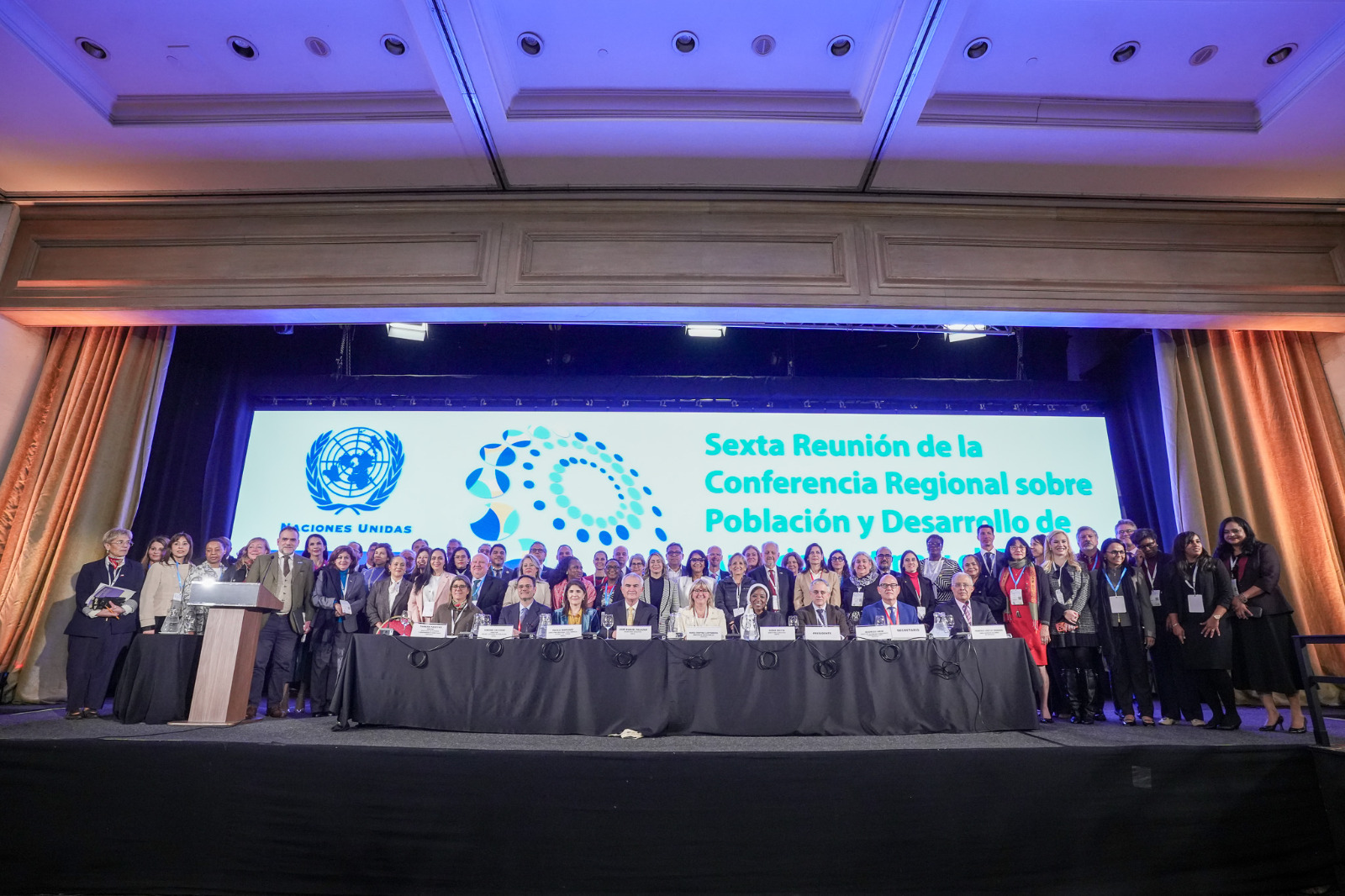
This reality demands overcoming fragmented responses and moving towards sustainable state policies over time, authorities agreed today during the opening of the Sixth Meeting of the Regional Conference on Population and Development, which is being held until Thursday, August 20 in Montevideo, Uruguay.
At the opening of the meeting, which brings together more than 600 people, the participants reaffirmed that the Montevideo Consensus is the regional roadmap on population and development, as well as an essential framework for placing human rights at the center of public policies.
The Conference was opened by José Manuel Salazar-Xirinachs, Executive Secretary of the Economic Commission for Latin America and the Caribbean (ECLAC); Diene Keita, Executive Director of the United Nations Population Fund (UNFPA); and María Cristina Lustemberg Haro, Minister of Public Health of Uruguay.
“This beautiful city of Montevideo hosted the First Meeting of our Regional Conference in 2013, where the countries adopted the Montevideo Consensus on Population and Development. The world has changed a great deal since then, not only due to technological, environmental, and political trends, but also due to real upheavals that have transformed geopolitics, globalization, and the world order,” stated José Manuel Salazar-Xirinachs in his opening address.
Demographic changes taking place in the region
The executive added that the demographic change the region is undergoing is characterized by a series of trends, including the reduction in the fertility rate and the adolescent fertility rate, the increase in life expectancy, the marked aging of the population, the reduction in household size and the reconfiguration of family types, the growing international migration flows and the advance of urbanization.
“These demographic trends pose multiple and clear challenges for public and development policies. To address these, countries need a forward-looking perspective and the capacity to respond to anticipated scenarios,” he stated.
Consequences of demographic trends
The Executive Secretary of ECLAC emphasized that the consequences of demographic trends do not apply only to specific issues such as health, education, pensions, or care. They represent structural transformations that reshape the nature of social contracts and challenge governance capacities.
“Longevity means that in our societies at least six generations will increasingly coexist: young children, school-age children, young people, adults, older people, and people over 80. Never before have so many generations lived together for so long, and each has slightly different demands and expectations,” he stated.
“The true wealth of our region lies in our ability to inhabit and empower a shared plurality,” highlighted José Manuel Salazar-Xirinachs.
UNFPA Executive Director Diene Keita stated that while demographic change is inevitable, it is not a cause for pessimism. “It is a call to lead differently, to plan further in advance, and to invest more wisely in people to ensure the prosperity of future generations,” she said.
“Latin America and the Caribbean have long demonstrated that demographic change can be addressed without fear, with solidarity, based on data, and with an unwavering commitment to human rights. The world has much to learn from this region,” he added.
Warning about deep inequalities
Minister María Cristina Lustemberg warned that deep inequalities, new forms of exclusion, and emerging challenges persist, requiring innovative and sustained responses. “Demographic transformations, climate change, migration, territorial gaps, gender inequalities, and the impacts of economic and health crises compel us to renew our commitments,” she stated.
In that context, he stressed that the Sixth Regional Conference on Population and Development “constitutes a privileged space to exchange experiences, evaluate the progress achieved, recognize the challenges that remain and strengthen a common agenda based on cooperation, evidence and respect for the diversity of our national realities and the regional reality.”.
During the opening session, the following were also present: Mario Lubetkin, Minister of Foreign Affairs of Uruguay; Tamara Paseyro, Minister of Housing and Territorial Planning of Uruguay; Paula Narváez, Regional Director of UNFPA for Latin America and the Caribbean; Rodrigo Arim, Director of the Planning and Budget Office (OPP) of Uruguay; Francisco José Coy, Ambassador of Colombia to Uruguay; and Luis Fidel Yáñez, Secretary of the ECLAC Commission.
During the intergovernmental meeting, participants will discuss the effects of demographic change in Latin America and the Caribbean and analyze the progress, challenges, good practices and current priorities for the implementation of the Montevideo Consensus on Population and Development.
Recommended readings:
- These were the Latin American and Caribbean countries with the highest FDI inflows in 2025, according to ECLAC
- New ECLAC projections raise the Dominican Republic's growth forecast from 3.6% to 4% for 2026
- The Dominican Republic continues to be among the countries leading growth in the region, according to a report by ECLAC







