


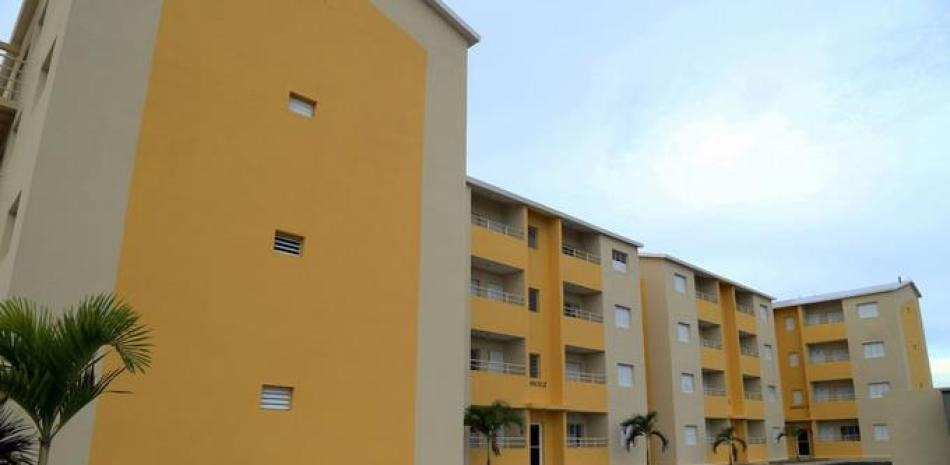
Between 2004 and 2010, INVI documented eighteen projects under that brand, spread throughout the country, although almost half of the solutions delivered were temporary homes made of wood and zinc
SANTO DOMINGO. – If Invivienda was the name that marked the housing policy of Santo Domingo between the eighties and the first decade of the two thousand, Villa Progreso was the brand that the National Housing Institute used to identify a good part of its relocation projects during the second government of Leonel Fernández.
And this is revealed in an institutional report from INVI itself, corresponding to the period 2004-2010 and included in the study by Ciudad Alternativa on the country's housing policy, which allows for the reconstruction of eighteen of these projects with their names and locations.
The list, scattered across much of the national territory, includes Villa Progreso Sabana Yegua, in Azua, with 64 families, Las Tablas, in Baní, with 112, and El Cerro, also in Baní, with 94. In Monseñor Nouel there were two projects, Bonao, with 208 families, and Piedra Blanca, with 64. San Cristóbal concentrated the largest individual project called Villa Progreso, with 416 families, in addition to another project, this time under the name of Villa Altagracia, with 160 more families.
In Villa Altagracia itself, a third project, identified as Pucela SA and Tormes, was implemented, serving 100 families. La Vega received the Ranchito project, with 144 families, and Nagua the Matancita project, with 206. San José de Ocoa added two projects, Sabana Larga and Arroyo Palma, with 64 and 96 families respectively. La Altagracia contributed the El Duey project in Higüey, with 79 families, and the province of Santo Domingo the smallest of all, María Auxiliadora, with 19.
The largest project on the list was located in Santiago, under the name La Herradura, with 512 families, more than a tenth of the total reported. Constanza closes the list of projects identified by location with La Dólara, serving 96 families. Adding these sixteen projects together, the total reaches 2,434 families.
The INVI report adds, however, two additional categories of national scope that raise the total reported to 5,391 families: 621 rural homes built in different parts of the country, and 2,336 units described as homes made of wood and zinc, also spread throughout the national territory.
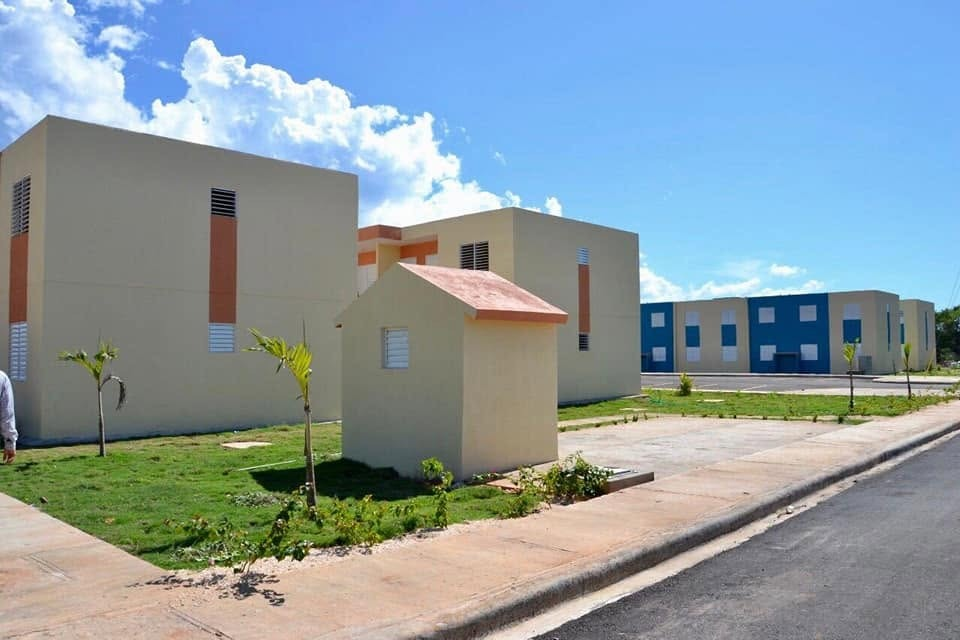
Wooden and zinc houses alone represent 43.3% of all families that INVI reports as having been served through the Villa Progreso program between 2004 and 2010. This type of housing solution is considerably cheaper and more temporary than a house made of cinder blocks and concrete, and the institutional report from which this data comes does not specify whether these units were part of a transitional housing strategy prior to a permanent solution, or whether they remained the final solution for these families. Ciudad Alternativa does not delve into this distinction in its research.
What the report does establish is that none of these eighteen projects were aimed at families specifically affected by storms Noel and Olga, which occurred in October and December 2007.
According to the same investigation, the care provided to these affected families was left out of INVI's regular programming for much of this period, a gap that the organization itself documented years later when studying the shelters that, in some cases, had already been functioning as permanent housing for more than a decade.
Sources: National Housing Institute (INVI), performance report 2004-2010, cited in Ciudad Alternativa, “The Marks of Housing Policy: Housing, Human Rights and Taxation in the Dominican Republic, 2000-2016” (Santo Domingo, September 2017), Chapter III, Table 38. | Verdeja, Andrea, “Situation of public policies for housing reconstruction in communities affected by hydrometeorological phenomena in the Dominican Republic (1979-2013)”, Oxfam and Ciudad Alternativa, Santo Domingo, 2013.
History of Social Housing in the Dominican Republic 2004-2012
Recommended readings:







