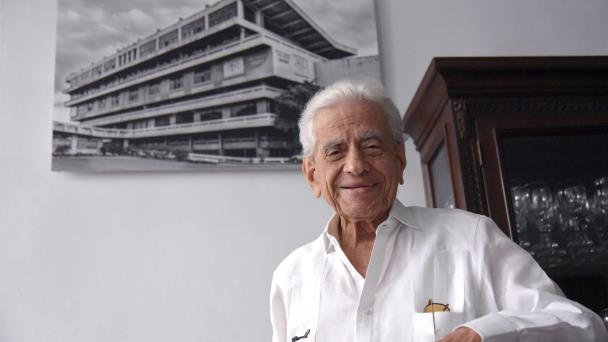
SANTO DOMINGO – Dominican architecture lost one of its most influential figures this Tuesday. Architect Francisco Manuel “Cuqui” Batista Bisonó passed away at the age of 101, leaving behind a career spanning more than eight decades dedicated to transforming cities, training generations of professionals, and conceiving architecture as a tool at the service of people.
Born on June 6, 1925, in Santiago de los Caballeros, Cuqui Batista played a pivotal role in the country's urban development. According to the biographical profile published by Construmedia, his signature style is evident in some of the Dominican Republic's most iconic institutional, cultural, educational, and urban projects, many of which remain integral to the daily lives of thousands of Dominicans.
More than just a building architect, he was a thinker about the city. According to testimonies gathered by the media outlet in a special interview conducted in 2025, those who worked alongside him remember him as a rigorous, meticulous, and deeply ethical professional, convinced that every project, regardless of its scale, should respond to the needs of society and respect the environment where it was built.
His commitment to architecture also transcended his professional practice. According to the obituary published by the Dominican College of Architects (CAD), Cuqui Batista was one of the founders of that organization and played an active role in advocating for an independent professional association.
A visionary who left his mark on cities
After moving to Santo Domingo in 1945 to study Architecture at the Autonomous University of Santo Domingo (UASD), Batista began a career that would make him one of the main references of modern Dominican architecture, according to the Presidency.
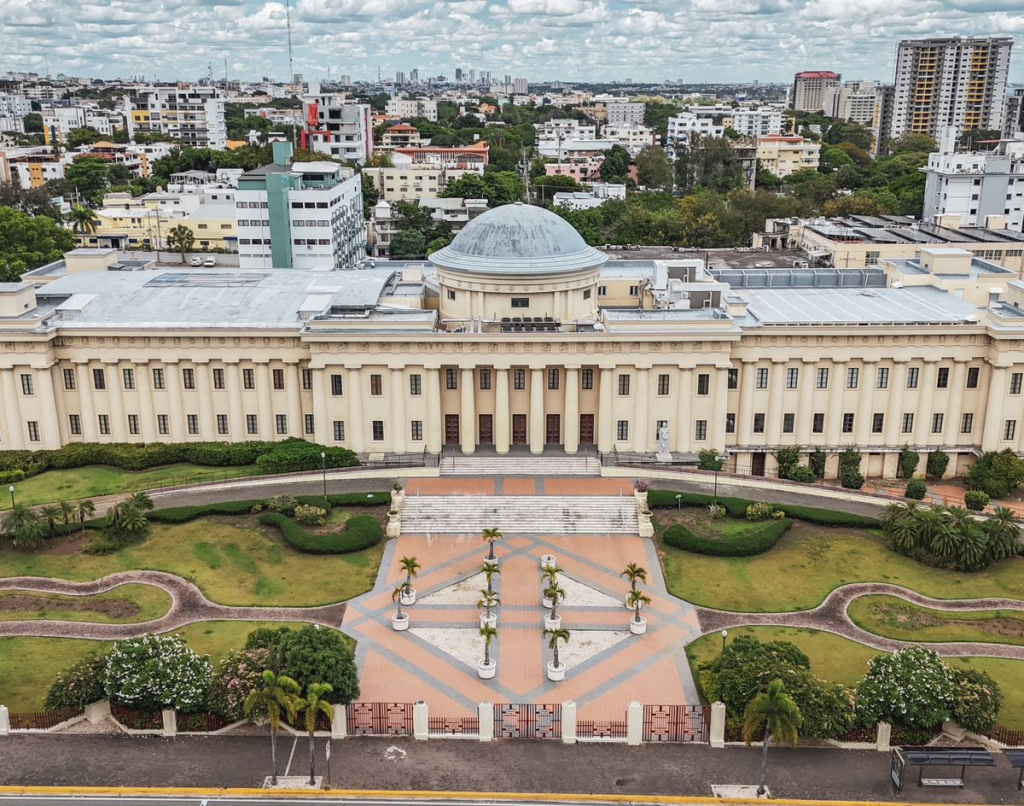
According to historical information compiled by the Ministry of Culture, throughout his professional career he participated in the design of important buildings and infrastructure that shaped the country's urban development. Among these, the Palace of Fine Arts stands out, considered his most emblematic work and one of the leading examples of modern national architecture.
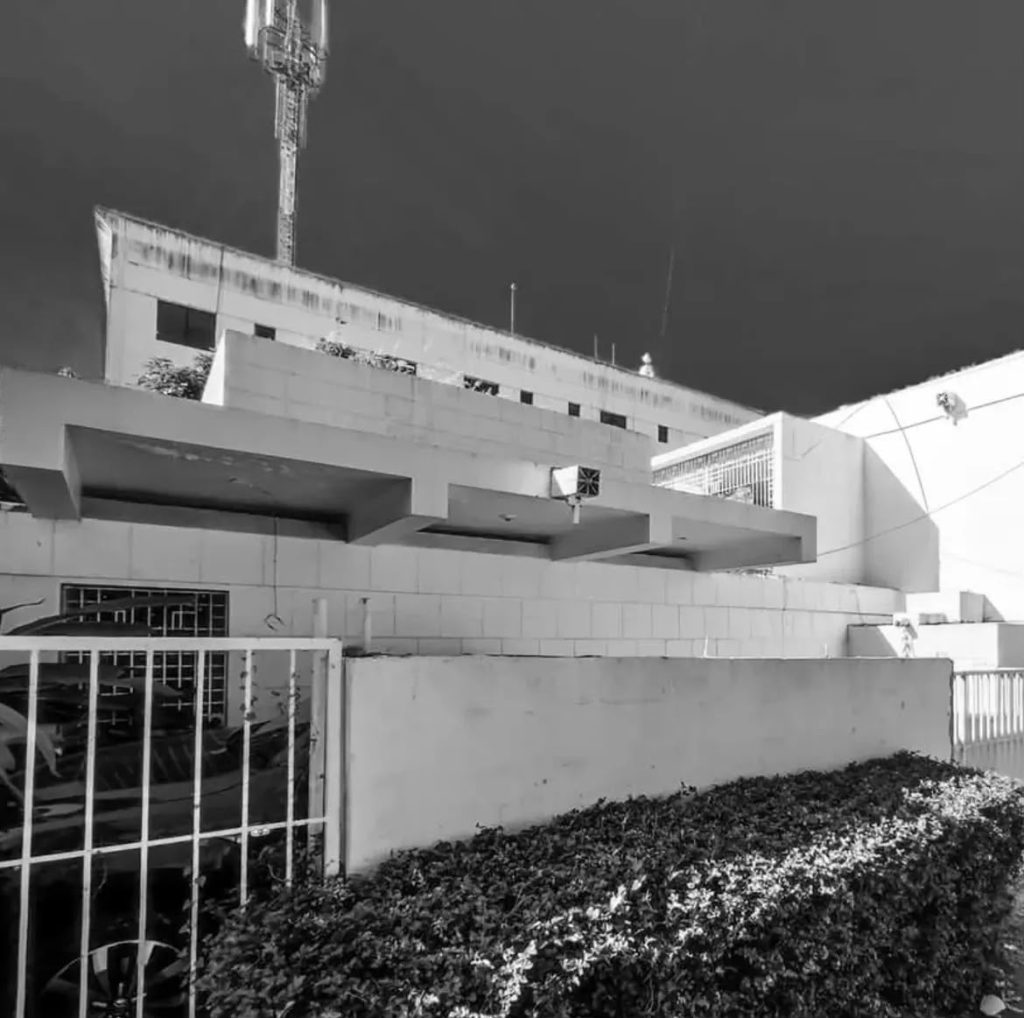
His legacy also includes the design of the first fire station in Santiago, the Social Christian Reformist Party building, the Professional Building on Las Carreras Avenue, part of the first buildings of the Pontifical Catholic University Madre y Maestra (PUCMM) in Santiago, as well as 26 bridges on the Duarte Highway between Santiago and Santo Domingo.
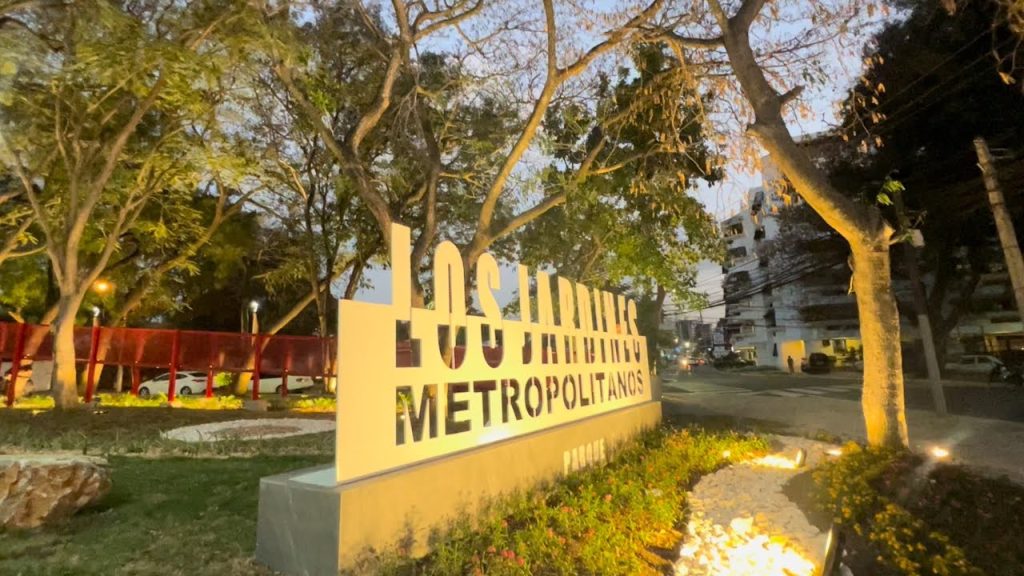
In Santiago, his urban planning vision was also reflected in projects that helped redefine the city's growth, such as the Los Jardines Metropolitanos and Las Colinas urbanizations, as well as the Los Jardines Shopping Center, a building that currently houses various public offices.
His professional output also included more than twenty urbanizations, dozens of institutional, commercial and religious buildings, housing and road projects, consolidating a body of work that transcended architecture to influence the urban planning of the country.
Architecture understood as a service
Far from conceiving architecture solely from an aesthetic perspective, Cuqui Batista defended a vision based on functionality, climate, structural safety, and commitment to the city.
According to Centro Leon, he was a lifelong student of urban planning and the major movements in international architecture. He admired the ideas of Walter Gropius, Le Corbusier, and Ludwig Mies van der Rohe, but insisted that each project should respond to the Dominican reality and not simply copy foreign models.
His thinking was reflected in numerous writings and essays, where he analyzed the challenges of urban growth and questioned solutions that, in his opinion, affected the quality of life of citizens.
Even after reaching a century of life, he continued to create sketches and develop proposals aimed at safer buildings in the face of seismic events, demonstrating that his intellectual curiosity remained intact until his final years.
The teacher who shaped generations
Beyond his works, those who shared time with Batista agree that a fundamental part of his legacy lies in the people he helped to shape.
For decades he transformed his studio into a learning space where young architects found not only technical teachings, but also a work philosophy based on honesty, professional rigor and social responsibility.
His humility was reflected in a phrase he frequently repeated: "I have been a simple cartoonist all my life," an expression collected by Construmedia during an interview published in 2025. However, that definition contrasted with the recognition he received from both colleagues and national and international institutions.
One of the most significant moments of his career occurred in 2025, when the Pontifical Catholic University Madre y Maestra (PUCMM) awarded him an honorary doctorate. As the university during its 111th graduation ceremony at the Santiago campus, the recognition was in response to his extraordinary contributions to Dominican architecture and his influence on the development of the university campus, where he designed some of its first buildings and the original master plan.
A century of recognition
The significance of his work has been recognized over the last few decades by various institutions.
According to historical information about his professional career, in 2006 he was declared a Living Heritage of Dominican Architecture by the Society of Architects of the Dominican Republic. He subsequently received the José Ramón Báez López-Penha Award as an Icon of Dominican Architecture, recognition from the Harry Walter Palm Foundation, the Dominican College of Engineers, Architects and Surveyors (CODIA), and the Ministry of Culture for his contributions to the Palace of Fine Arts. He was also honored at the dedication of the XII International Biennial of Architecture and Urbanism in 2024 and received recognition for Outstanding Career Achievement at the 2025 Construgala Awards.
These tributes reflected the existing consensus within the sector on the scope of a career that spanned more than eight decades and helped to define an important part of the national architectural landscape.
A legacy that remains standing
With the death of Francisco "Cuqui" Batista, the life of one of the architects who contributed most to thinking about and building the contemporary Dominican Republic comes to an end.
His name will remain associated with works such as the Palace of Fine Arts, the first buildings of PUCMM, the Santiago Fire Station, the bridges of the Duarte Highway, urbanizations that boosted the growth of Santiago and numerous public and private projects that continue to operate.
But perhaps his greatest legacy lies not only in concrete, steel, or blueprints. It also resides in a way of understanding architecture as a commitment to people, to cities, and to future generations.
Francisco Manuel «Cuqui» Batista Bisonó (1925-2026) leaves behind a body of work that will continue to be part of the Dominican landscape and the history of national architecture.
Recommended readings: