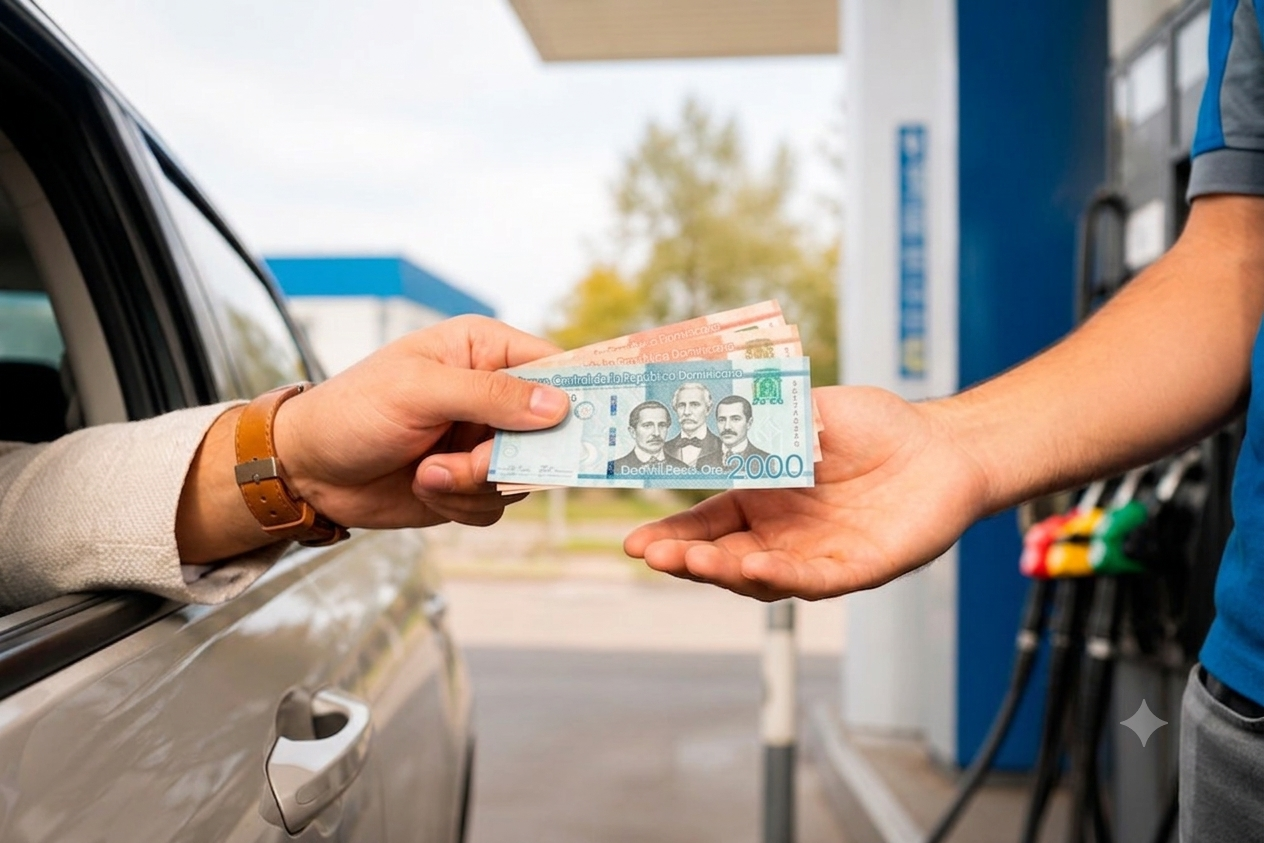
The association announced it will wait for a meeting with government representatives before implementing the removal of electronic payment terminals, a measure that could transform the way people pay for fuel
SANTO DOMINGO – The possibility of hundreds of gas stations ceasing to accept card payments has been temporarily put on hold. The National Association of Gasoline Retailers (Anadegas) announced Monday morning that it will postpone the removal of card readers from its affiliated stations while it holds talks with the Dominican government to find a solution to the conflict over the commissions they pay for electronic transactions.
The meeting is scheduled for tomorrow, Tuesday, and will include the participation of the Ministry of Industry, Commerce and SMEs (MICM), representatives of the Executive Branch and actors linked to the fuel and financial services sector.
The organization had previously announced the mass removal of payment terminals at more than 780 affiliated stations, arguing that the commissions charged by the companies managing the payment terminals have become unsustainable for retailers.
According to Juan Elías Pérez, president of Anadegas, gas stations receive an approximate gross margin of RD$25 for each gallon of fuel sold, of which about RD$7 is allocated to paying commissions associated with credit and debit card transactions.
"We don't want to abruptly harm consumers. We are waiting for dialogue and, depending on the outcome, we will set the date on which the measure would be implemented," Pérez stated.
The leader reiterated that the union's proposal consists of replacing the current percentage scheme with a fixed fee of approximately 30 cents per transaction, considering that the current model affects the profitability of retailers.
A conflict that could impact thousands of consumers
The eventual elimination of the verification terminals would represent a significant change for thousands of drivers who use bank cards as their main method of payment when refueling.
Although Anadegas assures that the measure does not seek to affect consumers, it acknowledges that the debate brings to the table a structural problem related to the costs of electronic payment methods and their impact on sectors with regulated margins.
The trade association maintains that it has already applied similar measures in the past with certain terminal suppliers and affirms that it will keep the channel of dialogue open before adopting any final decision.
The negotiation enters a decisive stage
Tomorrow's meeting could determine whether affiliated stations maintain the electronic payment service or if they finally move towards the gradual withdrawal of the payment terminals.
Meanwhile, the more than 780 stations grouped in Anadegas will continue to operate normally and accept card payments, while awaiting negotiations that will allow them to reach an agreement that avoids abrupt changes in one of the services most used by Dominican consumers.
Recommended readings: