


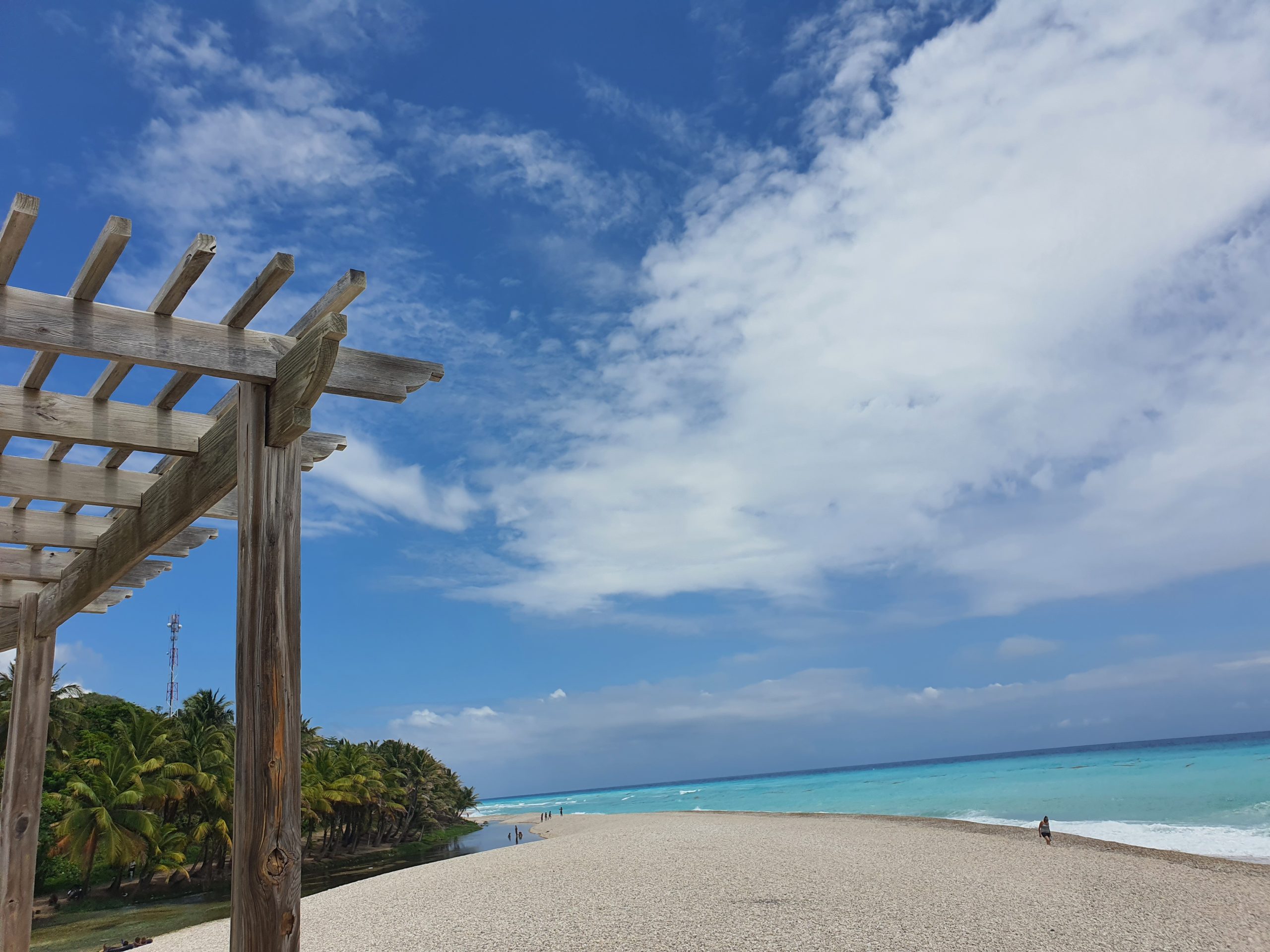
Sometimes rugged, always vibrant, its tourism history has been slow, marked by pioneering attempts, failed projects and a nature that commands respect.
If there is one destination in the Dominican Republic that has almost everything, it is Barahona: an airport that languishes without receiving the promised planes from Europe, beaches of polished stones and gray sands like San Rafael, El Quemaíto and the shortest river in the country, Los Patos, which comes down from the mountain to meet the sea.
Barahona is a place of warmth and friendliness, nestled in the Sierra de Bahoruco mountains, offering hiking and birdwatching opportunities, and producing some of the country's finest coffee in its coffee plantations. Nature reserves with pine forests and mist, the jewel of larimar, hot springs, a rich sugarcane tradition, and lagoons complete the landscape, along with the living memory of María Montés, the "Queen of Technicolor.".
One of the most breathtaking landscapes is found along the Paraíso highway, where the mountains meet the turquoise sea, creating a picture-postcard contrast. There are also mysteries: the Hoyo de Pelempito, over 700 meters deep with a unique microclimate; the Magnetic Pole, where vehicles seem to defy gravity; and the legend of the Ciguapa. All of this blends science, magic, and tourism in Barahona, sometimes rugged, always vibrant.
Airport without planes
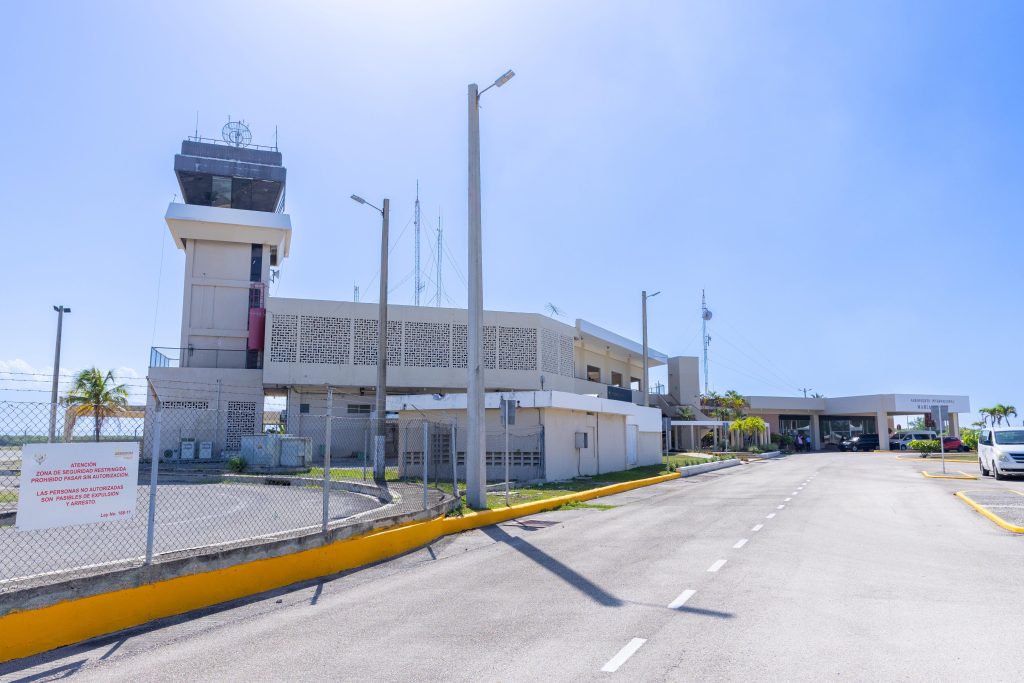
María Montez International Airport. (IDAC).
In 1959, the Hotel Guarocuya opened as part of a state strategy to promote tourism. Family-run accommodations and guesthouses also emerged. In the 1990s, the Occidental chain's Hotel Riviera resort was a landmark; it closed in 1999 and has operated as the Hotel Costa Larimar since 2004. Casa Bonita, the first mountain lodge, paved the way for nature and adventure tourism, nestled among coffee plantations and offering ocean views.
The Barahona Tourism Cluster brings together the efforts of hoteliers, guides, artisans, and authorities to achieve tourism with sustainable development.
The María Montés International Airport cost US$30 million and was inaugurated on April 27, 1996, but it never achieved regular flights. In 2011, RD$30 million was invested to restore the runway, and in 2020, US$200 million was announced for an aircraft maintenance center for Boeing. Today, it operates only with private and charter flights.
In March 2024, Luis José Chávez, communications director of the Dominican Institute of Civil Aviation (IDAC), announced that the airport would be transformed into an aeronautical complex, a move publicly celebrated by Polibio Schiffino of Casa Bonita, who said it would "contribute to the area's tourism development." More than a year later, nothing has happened.
Two journalists, Tomás Aquino Méndez and Benny Rodríguez, have denounced the historical neglect of the south. Rodríguez insists that the airport is a “white elephant” whose operation would benefit eight provinces and balance development with Pedernales. “It’s less than an hour away, and tourists would have those wonderful views, the lookout points, not to mention the jobs that would be created, just in ground transportation,” says the journalist, a native of Barahona.
Aquino Méndez warns about the political abandonment of the Enriquillo Region and the lack of advocacy from senators and representatives. Both agree: without genuine political will, Barahona will remain excluded from the major tourism route.
Pirate History
The history of Barahona is intertwined with the real piracy in the 17th-century Caribbean, when French and English pirates, including Roberto Cofresí, used the area as a refuge and took precious wood, aided by local lumberjacks who made their ranches on the beach, and thus the city was born in 1655, according to local historian José A. Robert.
Though vibrant, Barahona is not a picture-postcard destination, but rather a place brimming with life, myths, and history, awaiting the traveler seeking something different. It's a destination that grows at its own pace, leaving the Dominican south etched in memory and lingering in the soul.
Originally published in issue #12 of El Inmobiliario print magazine.






