


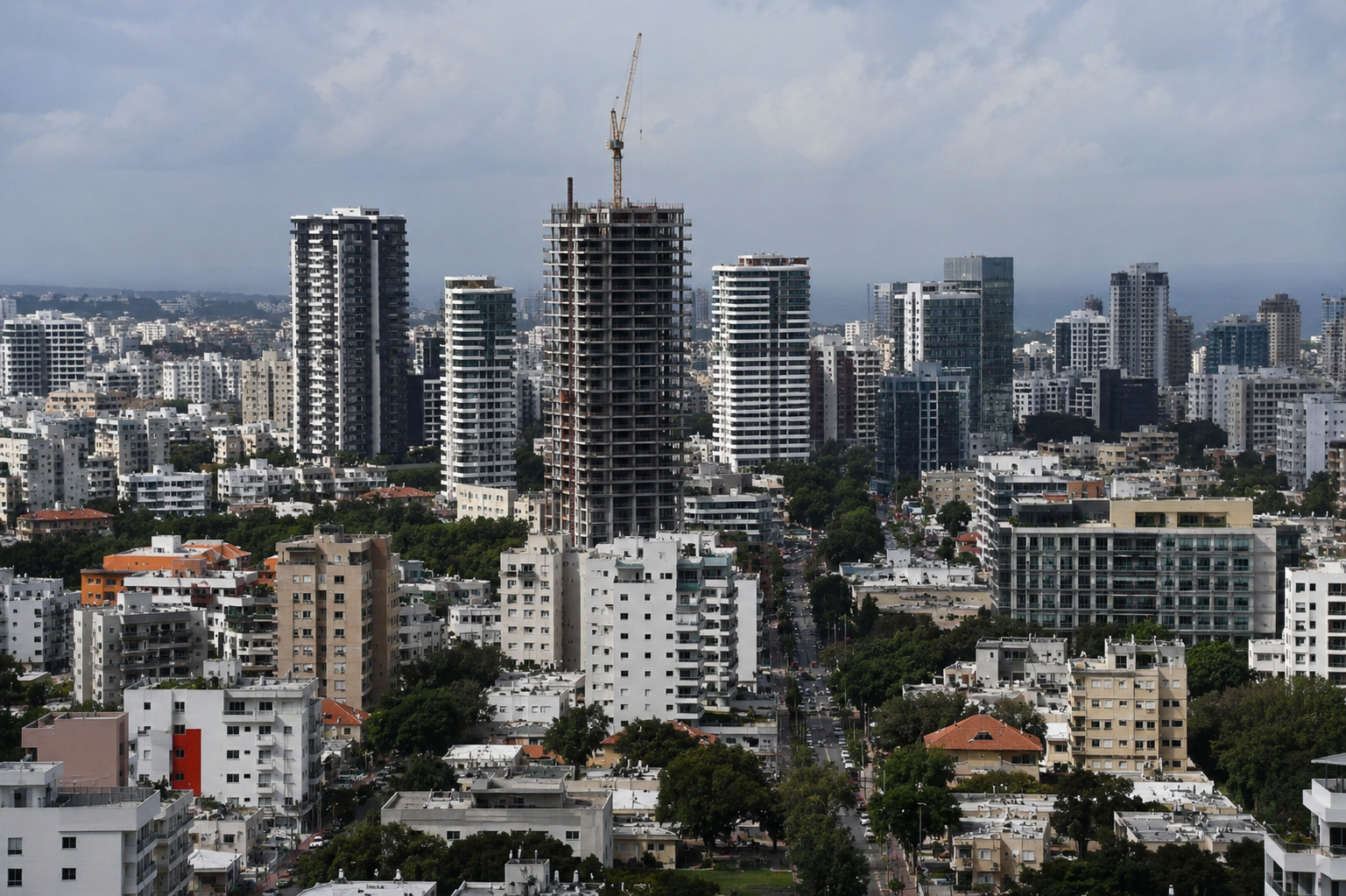
Of every ten active construction projects that the National Statistics Office (ONE) registered in the Metropolitan Region for the Building Supply Registry (ROE) 2026-1, more than seven do not reveal the source of the money used for their construction
SANTO DOMINGO. – According to the semiannual report, “77.4% of active construction projects do not have information on loan applications to finance construction,” and this information is shown in chart 15 on page 37. Only 7.4% of the total reported having taken out a loan; 15.2% said they had not applied for one.
Among the projects that did answer the question, 67.3% said they had not requested bank financing, which leaves construction as a mostly self-financed activity, according to the available data.
The same gap exists with the key variable of who manages the money for each project. The report indicates that “77.3% of projects lack information on whether their administration is carried out through a trust,” the legal structure created specifically to provide traceability and external oversight to the financing of real estate projects in the country.
Only 1.6% of active construction projects in the Metropolitan Region declared that they were under a trust; 21.0% said they were not, and in total, the ONE reports that 97.6% of registered active projects are of a private nature.
The figure of the trust
The trust referred to in the ONE report was created by Law 189-11 for theDevelopment of the Mortgage Market and the Trust, whose text is administered by the Superintendency of Banks (SB).
As described by the SB itself on its website, the law seeks to "create financial instruments that channel savings resources towards housing financing, especially low-cost housing," and requires trustees to maintain "separate or independent accounting" and to render accounts "no less than twice a year" to trustors and beneficiaries, under the joint supervision of the General Directorate of Internal Taxes (DGII), the Superintendency of Banks, and the Superintendency of the Securities Market.
To put it more clearly, it's the mechanism designed by the Dominican State itself to make the financing of a real estate project auditable. And, according to the ROE 2026-1, it's used by fewer than two out of every one hundred active projects in Greater Santo Domingo.
This lack of transparency is no small matter for the authorities responsible for overseeing the use of the financial system. The Financial Analysis Unit (UAF), the Dominican agency responsible for preventing money laundering, issued General Rule 03-18, which designates three types of entities as obligated to report suspicious transactions and apply due diligence: real estate agents, construction companies, and trust companies that do not provide services to financial institutions.
Among the obligations it imposes on construction companies and real estate agents are registration with the DGII, the designation of a compliance officer, the reporting of cash transactions equal to or greater than US$15,000, the reporting of suspicious transactions to the UAF within five business days and the preservation of documentation for ten years.
TheUAF General Standard 03-18 classifies construction companies, real estate agents and trust companies without banking ties as subjects obligated to prevent money laundering, precisely because of the risk that their operations serve for "the concealment, handling, investment or use" of illicit money.
The regulated financial system itself, meanwhile, shows that formal bank credit covers only a fraction of the sector. According to the Financial System Performance Quarterly Report of the Superintendency of Banks as of March 2026, the system's mortgage loan portfolio amounted to RD$451,161 million, with a weighted average interest rate of 11.7% and year-on-year growth of 13.3% in nominal terms.
It is an expanding portfolio, but it represents a small portion compared to the size of the real estate market reflected in the ONE's own records: if 92.6% of the active works in the Metropolitan Region do not report having requested a loan, either because they did not need it, because they did not qualify, or because the ONE did not obtain that information, the question of how it finances the rest of Dominican construction remains without an official answer with the data currently available.
Neither the ROE nor the statistics of the Superintendency of Banks allow us to establish how much of that construction without declared bank financing corresponds to legitimate family savings, remittances, reinvestment of profits from other businesses or capital whose origin has not been reported to any authority.
Establishing that proportion, and determining whether the information gap acknowledged by the ONE itself in its report coincides with the areas of greatest risk identified by the UAF, is, with the current public data, a pending task for the oversight of the sector.
Recommended readings:






