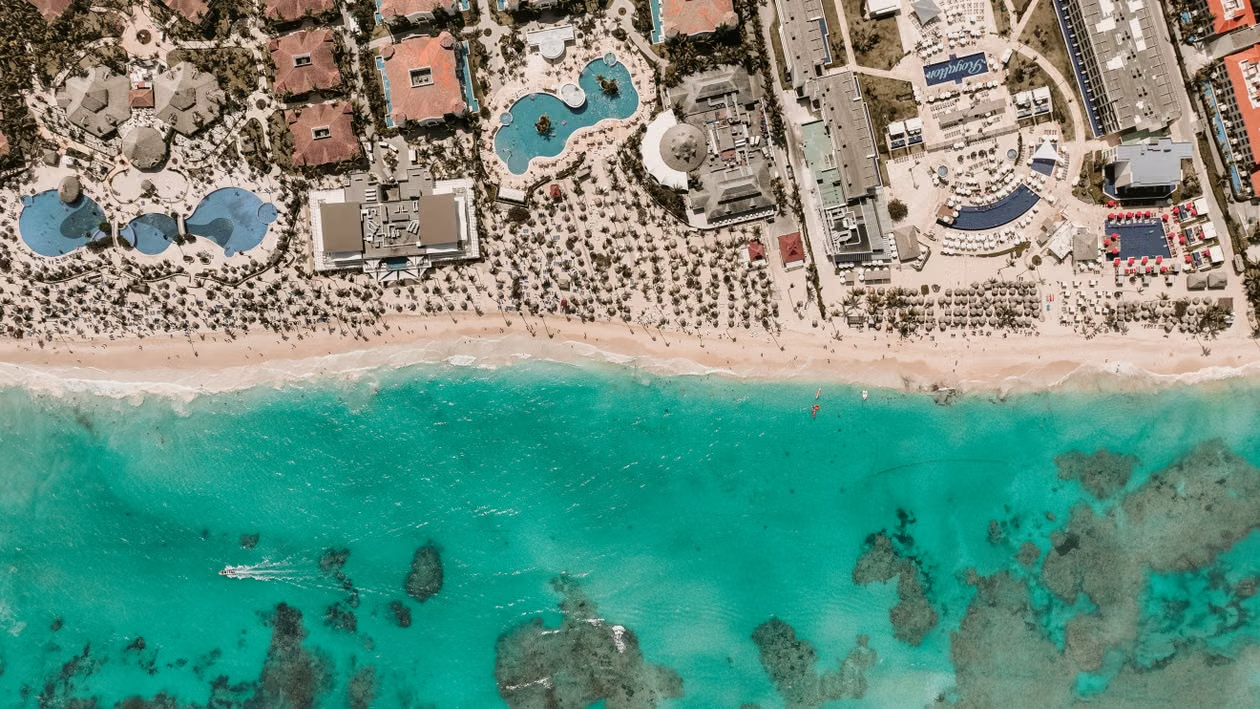
With this article we begin a series of four installments in which we propose a look at the future of development in the Dominican Republic from a perspective that transcends the traditional concept of tourist centers and raises the possibility of moving towards a more integrated and multipolar territory.
The main focus of this series will be real estate and territorial development, understanding tourism as one of the great engines capable of driving infrastructure, attracting investment, generating jobs and services and, as a result, creating new demands and opportunities for real estate appreciation.
Throughout the four installments we will analyze this vision from different realities of the national territory: first, the need to evolve towards a territorially integrated country; then, the East as a model that demonstrated that transformation is possible; the North facing the challenge of reinventing itself; and finally, the South as a new frontier with the opportunity to plan before growing.
Rather than talking about tourist destinations, in this series I propose to talk about territory, investment and development, and how the Dominican Republic can take advantage of what it has learned to expand its map of real estate and economic opportunities.
From tourist hotspots to a territory of opportunities
For decades, the Dominican Republic has developed various tourist destinations with remarkable success. Punta Cana is the most prominent example, but there are also La Romana-Bayahíbe, Puerto Plata, Samaná, and, more recently, Miches and Pedernales.
This model has been crucial in transforming the country into a regional tourism powerhouse. However, the next leap should be even greater: evolving from a country with isolated tourist hubs into an integrated tourism territory, capable of distributing investment, infrastructure, and real estate development across different regions.
It's not simply about bringing hotels to new places. Tourism must be understood as a catalyst for territorial transformation.
When an area begins to receive tourism investment, it typically needs roads, airports, energy, water, sanitation, telecommunications, and improved services. This infrastructure then facilitates the arrival of other capital.
Shops, restaurants, medical centers, professional services, and businesses spring up. Jobs appear. New residents arrive. The need for housing increases, and gradually, a larger real estate market takes shape.
That's why behind many successful tourist destinations there is also a story of real estate transformation.
But that evolution requires planning.
The real challenge isn't about building housing developments, hotels, and apartments around every natural attraction. It's about connecting territories and creating conditions for different economic activities to coexist.
The Dominican Republic has an extraordinary advantage: within a relatively short distance it has beaches, mountains, historic cities, important production centers, ports and international airports.
The territory can therefore become part of our value proposition.
Investment typically follows infrastructure and connectivity. And when both reach territories with untapped potential, one of the most interesting processes for the real estate sector can begin: the transformation of land value.
This also necessitates thinking about land-use planning. Because development doesn't simply mean building more. It means determining where to build, what densities to allow, what infrastructure will support that growth, and how to preserve the very attributes that make a territory attractive.
The Dominican Republic now has the opportunity to think about its development under a broader vision: East, North, South, Cibao and Santo Domingo forming part of an increasingly connected territorial economy.
And we don't have to imagine whether that model can work. There's already a region that has proven it.
The eastern Dominican Republic is probably the best laboratory for understanding how infrastructure, connectivity, investment, and real estate development can completely transform a territory. That experience will be the starting point of our next article (Sunday, September 13).
Recommended readings: