


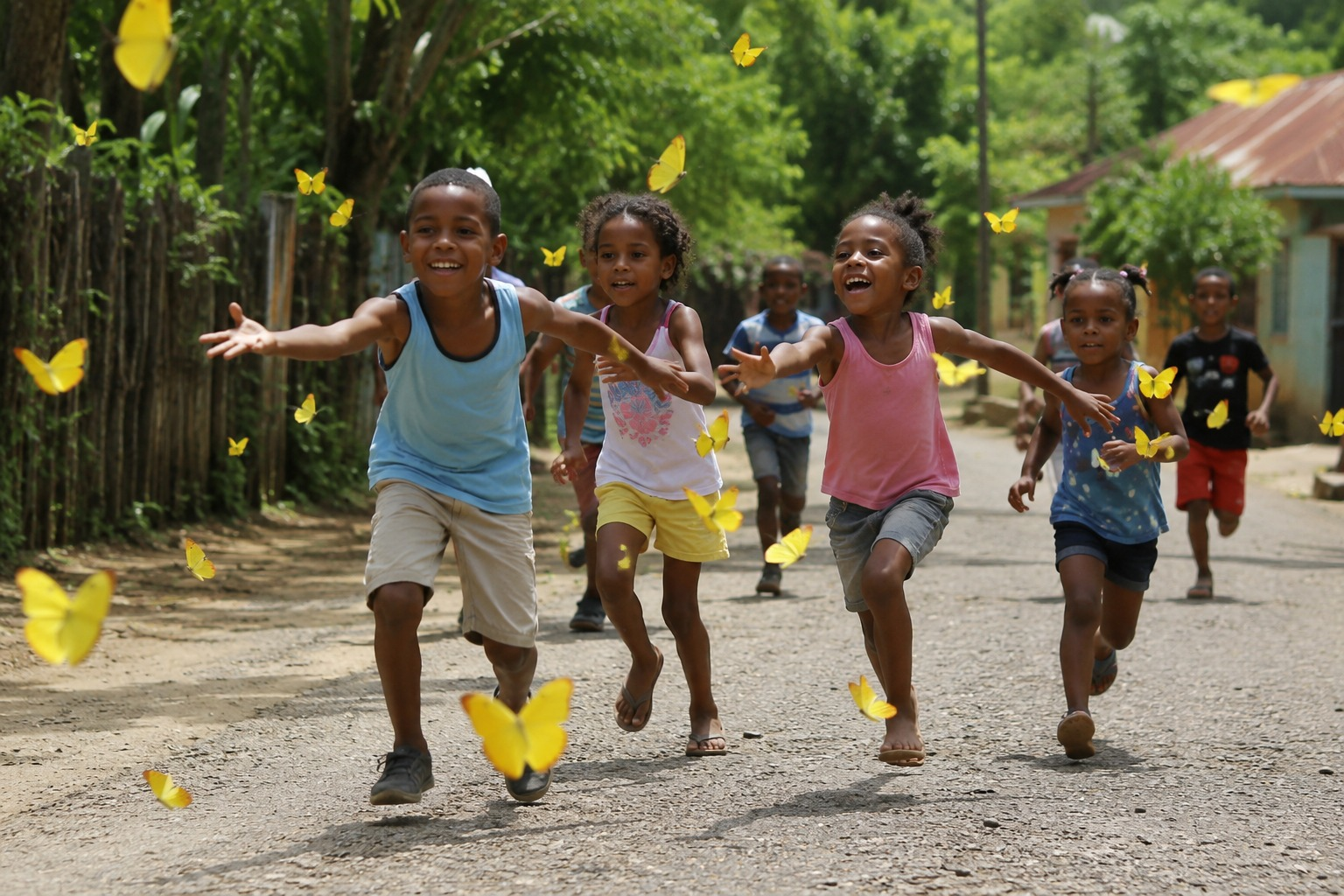
No one signed an extinction order. No one decided at a summit that they had to leave, and today, the children of the south and the capital don't know what it's like to run after a yellow cloud on June 24th. They don't have that memory in their bodies
SANTO DOMINGO. – Once upon a time, not too long ago, the arrival of summer was experienced in streets and fields alike, under the same sign, and it was not the heat, which in these latitudes is felt earlier and stays longer, but when they appeared on June 24, the day of Saint John the Baptist.
Hundreds of tiny yellow butterflies transformed the way children played in fields and cities. It was a yellow cloud, trembling, light as a collective sigh, descending upon the city and turning it into something else entirely. Something alive, joyful. So unique that they were christened "The Little Butterflies of San Juan," with that affectionate diminutive that Dominican Spaniards reserve for what they love.
They arrived right on time, as if they had their own calendar and knew that they were expected that day. The children, smiling, flushed, with their hands open as if they could grasp the very air, ran after them along the sidewalks, through the courtyards, along the curbs, in the paths through the sugarcane fields, in the tall grass, and in the alleyways.
They were agile, graceful, capricious. Flirtatious, they would almost let themselves be caught, then bend or rise at the last moment, with that insolence of knowing they were beautiful. To catch even one was a triumph worth recounting. Imagine, dear reader, what that must have been like in the field.
On the highways, the spectacle was of a different order of wonder. The migrations were so dense that cars had to stop. Not by law, nor by sign, but because the windshield was covered and there was no way to see.
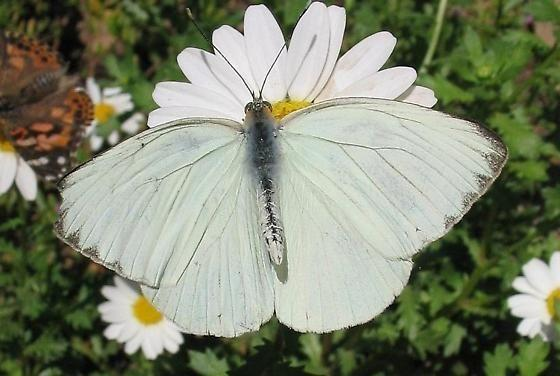
The drivers got out, poured water on the windshield, cleaned it with almost ritualistic slowness, and continued on their way. No one seemed bothered. It was part of summer, part of the tropics, even if that wasn't entirely clear.
That no longer exists
Biologist Eugenio Marcano, one of the most serious voices the country had on environmental matters, wrote it down with the simplicity of someone who has studied a phenomenon and understands its weight: that vision is now history that lives on in memory.
The reason, he said, is the disappearance of the forests with the plants these butterflies need to lay their eggs and feed their larvae. Without those plants, there is no cycle. Without a cycle, there are no butterflies. Without butterflies, June 24th is just another hot June day.
The species that starred in that flight—Ascia monuste, Kricogonia lyside, and Phoebis sennae with its intense sulfur yellow—didn't disappear for no reason. They disappeared because what sustained them disappeared: the forest edges, the riparian wildflowers, the open areas without herbicides.
The San Juan Valley, once one of the most fertile and biodiverse territories in the Caribbean, has spent decades surrendering that heritage to agricultural pressure, agrochemicals, and silent deforestation that doesn't make the headlines because it lacks the photogenic drama of a fire.
It wasn't a monumental tree that disappeared, nor a forest that someone could photograph burning. It was the wild shrubs along the roadsides, that low vegetation that grew without anyone planting or caring for it, on the edges of the roads, in the ditches, in the lands that were still called vacant lots.
Native plants such as the cañafístula (Senna and Cassia) and the donkey coffee or caper (Capparis) or the guatapanal (Caesalpinia coriaria) have disappeared, which are essential for these species to complete their life cycle.
The butterflies of San Juan needed those plants to lay their eggs and feed their larvae. Without them, the cycle is broken. And those plants disappeared in the same silent way that all things that no one values do: a herbicide here, a clearing there, a plot of land that was cleaned because clean looks good.
No one mourned them. No one missed them. Until one June 24th, the butterflies stopped arriving, because the world they needed to exist was taken away from them, and they, with the honest fragility of the small, left.
No one signed an extinction order. No one decided in a meeting that the San Juan butterflies had to leave.
Today, children in the south and the capital don't know what it's like to run after a yellow cloud on Saint John's Day. They don't have that memory in their hearts.
And what seems like a minor loss—what are butterflies compared to all that worries us?—is actually a sign of something much more serious: an ecosystem sending a message in the only language it has left: silence. Absence. The clean windshield at the end of a journey on June 24th.
Recommended reading:







