


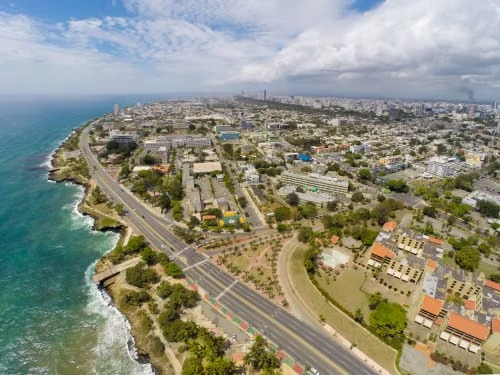
In 1990, UNESCO declared it a World Heritage Site, as it is the oldest group of permanent European buildings in America
SANTO DOMINGO. – The first settlement was called Nueva Isabela and occupied the eastern bank of the Ozama River, founded around 1496 by Bartolomé Colón. It was short-lived: a hurricane in 1502 devastated much of the settlement and the fleet that was waiting to sail to Spain. The only surviving remnant of that first attempt is the Ermita del Rosario, located in what is now Villa Duarte.
And what was most enduring was not the place, but the idea of building a city: Nicolás de Ovando, according to historians José Guerrero and Roberto Cassá, who also cannot agree on whether the founding was in 1496 or 1497, did not rebuild where he had fallen; he crossed the river and started again on the other side.
This Tuesday marks 530 years since that refounding, although no one can say for sure the exact date. Historians are divided between 1496 and 1497 without reaching a consensus, and probably never will.
What is beyond dispute is that here began not only the first permanent European city in the Americas, but a city planned and designed before it was inhabited. Ovando laid out streets at right angles, measured building plots, and a main square as its political and religious heart. Nothing was left to chance.
Five centuries later, the architect Eugenio Pérez Montás would read in that layout something more than urban planning: a way of understanding how one should live in the Caribbean.
In that plan from five centuries ago, the slopes channeled the water, the blocks helped to circulate, the interior courtyards and the thick coral stone walls solved what no European manual had foreseen: the sun, the humidity, the tropics.
The Casa del Cordón, from 1507, and the Primatial Cathedral stand as stone witnesses to that first attempt at a lasting city, which was not just architecture, but from then on, a way of building a city. But no plan can fully contain life.
Three urban layers
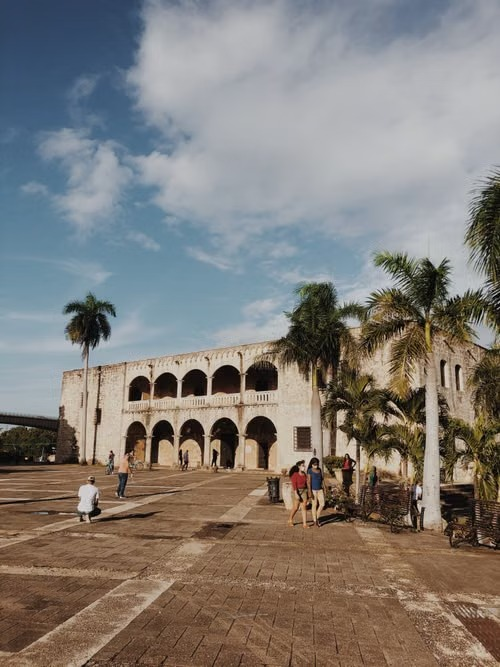
The ordered city and the spontaneous city came into being together. (Photo/Pexels).
A few meters from Ovando's perfect grid, another city began to grow, one that no one drew: Santa Bárbara, linked to the port and the river trades, born without rule or compass almost at the same time as the walled town.
The ordered city and the spontaneous city came into the world together, and that coexistence, which at the beginning of the 16th century may have seemed like an accident, ended up being the trademark of Santo Domingo.
Urban planner Erwin Cott summarizes it in three layers that do not replace each other but coexist: the founding city of the colonial grid, the modern city of Malecón, Gazcue, Naco and Piantini, and the city of migrations, the one that climbed ravines and river margins in neighborhoods like La Ciénaga and Los Guandules.
Frank Moya Pons describes it as a capital city that grew faster than the state could plan. The result is a city that, seen from the air, appears as a single blob, but which, from the street, sheds its skin every few blocks: centuries-old houses next to homes built by hand, block by block; pedestrian streets next to streets where the pedestrian is almost an intruder.
And amidst that fertile chaos, the Colonial City remained for centuries an island of equilibrium. Not by chance, Pérez Montás insisted, its value never lay solely in the Cathedral, the Alcázar, or the Ozama Fortress taken individually, but rather in the relationship between all those elements with inhabitants and visitors, in the city as a whole.
That balance survived earthquakes, fires, military occupations, and the rampant growth that surrounded it.
In the 21st century, something disappears
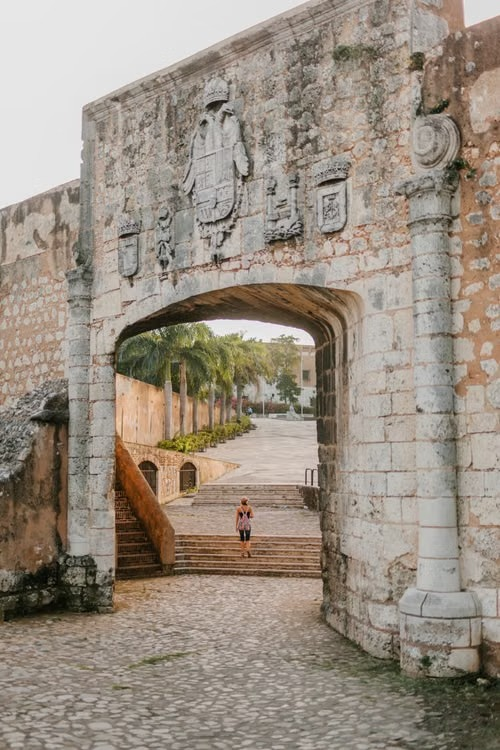
It's not about denying the need to intervene in a center that's over five hundred years old, but about not forgetting the true lesson of Santo Domingo. (Photo/Pexels).
The true value of the Colonial City was never in its monuments, but in the fact that it remained, simply, a neighborhood: with grocery stores, workshops, cafes, schools, people who live there and not just tourists who visit it.
That situation is being debated today. How to restore it without turning it into a mere backdrop? How to attract visitors without displacing those who still live there? Shopkeepers complain about renovations that drag on longer than promised and force them to close their businesses.
Residents and experts are wondering why streets that never used to flood now do, and whether the old drainage system, as clever as the rest of the layout, is being lost along the way.
It is not about denying the need to intervene in a center that is more than five hundred years old, but about not forgetting what the true lesson of Santo Domingo was: not to build extraordinary buildings, but to build a city capable of adapting, and that is why the Colonial City remains the best key to understanding the rest of the capital.
There they are, still, the plan and the disorder, the planning and the spontaneous, the commerce and the heritage, the same tensions, between those who arrive, those who invest, those who work and those who still call "my neighborhood" that handful of stone streets, which, multiplied to the size of a metropolis of millions of inhabitants, continue to define Greater Santo Domingo.
The capital city has long since outgrown its walls. But it cannot be understood without them either.
Perhaps the mistake is thinking that the Colonial City is only the past. In reality, the future is still being tested there: how to coexist with the river, how to adapt to the Caribbean climate, how to grow without losing order. Five centuries later, those questions remain open, only now they are answered by a city of millions of inhabitants with three distinct and complementary personalities, and not a village of a few hundred settlers.
It doesn't matter, in the end, whether it was 1496 or 1497, Santo Domingo is not celebrating its 530th anniversary because it has preserved its stones intact, but because, amidst hurricanes, earthquakes, migrations and a growth that long ago overflowed its walls, it continues to strive to be a city where heritage is not a memory, but a way of living the present.







