… “the place was filled with “men, women and children of all ages and social classes”, all gathered to see the same thing: “portraits that walked, jumped, ran, swam or were already flying«.
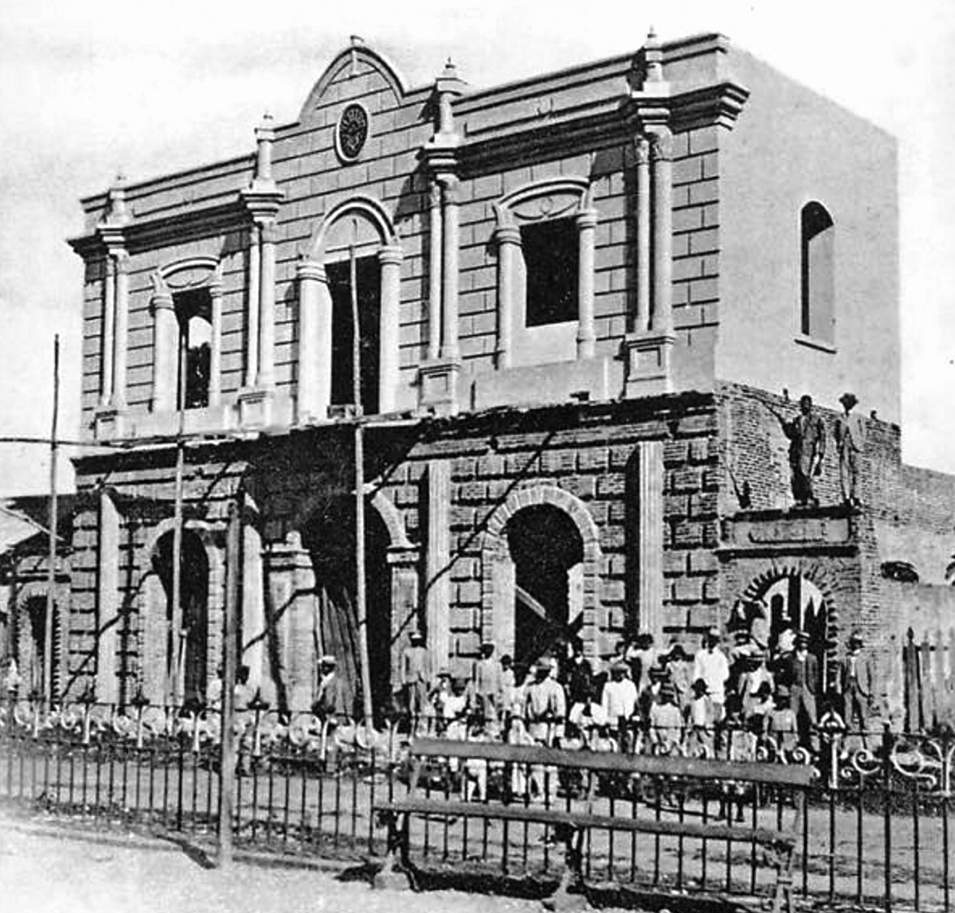
SANTO DOMINGO. – For many years, history held that the first film screening in the country took place at the Curiel Theater, across from the park in Puerto Plata, in August 1900.
But in 2020, filmmakers and researchers Martha Checo and Félix Manuel Lora published their book "The Movie Theaters of the Dominican Republic," and since then, history has changed, with the location of this milestone now fixed in La Vega. That same year, but a month earlier.
Father José Luis Sáez (EPD), Jesuit, philosopher, theologian, film critic and university professor, in his work “History of an Imported Dream. Essays on Cinema in Santo Domingo”, from 1983, honestly established the narrative: “The history of cinema in the Dominican Republic, as far as documentary evidence allows us to go, begins one night in August 1900 in the city of Puerto Plata.”.
And he added, cautiously, with all the intellectual rigor that characterized him, that everything "seemed to indicate" that the Curiel Theater was the venue for that premiere. He did not state it as a categorical truth, but rather proposed it as the best available hypothesis.
And this was the official history of Dominican cinema: it started in Puerto Plata and had the academic baptism of José Luis Sáez, whose story is told in the book by Lora and Checo:
On the night of August 27, 1900, the Italian businessman Francesco Grecco disembarked in Puerto Plata aboard the steamship Cherokee carrying a box of wonders: the Lumière Cinematograph, the device that the brothers Auguste and Louis Lumière had invented in France just five years earlier.
Grecco came from Port-au-Prince, where he had established his company, Grecco & Co., together with photographer Maurice Hargous, and brought with him on his tour of the "Variety Theatre" eleven films from the Lumière house, filmed between 1895 and 1899.
The audience at the Curiel Theater saw something that night that had no name yet in their experience: portraits that moved.
The Listín Diario newspaper reported on “The Redemption of Santiago”: the paintings “were warmly applauded” and two of them received “a standing ovation.” One transported the viewer to a street in Paris, “populated with cars, bicycles, and pedestrians and horseback riders crossing in all directions.”.
The story seemed set in stone, but as often happens, another version of the tale emerges.
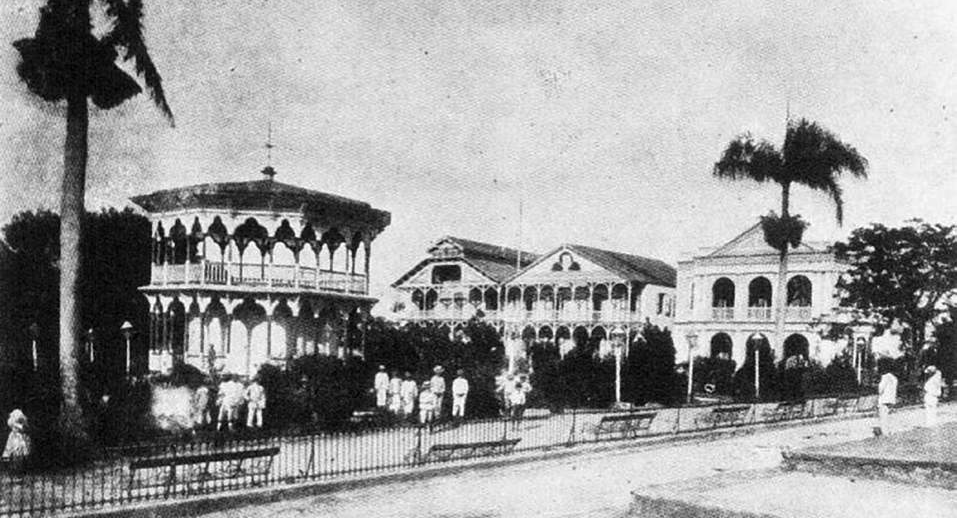
The book published in 2020 by researchers Félix Manuel Lora and Martha Checo, “The movie theaters of the Dominican Republic”, rescues a chronicle that had been dormant in a regional history volume since 2009.
Its author, Jovino A. Espínola Reyes, a dentist, historian and inventor from La Vega, born in 1892, wrote his cinematic memoirs on December 22, 1950 under the title "The cinematograph, appearance in La Vega and its evolution".
Espínola was eight years old when the events he describes in the booklet took place. A narrative from the point of view of a child who saw something he never forgot.
“In mid-July 1900,” Espínola writes, “a very charming gentleman of Italian nationality, named Greco, arrived in this cultured city we love so much.” The man set up his machine in the house of Mr. Nathan Cohen, on the southwest corner of Independencia and Colón streets, in a room Cohen had built for billiards.
Night after night, the place was filled with "men, women and children of all ages and social classes", all gathered to see the same thing: "portraits that walked, jumped, ran, swam or flew".
The date Espínola gives, mid-July 1900, predates the night at the Curiel Theater, and this account reveals that Grecco did not arrive in Puerto Plata first. The cinematograph arrived in La Vega first.
What Sáez correctly identified was the event and the date in Puerto Plata. What he couldn't have known, because Espínola's chronicle hadn't yet entered the canon, was that Grecco had already made his first stop in the central Cibao region.
And there was no mistake here, only a historical discrepancy, since this testimony was kept in a regional book for decades, before someone found it.
Martha Checo and Félix Lora say that Grecco continued his tour: from La Vega to Puerto Plata, from Puerto Plata to Santiago, from Santiago to Santo Domingo, where he arrived at the Teatro La Republicana on November 3, 1900. He made another tour of Haiti between February and May 1901, returned to the country for a second tour, and in March 1902 left for Europe never to return to Dominican territory.
He left behind a country that had seen images move for the first time, and whose exact history waited seven decades to cross from a regional archive to the national film canon, thanks to the research of Martha Checo and Félix Manuel Lora.
Recommended readings: