


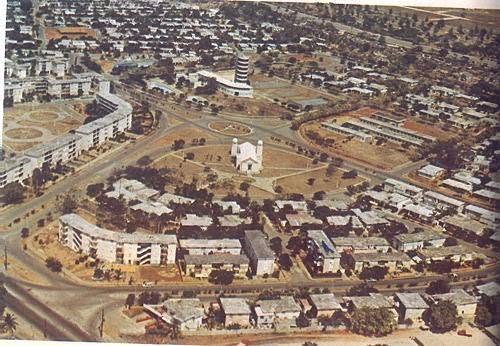
The Social Improvement Neighborhoods of the 1940s were not just housing: they were political infrastructure, and when Balaguer came to power in 1966, the logic of building to control not only remained intact, but would become the basis of his own housing policy
SANTO DOMINGO – When Joaquín Balaguer assumed power in 1966, Santo Domingo was a city burdened by nearly four decades of unfulfilled promises and an urban debt that no transitional government had been willing to address. The city he inherited was not the same one Trujillo had envisioned: it was a fragmented capital, overwhelmed by internal migration and scarred by the recent memory of the April War of 1965.
The Trujillo regime established the typologies, the first institutions and, above all, the clientelist logic that would govern housing policy for decades and the first programs recognizable as social housing in the Dominican Republic date back to the forties of the last century, when the regime built the so-called Social Improvement Neighborhoods.
The first of these, the Barrio Mejoramiento Social, known as BAMESO, was designed by the architect Henry Gazol and inaugurated in 1940. It was followed by the Barrio Obrero in 1944 and the Barrio María Auxiliadora in 1945, which also had a hospital, school and manual arts school.
These first units were modest single-family homes: living room, dining room, two bedrooms and a bathroom, built with simple materials but which represented, as documented by researcher Natalia Ulloa Cáceres in her doctoral thesis on social housing in Santo Domingo, an important leap compared to the popular housing predominant at the time.
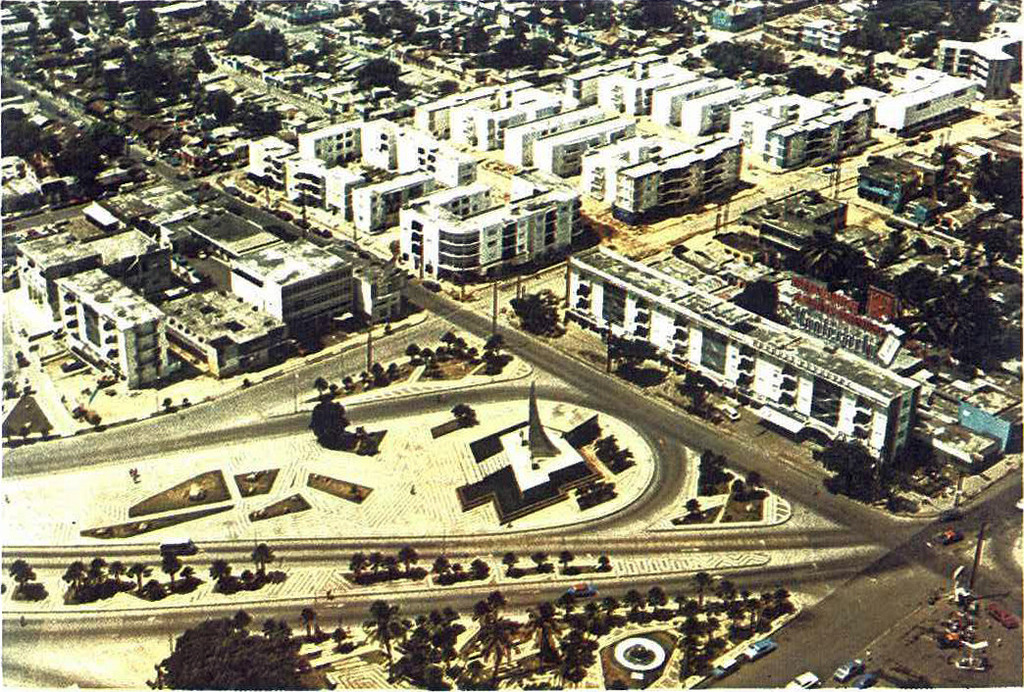
What the regime presented as social policy was, in reality, a mechanism of control, according to historian Marcos Prados Martín of the Institute of History at the Spanish National Research Council (CSIC), a Spanish public body attached to the Ministry of Science, Innovation and Universities. In his study on authoritarian modernization in Ciudad Trujillo, Prados Martín documented that public housing was conceived as economic infrastructure, with the aim of sustaining industries under the control of dictator Trujillo and influencing the allocation process.
The lists of beneficiaries included personal recommendations from high-ranking officials and relatives of the regime. A letter from a woman requesting housing, preserved in the General Archive of the Nation, offers the clearest image of this logic: the petitioner begs the dictator's wife to intercede on her behalf, appealing to their shared motherhood as an argument.
According to Prados Martín, architecture also served the narrative. Concrete was the emblematic material of Santo Domingo's reconstruction after the San Zenón hurricane of 1930, and the regime prohibited the use of wood and zinc in the capital, associating these materials with the architecture of the bohío, which the dictatorship, in turn, identified with Haitian heritage and the supposed racial degeneration of the rural population.
The prohibition of the bohío in the urban perimeter was not only a technical decision but an act of cultural policy: it erased the architecture of the poor from the landscape of the capital and forced internal migrants to adapt to ways of life that the State considered modern and orderly.
When Trujillo was assassinated in 1961, the country entered a transitional phase that lasted until the Civil War of 1965. Those four years were, in housing terms, a period of institutional paralysis and acceleration of the problem.
Prados argues that the fall of the regime freed up land that had been owned by the Trujillo family and passed into the hands of the State, but this liberation also facilitated the illegal occupation of plots where new informal settlements emerged.
The western bank of the Ozama River, for example, began to be irreversibly populated during that period: La Ciénaga, La Zurza, Guachupita and Los Guandules began to consolidate themselves then as the densest marginalized neighborhoods of the capital.
In institutional matters, the government of Juan Bosch, which began in 1963, strengthened the National Housing Bank, which had been created by the Council of State with Law 5894 of May 1962, and opened up the real possibility of long-term mortgage financing. The Constitution of that same year was the first in Dominican history to recognize the right of every family to own a home, enshrining it in Article 26 as a matter of public interest.
But Bosch's government lasted only seven months and what followed was a combination of political crisis, foreign intervention and civil war that left the housing sector completely paralyzed.
At the beginning of 1966, Santo Domingo had an approximate area of thirteen square kilometers and a population that was growing at a rate that no housing program had managed to absorb.
Internal migrations in the sixties and seventies, resulting from the regional imbalance in public investments and the concentration of economic activity in the capital, fueled a deficit that accumulated without response.
And it was on that city, with that heritage, that Balaguer built his policy of rebar and cement.
Series: History of social housing in the Dominican Republic. (Chapter VI).
Recommended readings:







