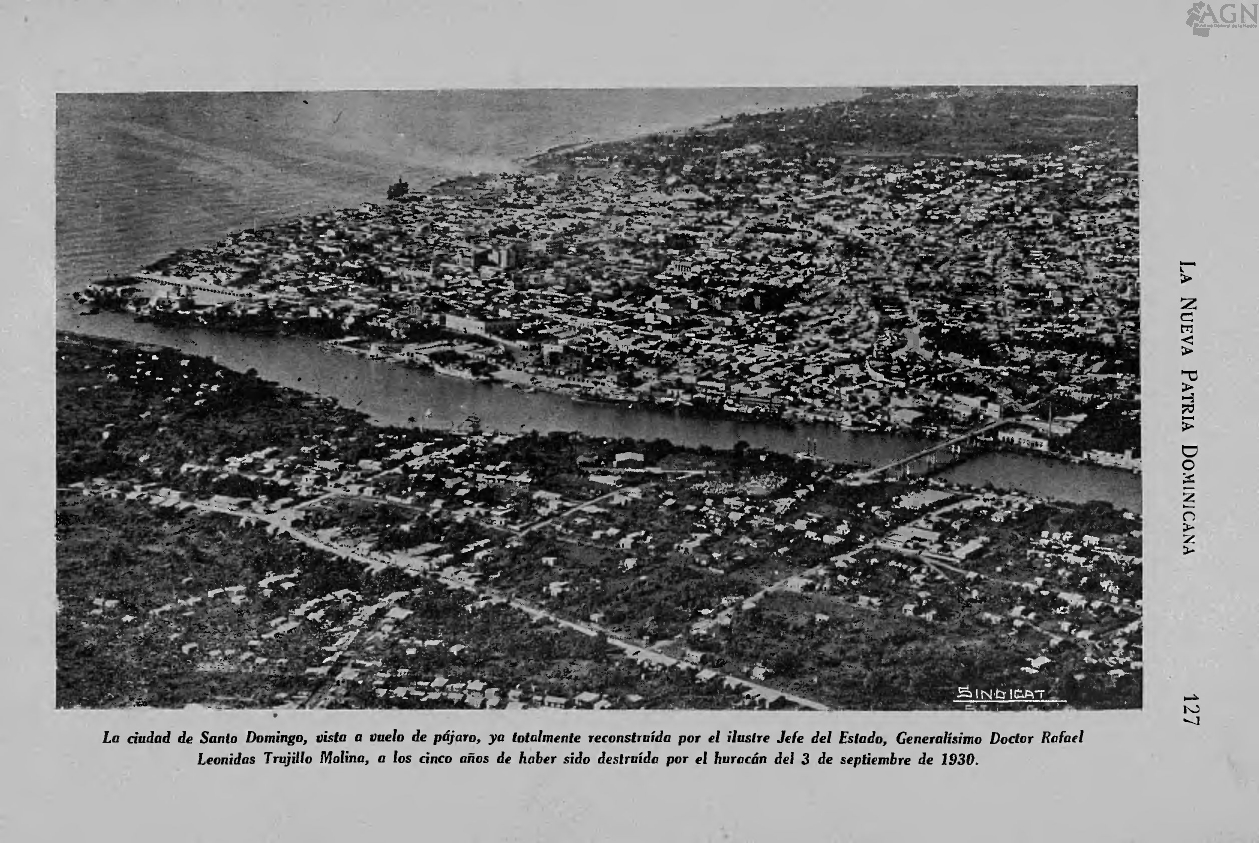
Beginning in 1946, the Trujillo regime built working-class neighborhoods in Santo Domingo. Documents from the General Archive of the Nation show that the beneficiaries were not the most needy, but rather those most convenient for the regime
SANTO DOMINGO. – The first Social Improvement Neighborhood was built in 1946 and its legal basis came later: Law 3105 of October 9, 1951, which authorized the development of areas on State land designated as social improvement neighborhoods, workers' neighborhoods or agricultural farms.
This is cited by Marcos Prados Martín in «From bohíos to social housing» (Culture & History Digital Journal, 2025) and Jesús Morel in «Official Models for Workers' Housing and Social Improvement in Ciudad Trujillo» (architecture magazine).
Project approval was entrusted to private engineers, with final oversight from the State Secretariat of Public Health and Social Welfare. Mortgage financing was provided by the Agricultural and Industrial Bank.
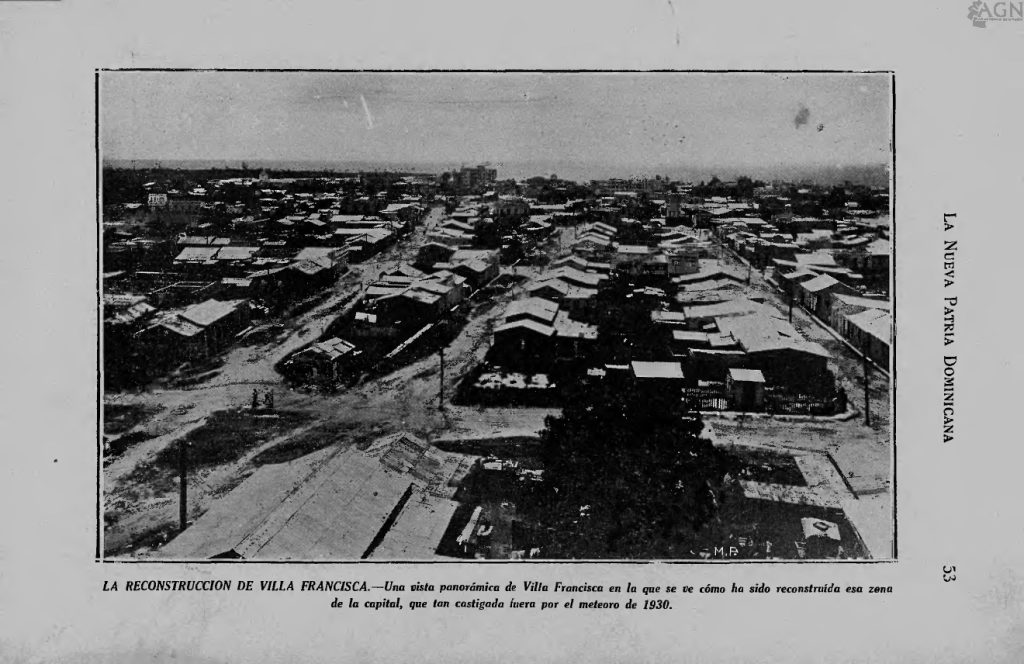
According to Morel, the neighborhoods that were built were: María Auxiliadora, Luperón, Villa Francisca, Villa Duarte, Ensanche Ozama, Mejoramiento Social and Barrios de Alistados, the latter intended for military families.
The houses were organized into typologies identified by letters. According to Morel, Type A housing had concrete or asbestos cement roofs on plots of 12×50 meters; the living-dining room measured 3×20 meters and the service bedroom 2.30×2.60 meters.
Type B housing consisted of three bedrooms with reinforced concrete roofs and block walls. Officers' Housing came in four types, with considerably larger dimensions. Monthly sales installments ranged from RD$7.00 to RD$20.00, with land acquisition fees ranging from RD$1,000.00 to RD$3,000.00 depending on the location.
Prados Martín explains that the Agricultural Bank initially did not offer loans longer than eight years, which limited access for higher-income families. Only in the case of the Mejoramiento Social neighborhoods was the term extended to fifteen years.
The law defined "workers" as beneficiaries, but did not specify their profile or concrete requirements. Prados Martín points out that archival sources suggest the selection process was heavily influenced by political power.
The General Archive of the Nation preserves lists in which high-ranking officials personally proposed new residents for housing. A document dated January 17, 1957, cited by Prados Martín, includes recommendations signed by General Rafael L. Trujillo Jr., Colonel Pedro V. Trujillo Molina, Secretary of State of the Presidency Amado Hernández, Secretary of State of Finance Virgilio Álvarez Sánchez, and Secretary of State of Public Works Jaime A. Guerrero Ávila, among others.
Before the homes were handed over, the Dominican Party carried out a political vetting of the applicants, as documented by Prados Martín with records from the AGN.
Also in the AGN are the letters of Blasina Rodríguez and “La Mora”, begging for a roof for their children, which leads Prados Martín to conclude that the inhabitants evicted to build the Mejo neighborhood were not, in most cases, the ones who received the houses, since according to Prados Martín, it was common for the army to force the residents to dismantle their homes and return to their provinces of origin with a small sum of money.
Series: History of Social Housing in the Dominican Republic. Chapter III.
Recommended readings: