


Between the fall of the regime and Balaguer's rise to power, the Dominican Republic attempted to build a housing policy from scratch, and the starting point was devastated
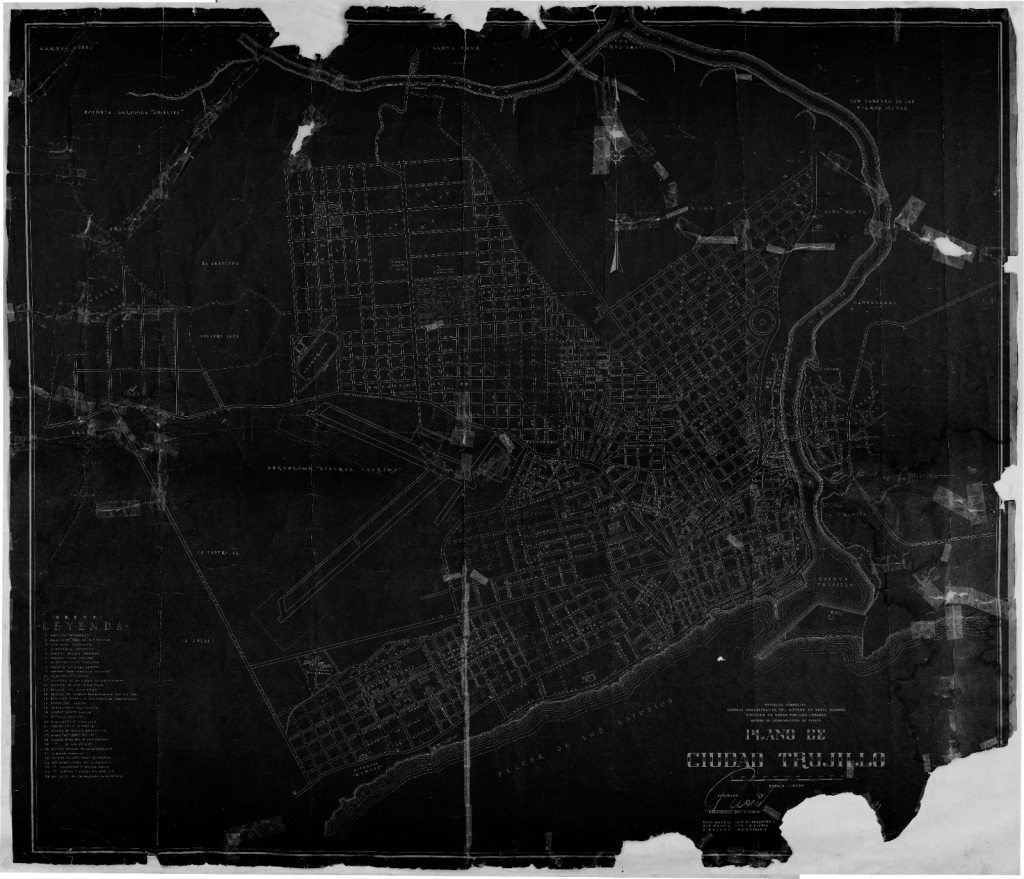
SANTO DOMINGO. – After the assassination of tyrant Rafael Leónidas Trujillo on May 30, 1961, the Dominican Republic inherited, in addition to a political system in crisis, a capital city transformed by three decades of urban interventions, several neighborhoods built by the State, and an institutional structure that was still attempting to respond, albeit in a limited way, to the housing problems of a growing population.
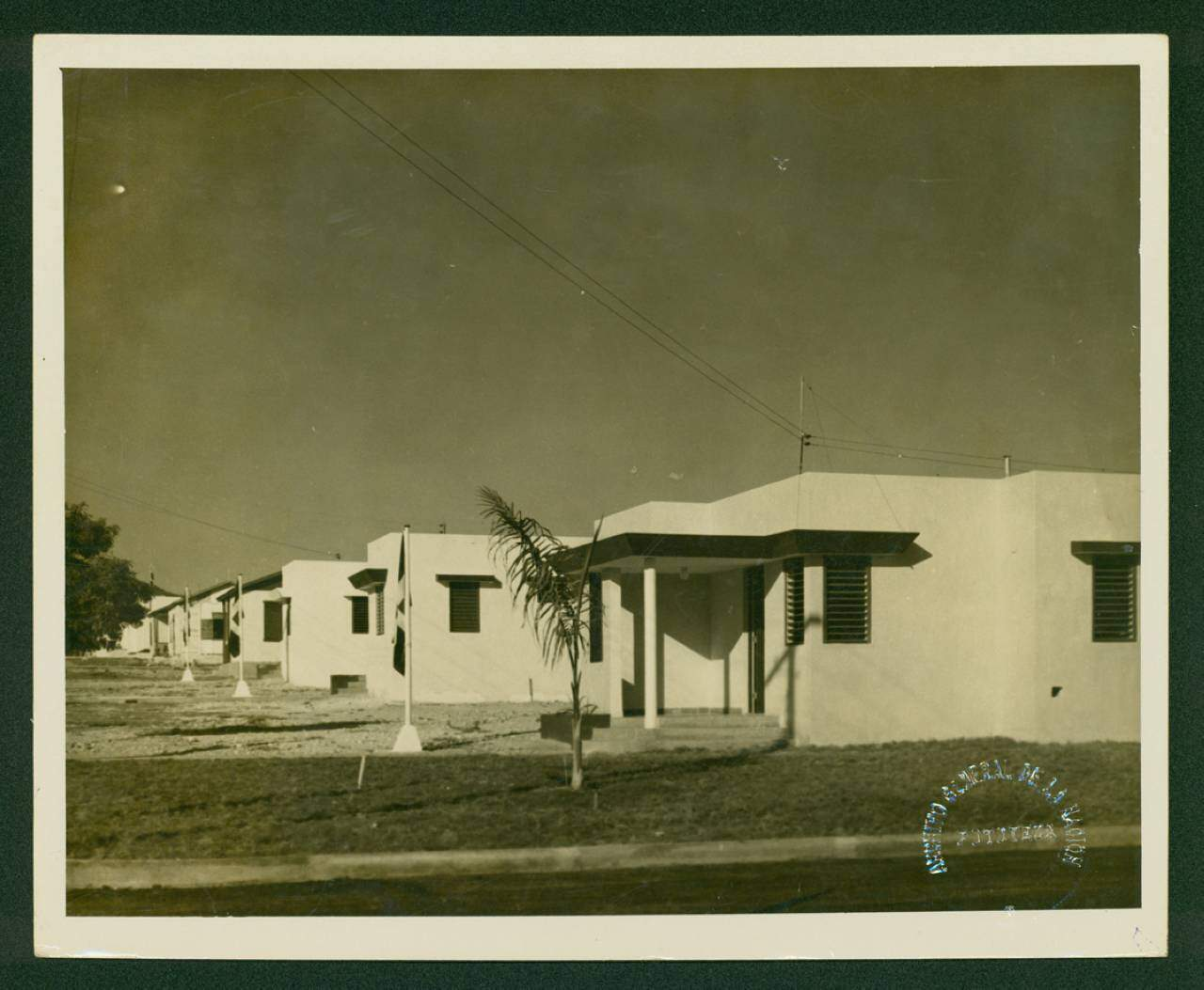
The dictatorship had left a network of housing projects concentrated in Ciudad Trujillo, including the Barrios de Mejoramiento Social, María Auxiliadora, the Ensanche Luperón and other developments promoted by the State.
However, that experience was far from constituting a national policy capable of addressing the housing deficit accumulated over decades, and architect and researcher Natalia Ulloa Cáceres identifies these projects as the antecedents of Dominican social housing.
In his 2017 study on the evolution of social housing in Santo Domingo, he argues that the programs implemented during the Franco regime reflected a paternalistic vision of state action, aimed at providing stability to certain sectors of the urban population and, at the same time, reinforcing the government's role as a provider of welfare.
The
fall of the regime ushered in a period of institutional reorganization that led, in July 1961, to the enactment of Law No. 5574, which transformed the Insurance, Aid, and Housing Company, known as SAVICA, into the Institute of Aid and Housing (INAVI).
The new entity assumed social improvement and housing assistance functions in a context marked by political uncertainty and the need to reform the structures inherited from the regime.
On May 10, 1962, through Law No. 5892, the National Housing Institute (INVI) was reorganized, conceived as an autonomous body, intended to contribute to the solution of the housing problem through the construction of social housing.
Although the name already existed since the final stage of the dictatorship, the reform promoted by the Council of State sought to give the institution a more defined structure and a mission explicitly oriented towards popular housing.
That same month, Law No. 5894 created the National Housing Bank (BNV), a fundamental piece for the subsequent development of mortgage financing in the country, and the creation of the bank responded to a reality widely recognized by urban planners and specialists: the construction of housing could not be sustained solely through direct state initiatives.
It was necessary to develop financial mechanisms that would allow for broader access to credit and stimulate housing production.
Despite these changes, the limitations of the existing model were evident. Marcos Prados Martín's research shows that housing policies from 1930 to 1961 were closely linked to the urban transformation of the capital.
Housing construction was part of a broader authoritarian modernization project that sought to replace precarious settlements, promote the use of permanent materials, and consolidate a social base made up of urban workers and small landowners.
That model had produced visible results in certain sectors of the city, but it failed to solve the housing needs of a population that continued to grow, nor did it generate a national coverage comparable to that deployed in the capital.
As the 1960s began, the challenge was no longer simply to build houses, but to design institutions capable of responding to an ever-increasing demand.
The 1963 Constitution, under the short-lived government of Juan Bosch, reflected this shift in perspective with one of the most ambitious formulations in Dominican constitutional history regarding housing.
Article 26 declared the establishment of every Dominican household on its own land and with its own improvements to be of high public interest, and stipulated that every family should own a comfortable and hygienic home. When a family's resources were insufficient, the State assumed the obligation to provide housing with the cooperation of the beneficiaries and according to their income.
Article 27 completed that protection by declaring the family home and the family fund inalienable and unseizable, guaranteeing that the housing intended for the family unit could not be sold or seized for debts.
The provision placed housing within the framework of social rights and elevated it to the status of a state commitment.
The importance of this formulation lay in the fact that housing ceased to be seen solely as a project promoted by the governments in power and became an aspiration recognized by the constitutional order.
However, the gap between the legal principle and the material reality remained considerable. The government of Juan Bosch attempted to deepen some of the reforms initiated during the transition period, but his overthrow in September 1963 interrupted the process.
Two years later, the April War of 1965 and the subsequent US military intervention added new factors of instability to a city that continued to expand, both in territory and population.
Ulloa documents that even during those years, residential projects inspired by models developed during the previous period continued to be built. In Villa Duarte, for example, a housing complex of single-family homes emerged whose spatial organization recalled the schemes used in the first neighborhoods promoted by the State during the dictatorship.
The new authorities inherited institutions, construction techniques, and urban planning concepts developed during the previous thirty years.
Governments changed, laws changed, and political discourses changed, but much of the country's housing structure continued to rely on foundations built during the Trujillo regime.
Natalia Ulloa summarizes this trajectory by pointing out that the production and allocation of housing by the Dominican State was historically linked to political strategies, in addition to social objectives.
This observation helps to understand one of the most persistent constants in Dominican urban history: housing has not only been a response to a material need, but also a tool for building power, legitimacy, and social organization.
Between 1961 and 1966, the Dominican Republic attempted to build new democratic institutions while facing profound political tensions. In terms of housing, those years represented less a rupture than a transition.
The country was beginning to move away from the model created by the dictatorship, but it still depended on many of its structures. The true expansion of Dominican social housing would be reserved for the following decades.
Series: History of social housing in the Dominican Republic. (Chapter V).
Recommended readings:







