SANTO DOMINGO.-The Ministry of Labor invited interested people to participate in the hotel job fair in Santiago, tomorrow, Wednesday, September 18, 2024.
It will take place from 9:00 a.m. to 2:00 p.m.
The event will take place at the Infotep Regional Office, located at the corner of Estrella Sadhalá Avenue and Hatuey Street.
The vacancies for this day are 180: Bar manager, bartender, waiter, cook,steward, night auditor, housekeeper/governor, chambermaid, bellhop/porter, laundry assistant, maintenance assistant, reception supervisor, reception agent, customer service agent.
The Ministry of Labor clarifies that the recruitment process depends on each company; some of them take a little longer due to the nature of their vacancies.
Those interested should register on the website: rdtrabaja.mt.gob.do or call the following numbers: (809) 583-3900 ext. 3009 and (809) 224-9239.
SANTO DOMINGO.- The bill to regulate real estate brokerage in the Dominican Republic received a favorable report from the Justice Committee of the Chamber of Deputies and is now awaiting its presentation in session in the Lower House.
This was announced yesterday by the president of the Association of Real Estate Agents and Companies (AEI), Alberto Bogaert, who told El Inmobiliario that the legislation has the consensus of all sectors involved.
He said that the sector is only waiting to be summoned again by the president of the Chamber of Deputies, Alfredo Pacheco, who will be in charge of presenting the project to the plenary of that legislative body.
“The law has already been agreed upon with the legislators and the construction sector, with a favorable report and is only waiting to be summoned again by the president of the Chamber of Deputies, Alfredo Pacheco, who is the one who will submit it,” Bogaert commented.
The report in favor of the bill was offered by the former Justice Commission, which was chaired by Representative Alexis Jiménez.
What does it consist of?
The latest version of the bill regulating real estate intermediation, a copy of which El Inmobiliariohas, has 54 articles, focused on "protecting the rights and interests of property buyers, sellers and developers".
“This law aims to regulate, supervise, develop and promote an orderly, efficient and transparent real estate brokerage market, in order to protect the rights and interests of both property buyers and sellers and real estate developers, as well as to preserve confidence in the Dominican real estate market, establishing the conditions for information on the promotion of real estate transactions to be truthful, sufficient and timely, in order to contribute to the economic and social development of the country,” says article one.
The bill "regulating real estate intermediation" contains in its second article its scope, the third speaks of its nature, while the fourth explains the principles by which the legislative piece will be governed.
Article five elaborates on the definitions on which the project is based, article 6 specifies the body that will act as the governing body for its application, article seven deals with its purpose, while article eight details the functions of the Real Estate Intermediation Directorate.
Article 12 refers to the suspension or exclusion of participants from the Real Estate Market Registry, article 18 refers to the explanation of the exercise of real estate intermediation, article 19 to its types, while article 20 refers to the prohibitions.
Article 22 deals with real estate agencies, article 23 with the requirements for their authorization, article 24 with the renewal of the license, article 27 explains matters relating to the real estate agent, the next article details the requirements for accreditation, article 30 outlines the rules of contracting, and article 32 addresses illegality in the profession.
In Chapter 3: Commissions and Fees, Article 33 discusses the amounts of commissions, and Article 34 creates a commission for ethics in the real estate market.
Articles 38 through 49 deal with sanctions. Articles 50 and 51 cover the administrative aspects, article 53 the regulations, while article 54 concludes with the issue of validity.
SANTO DOMINGO.- There is a common factor shared by real estate agents and leaders: The satisfaction of seeing the happy and grateful faces of their clients after receiving the key to the property they truly longed for.
This is the feeling experienced by the CEO of Murcia Group, Juan Pablo Almonte Monsanto, as he contributes to the realization of every human being's dream: to own their own home.
Almonte, who belongs to the world of Business, became an agent after finding his true vocation in this sector.
Through this profession, he has developed countless skills that bring him deep personal and professional satisfaction.
Juan Pablo Almonte Monsanto. (External source).
“I am an agent because of the vocation I have found in this niche, where I can serve, manage and guarantee processes with security for each prospect,” he stated in an interview with El Inmobiliario.
Before discovering this market niche, he revealed that he worked as a project supervisor in the electrical and electronic security fields. Later, he worked as a supervisor for plumbing installations on various projects.
But who would Almonte Monsanto be if he hadn't worked as a real estate agent? Sincerity shone through as he confessed that he would follow his innate vocations, learned from his parents, which point to the financial and agricultural sectors.
Focusing on the present, he recounted that his day typically begins at 4:45 a.m. His dedication to work exceeds eight hours daily, as he invests between 12 and 14 hours in his work as a real estate agent.
What began as a project under the name Murcia Group, driven by the passion of Juan Pablo Almonte Monsanto, was formalized as a company in just one year, after starting operations in December 2018.
This real estate group, which today has approximately 25 agents, has sold around 80 to 150 units during its almost six years in the market.
“The evolution has been quite demanding and challenging, especially when managing various indicators to achieve the materialized objectives of each plan,” he specified.
Currently, the company has three offices located in Santiago, where its headquarters are located, and in Puerto Plata. Future plans include a corporate building in the northern region, as well as establishing a presence in Santo Domingo and Las Terrenas.
Juan Pablo expressed some words with great meaning and weight: he firmly believes that an agent contributes to the well-being of society, since he participates in the development of cities through transactions and the success of real estate projects.
Regarding his concerns about the sector, he highlighted the importance of controlling cost regulations in different developments to preserve and provide more practical solutions to projects.
The Presidential Commission for Provincial Development Support, FONVIVIENDA and Familia Feliz will be merged with the Ministry of Housing.
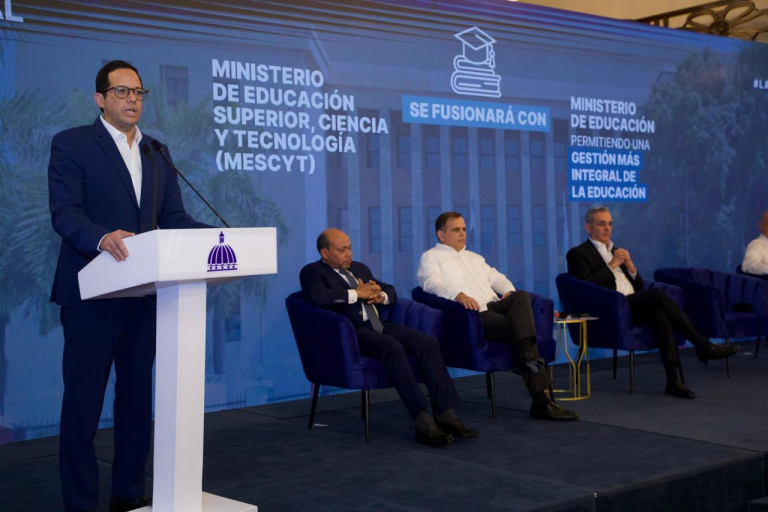
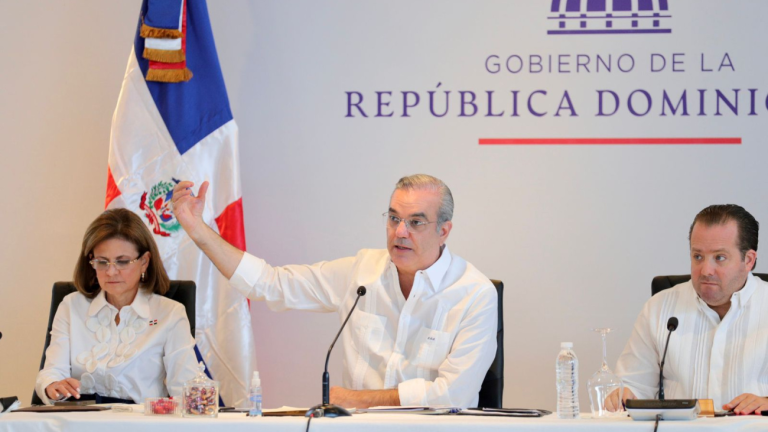
SANTO DOMINGO.– With a proposal projected to generate savings of RD$25 billion, President Luis Abinader yesterday led the presentation of a second reform for the unification of ministries and other state institutions, with the aim of continuing the restructuring and rationalization of the public administration.
The proposal, revealed in "La Semanal con la Prensa," also seeks to eliminate redundancies in public institutions, in order to be more efficient, coherent, and more aligned with government priorities.
Abinader explained that most of the proposals will go to the National Congress for approval, but from an economic point of view, "the necessary savings can be made.".
He recalled that the first unifications and suppressions carried out during his term were the merger of the Oisoe and the INVI, (now the Ministry of Housing, Habitat and Buildings), the CEA and the Corde, and the elimination of the Office of the First Lady and Procomunidad.
Sigmund Freund, Minister of Public Administration. (External source).
Goals
The four objectives of this second reform are: the optimization of resources to free up financial and human resources, redirecting them towards critical areas such as health, education and citizen security; improving coordination to reduce dispersion and improve work between agencies; eliminating redundancies by suppressing entities whose reason for being no longer exists or can be assumed by other agencies; and finally, the reduction of bureaucracy in favor of a simpler state structure and a more agile and effective administration.
Mescyt and Minerd
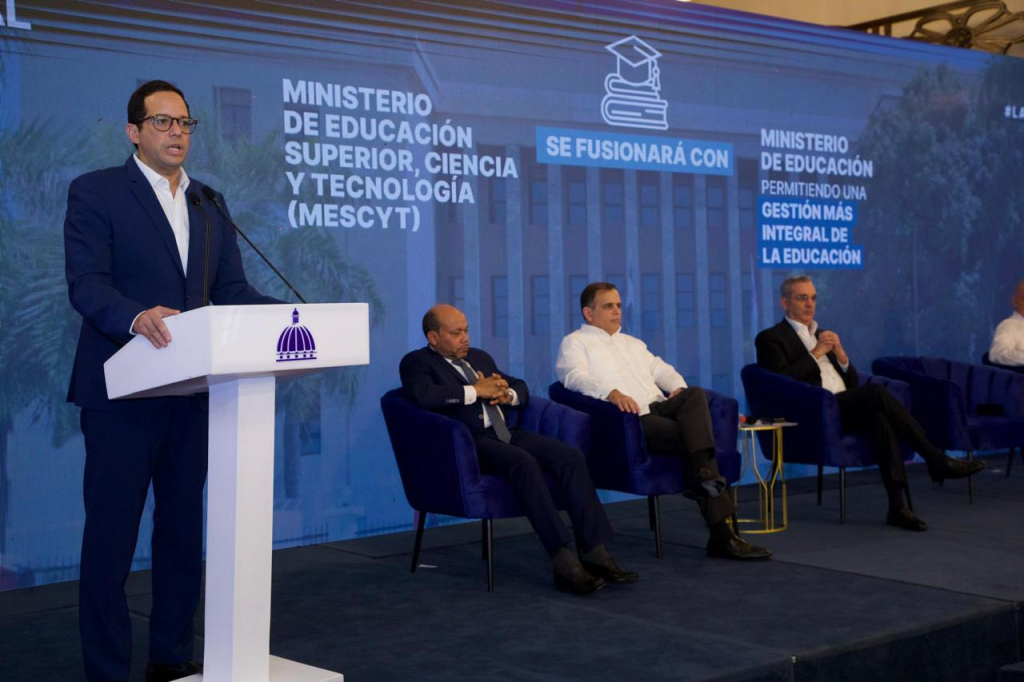
The first proposal for institutional merger presented by Sigmund Freund , Minister of Public Administration, was that of the Ministries of Higher Education, Science and Technology ( Mescyt ) and Education ( Minerd ).
This aims to optimize resources and improve the efficiency of educational spending, with a more strategic and comprehensive distribution of resources, strengthening educational quality and reducing costs.
It also aims to integrate the education system, avoiding fragmentation between levels (initial, basic, secondary, higher), which will reduce costs and increase coherence in actions to improve learning.
Similarly, the aim is to achieve an improvement in the quality of education, facilitating a comprehensive approach to education, from basic to higher education, aligning curricula with the demands of the labor market.
Strengthening the national education system is another goal of this merger, aligning education with the country's priorities in science and technology, promoting regional development and equity in the distribution of resources.
Finally, regarding improvements in education policy: the merger facilitates the development of joint policies to address educational and scientific challenges, improving access to education and strengthening the monitoring of student progress and research.
As for the science and technology component of Mescyt, it will be sent to another entity that will dedicate its efforts to these aspects, including innovation actions.
Mepyd and Hacienda
The merger of the Ministries of Finance and Economy, Planning and Development will result in the Ministry of Finance and Economy, to improve coordination and efficiency in public management.
In addition, measures will be implemented to optimize support areas such as human resources, finance, purchasing, legal, security and communication.
Mapfre
The Administrative Ministry of the Presidency will be abolished and transformed into an Administrative Secretariat under the Presidency, to achieve a single coordination in all cross-cutting and support areas, improving human resources, finances and communications.
IAD and Agriculture
The Dominican Agrarian Institute (IAD) will be absorbed by the Ministry of Agriculture, eliminating redundancies and ensuring the monitoring of agricultural settlements.
National Council for Agricultural Research
Similarly, the National Council for Agricultural Research will be integrated into the Dominican Institute of Agricultural Investment.
ADESS
The Social Subsidies Administrator (ADESS) will merge with the Supérate program to improve coordination and increase efficiency in resource management.
Presidential Commission for Support to Provincial Development, Fonvivienda and Happy Family
The Presidential Commission for Provincial Development Support, FONVIVIENDA and Familia Feliz will merge with the Ministry of Housing, achieving greater centralization and coordination in the works managed.
Economic Dining Halls
Similarly, the Economic Dining Halls will be integrated into the Presidential Plan Against Poverty in order to improve coordination and efficiency, given that both institutions provide similar services to the population.
National Maritime Affairs Authority
Likewise, the National Maritime Affairs Authority will merge with the National Aquarium to form the Oceanographic Institute,with the aim of strengthening coordination and improving efficiency in the management of marine and coastal resources.
Strategic eliminations
Among these eliminations are the Savings Bank for Workers and Pawnshop, the Sectoral Commission for the Reform and Modernization of the Agricultural Sector, the Dominican Development Council Abroad (Condex), the National Council for Population and Family, and the Presidential Commission for Modernization and Port Security.
Also, the Business Commission for Mortgage Development and Trusts, the International Advisory Commission on Science and Technology, and the National Directorate for the Promotion and Development of Handicrafts (Fondearte).
Cost containment measures
For his part, the Minister of Finance, José Manuel (Jochi) Vicente, stated that among these measures is the streamlining of the use of state advertising, concentrating it only in the institutions that should use advertising and giving it an educational and informative content.
Also, the prohibition of the purchase of non-utility vehicles, the prohibition of expenses intended for general events and celebrations of the anniversaries of the institutions, and the prohibition of printing institutional reports, which from now on will be digital.
Other measures include freezing the number of public employees in each institution at the levels of August 2024.
The hiring of police officers, military personnel, medical staff, and teaching staff is exempt from this provision. The Ministry of Public Administration (MAP) may exceptionally approve exemptions depending on the nature and reasonableness of the need. A maximum period of four months is granted for the necessary implementation.
Similarly, all trips abroad by the various institutions must have the approval of their governing or affiliated body.
Official delegations may not exceed three people unless they have written authorization from the governing or affiliated body.
Expected impact
Redistribution of resources: Financial and human resources freed up for priority sectors such as health and education.
Greater efficiency and transparency: A simpler, more transparent and results-oriented public administration.
Institutional strengthening: Stronger institutions, with clearly defined roles and functions aligned with the needs of the country.
SANTO DOMINGO- The Trust for the Economic and Social Development of the Punta Bergantín Zone, in Puerto Plata, has become part of the Dominican Association of Tourism and Real Estate Companies (Adeti), an organization that represents companies that promote real estate tourism in the Dominican Republic.
Punta Bergantín, the new complex with which the government relaunched tourism in the northern region, stated that the project "is strengthened by its participation in the industry as part of the exclusive group of real estate tourism developers that make up this association, since it includes 4,000 hotel rooms and 1,500 residential rooms. It also has lots for commercial premises, areas designated for offices, recreational activities, public and private beach clubs, among other services.".
According to a press release, this project will strengthen tourism growth in the municipality of Montellano, in the province of Puerto Plata, with the construction of a modern 18-hole golf course.
This initiative also includes in its plan an academic campus intended to promote education and innovation in the country and a film studio.
Adeti, in welcoming Punta Bergantín into its membership, expressed that it receives the new member "recognizing its importance in the diversification and expansion of the country's tourism sector, and its contribution to the development of Puerto Plata and the north coast through the jobs it generates, contributing to the boost of its economy.".
Adeti brings together leading companies from the country's real estate and tourism sectors, which are driving real estate tourism. These include Cana Rock, Ciudad Destino Cap Cana, Costasur/Casa de Campo, Club Hemingway, Green One Playa Dorada, Grupo Puntacana, Grupo Velutini, Kaynoa, Metro Country Club, Playa Grande Golf & Ocean Club, Playa Nueva Romana, Puntarena, Rincón Bay, Terra RD Partners (Inicia's asset manager), and Tropicalia.
Engineers Guido and Luis Rosario announce a new stage in the company.
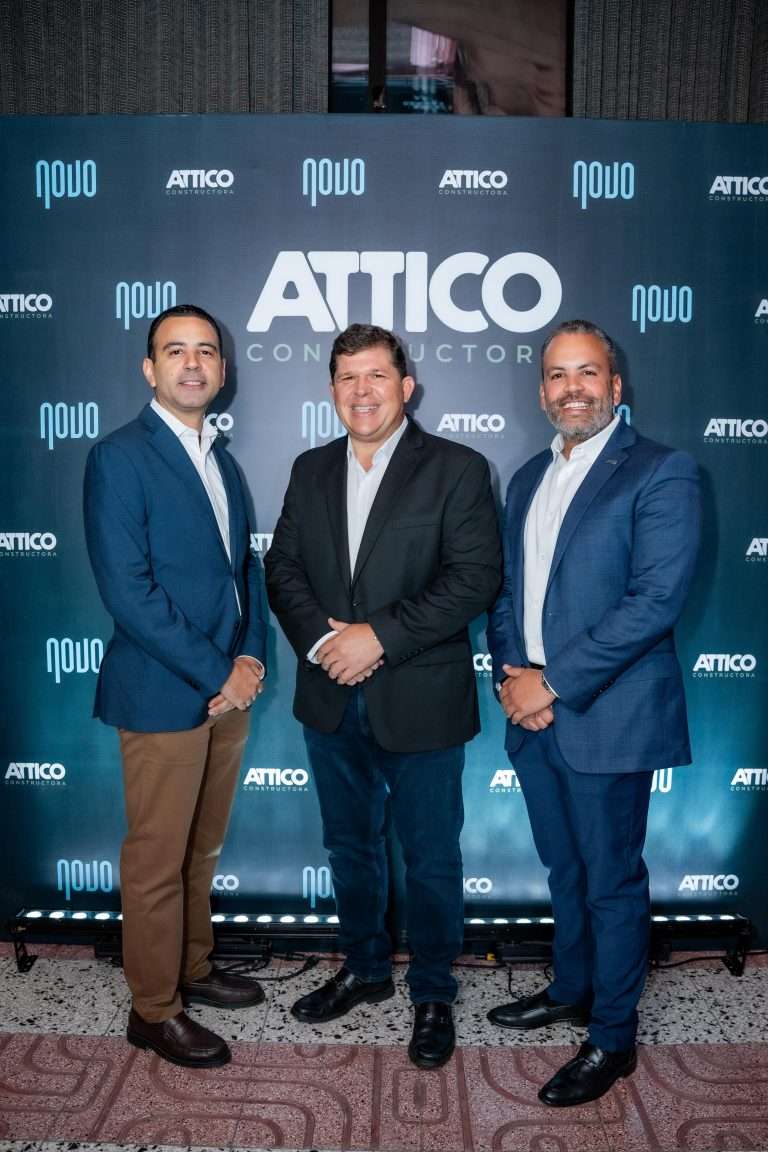
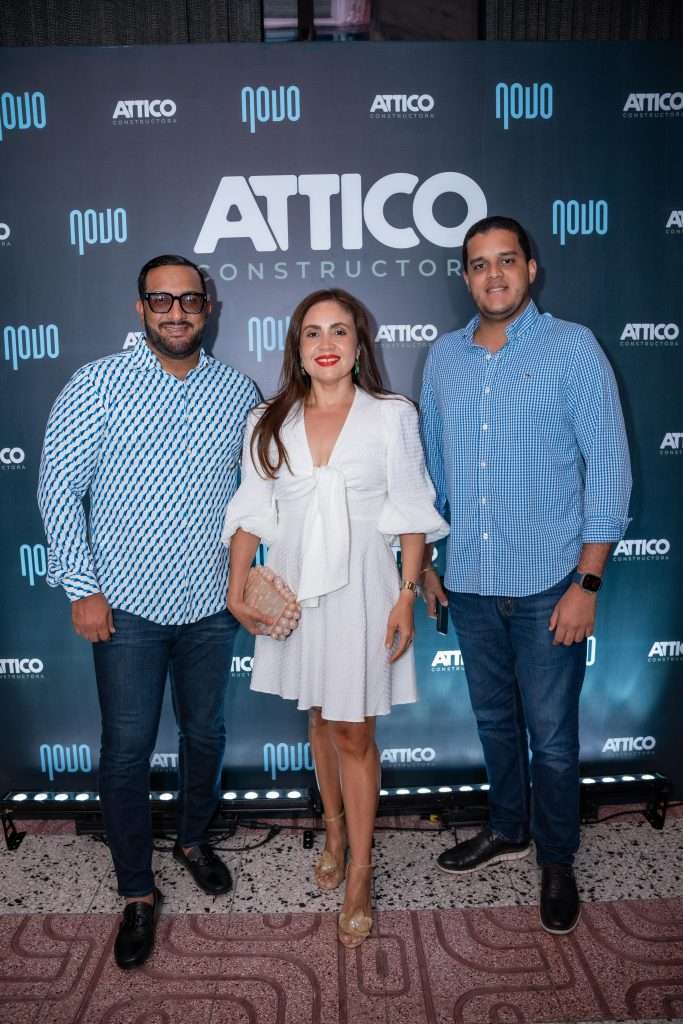
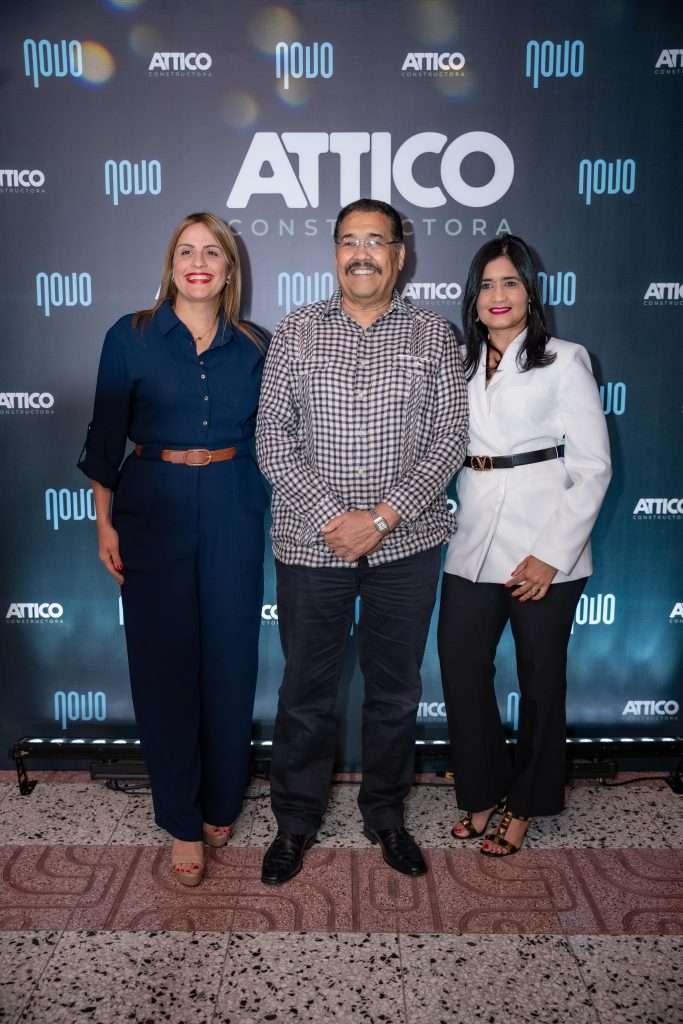
SANTO DOMINGO.- Engineers Guido and Luis Rosario recently announced an alliance to expand the operations of Attico Constructora, a development company that has been in the national market for more than 10 years, delivering real estate projects.
During a meeting held on September 10th at the Larimar restaurant, the brothers offered details of the expansion of their service portfolio.
Luis Rosario, Jorge Montalvo and Guido Rosario. (External source).
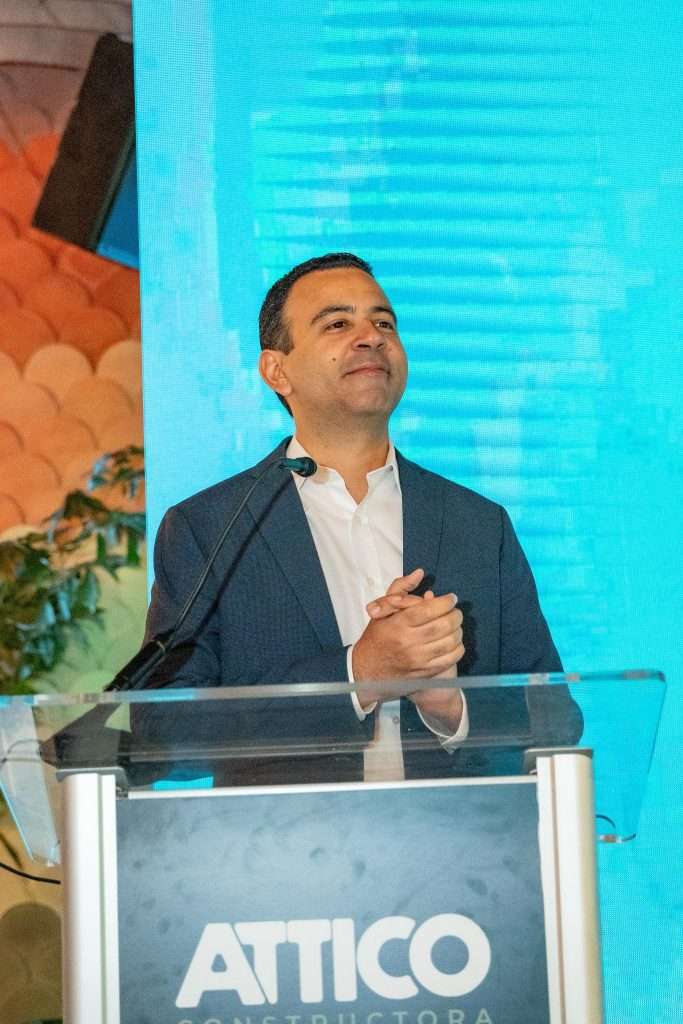
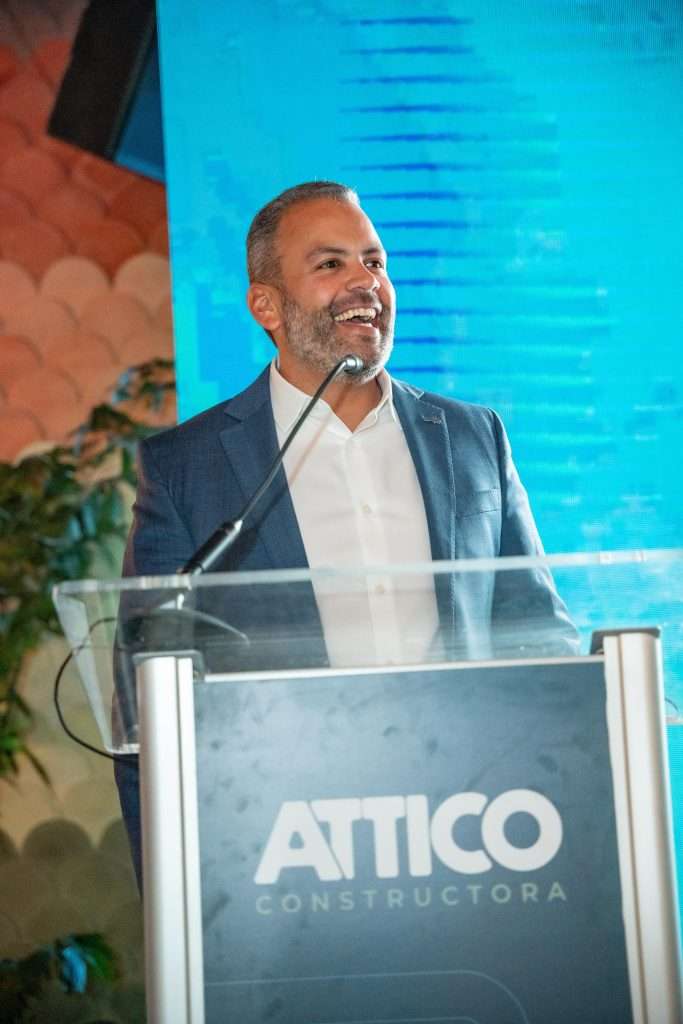
“Our mission has expanded. We not only build homes, but we also develop civil works of all kinds, covering the various areas of engineering and the construction sector in general,” said Guido Rosario in his speech.
He explained that together, they have formed a solid team of men and women committed to excellence and service, who not only build buildings, but also dreams and a better future for all.
Real estate agencies were present at the event. (External source).
“This new chapter we begin today is more than a business; it’s a legacy, a way to give back all the good we’ve received, and to contribute to a sector that has the power to transform lives. Thank you all for being part of this journey. Let’s continue together, because the best is yet to come,” commented the co-founder of Constructora Rodos.
Attico Constructora announced a new phase to its guests. (External source).
Rosario, Second Vice President of the current board of directors of the Dominican Association of Housing Builders and Developers (Acoprovi), declared to a large group of guests that everything is possible for those who believe. “The road may be difficult and the challenges great, but always remember that together we are stronger. You can go faster alone, but together, we will definitely go further.”.
Luis Rosario
He began his career in the sale of electric generators. He has been involved in the real estate sector for 20 years, with extensive experience in the conceptualization, development, and marketing of real estate projects. Between 2002 and 2009, he served as director in the United Kingdom and Spain for a major Spanish developer, building a robust sales network and achieving total sales exceeding 2,000 units and 700 million euros.
Guido Rosario
He studied Civil Engineering at the Technological Institute of Santo Domingo (INTEC), and also completed a master's degree in Construction Management. His main focus is always exceeding expectations on every project. "This has allowed him to successfully supervise more than 25 projects in Santo Domingo as a Founding Partner of Constructora Rodos," highlights his professional profile.
Attico Novo
During the meeting, the Attico Novo project was also presented, a new real estate development proposal that will be located in the Ensanche Evaristo Morales, in the National District.
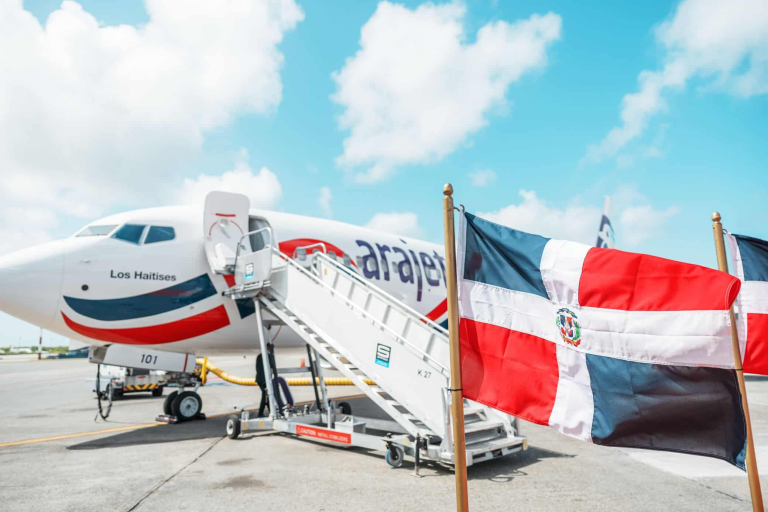
SANTO DOMINGO– Arajet, the Dominican Republic's low-cost airline, said it expects to end 2024 transporting approximately 1.2 million passengers, consolidating its exponential growth from Canada to the Southern Cone with new routes operating from Punta Cana International Airport.
The airline celebrated its second anniversary yesterday, September 15, and reported that it transported more than 120,000 passengers in August, surpassing the 100,000 passenger mark for the third consecutive month.
The company shared a statement indicating that they continue to lead in passenger traffic among local airlines, maintaining a milestone in the country's commercial aviation.
He stated that the figures are part of a monthly report from the Civil Aviation Board (JAC), which highlights that Arajet is the Dominican airline that had the highest passenger traffic from the country's various airports.
In the press release, the company stated that last August Arajet transported a total of 87,932 passengers who visited or departed from the Dominican Republic. They also highlighted that this figure is in addition to the more than 33,000 passengers who connected to their final destination from Las Américas International Airport, bringing the total to over 120,000.
"Arajet has established itself as the preferred option for tourism and business travel in the Dominican Republic and the continent, aiming to make the country the new air hub for connections in the continent," the statement reads.
The JAC also indicated, according to a note, that the airline leads the Dominican airlines between Sky High and Air Century, which transported 15,619 and 5,366 passengers, respectively.
Victor Pacheco Méndez, CEO & Founder of Arajet, congratulated all collaborators on the second anniversary and expressed that these figures that are "breaking records month after month" in the commercial aviationofthe Dominican Republic are the incentive to continue building together the new era of local aviation, he emphasizes.
"Together we are democratizing the skies of the continent so that more people can fly, and in these two years we have achieved countless milestones that should encourage us to continue making history," Pacheco noted.
CAP CANA.- The Dominican Republic Multiple Banking Association (ABA) successfully held the first edition of its ABA GOLF CUP tournament, with the participation of 120 players, including banking executives, from the financial sector and other companies in the country who met at the Punta Espada golf course in Cap Cana, La Altagracia province.
Pamela Castillo, Director of Communications and Marketing at the ABA, welcomed attendees on behalf of Rosanna Ruiz, president of the banking association. She stated that the occasion marks a milestone in the financial sector and that the intention is for it to become a tradition that fosters camaraderie, extending beyond the realm of commercial banking.
For his part, Jorge Subero Medina, CEO of Cap Cana, thanked the organizers for choosing the venue for the first edition of the sporting event. In that context, he emphasized that the banking sector has been closely linked to the development of Dominican tourism and, especially, to the so-called "Destination City," as the tourist and real estate complex is known.
Alexis Santana, Jorge Subero Medina, Pamela Castillo, Manuel González and Alberto Adams. (External source).
Next, Manuel González, Technical Director of the ABA, was in charge of the ceremonial first serve that formally started the tournament, which had the technical assistance of the Dominican Golf Federation (FEDOGOLF).
The ABA GOLF CUP tournament was held in coordination with the companies Golf View and COCO & CO. and offered participants a suitable space for this sport, which was developed in a scramble format of pairs divided into three categories, the ABA reported in a press document.
The golfers received sports equipment, enjoyed rewarding experiences, live music, raffles, special prizes and other amenities sponsored by the brands EQUIFAX, Sophos, Banreservas, BHD, Banco Popular, Banco Santa Cruz, Deloitte, Cap Cana, Mastercard, KPMG, Banco ADEMI, BDO, JMMB, AFI Universal, Visa, Banesco, CEVALDOM, Scotiabank and other sponsors.
The award winners
At the end of the day, Richard Stefan and Stefano Stefan were awarded in a ceremony as the champions of the first edition of the ABA GOLF CUP, who totaled 64 strokes to achieve the Best Gross Score; while the pair formed by Manuel Lehoux and Rodolfo Marranzini achieved the Best Net Score of the activity, with 59 strokes.
Participants in the tournament. (External source).
In category A, Franklin Escalona and Raimundo Perelló took first place; while category B was led by Federico Lebrón and Raymond de los Santos. Meanwhile, Carlos Valdez and Cristian Alfau finished first in category C of the tournament.
Special mentions were awarded to Carlos Alberto Ortega Hidalgo for the longest drive and to Joel Brito for the most accurate drive. Victor Mella and Federico Lebrón achieved the closest shots to the pin, and their performance was also recognized at the event.
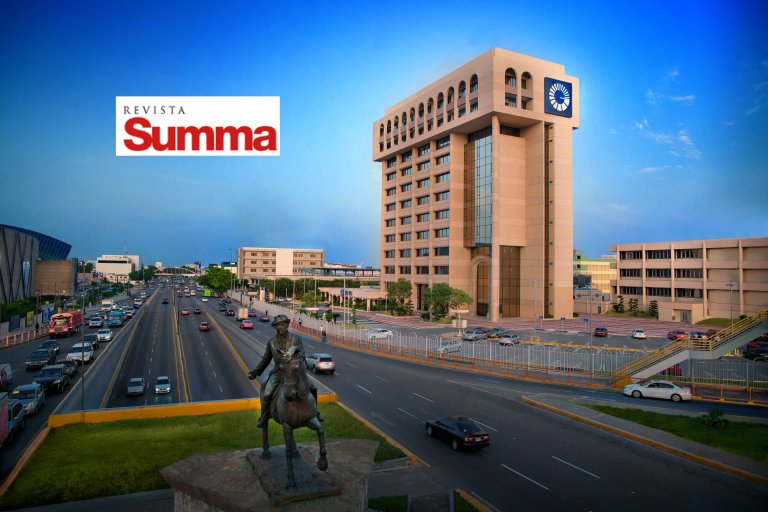
SANTO DOMINGO, DN – Banco Popular Dominicano was recognized as the most sustainable company in the country, according to the ranking of the Most Sustainable Companies in Central America and the Dominican Republic, carried out by Summa magazine, in its August edition.
The financial organization ranked first among the top 20 national companies and sixth regionally, standing out among 100 companies from seven countries in the region, reflecting the depth of the bank's sustainable vision and its commitment to being a catalyst for sustainable development, both internally and externally.
“Since opening its doors on January 2, 1964, this financial institution has played a fundamental role in the sustainable development of the Dominican Republic, guided by a vision focused on economic, social and environmental well-being that transcends conventional banking parameters,” the publication about the bank states.
To obtain these results, the business magazine conducted a survey of 1,200 readers and professionals in the region, of which 10% corresponded to the Dominican Republic.
Guaranteeing the environmental future
The CEO of Banco Popular, Christopher Paniagua, expressed his satisfaction with the award and stated that “at our financial institution, we know that only with a sustainable vision can we guarantee the future and build a lasting legacy for future generations. The role of the financial sector as a whole, and Banco Popular in particular, is fundamental to achieving this transformation of the social and environmental model in accordance with the planet.”.
Five years ago, Banco Popular was a pioneer in the Caribbean islands when it became a signatory to the Principles for Responsible Banking of the United Nations Environment Programme Finance Initiative (UNEP-FI), an international banking alliance that seeks to align internal, business and sustainability actions with the 2030 Agenda and the UN Sustainable Development Goals.
Leadership in digital transformation
In its June edition, Summa highlighted the bank as a leader in digital transformation, ranking it first nationally and second in the region. This recognition underscores the bank's commitment to innovation and its ability to lead in the technological environment.
In that sense, 85.3% of those surveyed acknowledged that Banco Popular not only deeply understands digital transformation and its impact on results, but also invests in technology as a central component of its strategy.
Corporate reputation and organizational climate
Summa magazine, in previous editions this year, also highlighted Popular as the private equity company with the best corporate reputation in the Dominican Republic and as one of the companies with the best organizational climate.
This reputation ranking was based on a survey of more than 2,000 executives in the region, who evaluated aspects of public perception such as the authenticity and trust of the public in the financial organization.
Regarding organizational climate, Popular ranked third in the Dominican Republic and positioned itself among the top 20 companies regionally, out of a total of 100 companies from seven countries, considering the work environment, growth opportunities and internal satisfaction among the factors highlighted in this list.
He said that the one-stop shop doesn't always respond as it should.
SANTO DOMINGO.– Regarding complaints from some business owners in the eastern part of the city about delays in obtaining building permits from government agencies involved in the process, Fermín Acosta, former president of the Dominican Association of Housing Builders and Developers (Acoprovi), suggested that the Ministry of Housing, Habitat and Buildings (Mivhed) implement urban brokerages to expedite these procedures.
“We want to take this opportunity to suggest to the Ministry of Housing, Urban Development and Housing (MIVHED) that it put into operation the urban brokerages that are managed by the private sector, but enforcing the Ministry's regulations, and that would allow for faster project approvals,” the businessman stated when consulted by El Inmobiliario.
Acosta said that with this implementation, it also eliminates the need to look for intermediary companies to process projects for developers, which, he said, increases costs for construction companies.
He argued that “there are certainly some delays in the approval of projects, which are not necessarily the responsibility of the Ministry of Housing and Urban Development (MIVHED), because there are other entities involved in project approvals and the one-stop shop does not always respond as it should.”.
At this point, he agrees with Teodoro Tejada, former president of the Dominican College of Engineers, Architects, and Surveyors (CODIA), who told El Inmobiliario last week that the one-stop shop is a myth in the country. “They’ve been negligent in issuing building permits here, and this whole one-stop shop thing is a myth; it’s never existed in this country,” Tejada emphasized.
For his part, Acosta cited the municipalities, the Ministry of Environment, and the Ministry of Tourism as among the institutions involved in issuing permits.
Fermín Acosta. (External source).
“One issue that developers in the East face is that they almost always have to look for an intermediary company to manage the approval of projects,” Fermín Acosta pointed out.
He stressed that this represents "an anomaly in itself because project approvals should be directly between the interested party and the approving institution, and everything should work through a single window.".
The complaints
Daniel Cordero and Arnold Cordero, executives of Desarrolladora Morada, with several projects in Punta Cana, expressed that the construction sector in the eastern part of the Dominican Republic faces a growing challenge such as the constant delay in the issuance of permits for real estate projects.
They stated that the situation has generated concern among construction companies, who claim that the progress of their works has been affected by the slowness of the authorities.
They stated that the situation hinders the progress of the area and could damage its reputation due to the constant delays in project deliveries.
“If we don’t have a shared responsibility among the authorities regarding permits, it’s impossible for us to develop this area. This area has lost prestige, for example, due to the many late deliveries by numerous developers,” he stated.
Daniel Cordero asserted that this scenario is largely due to delays in the issuance of permits by various state institutions.
Former President Codia
Similarly, former Codia president Teodoro Tejada stated that the situation in the East is regrettable, and that all permits for that area are processed through the Dominican capital, further exacerbating the problem. "This is a setback because the same situation from 20 years ago persists," he said, adding that local offices simply collect cases and refer them to the National District.
He said that those who hinder construction permits have a strong impact on the Dominican economy, because when construction is paralyzed in that same order, dynamism stops, since it is the main catalyst for jobs in the country.
He added that several sectors are indirectly affected, such as the construction industry, the hardware store, the woman who sells food in the towns, and all the actors involved in the process.
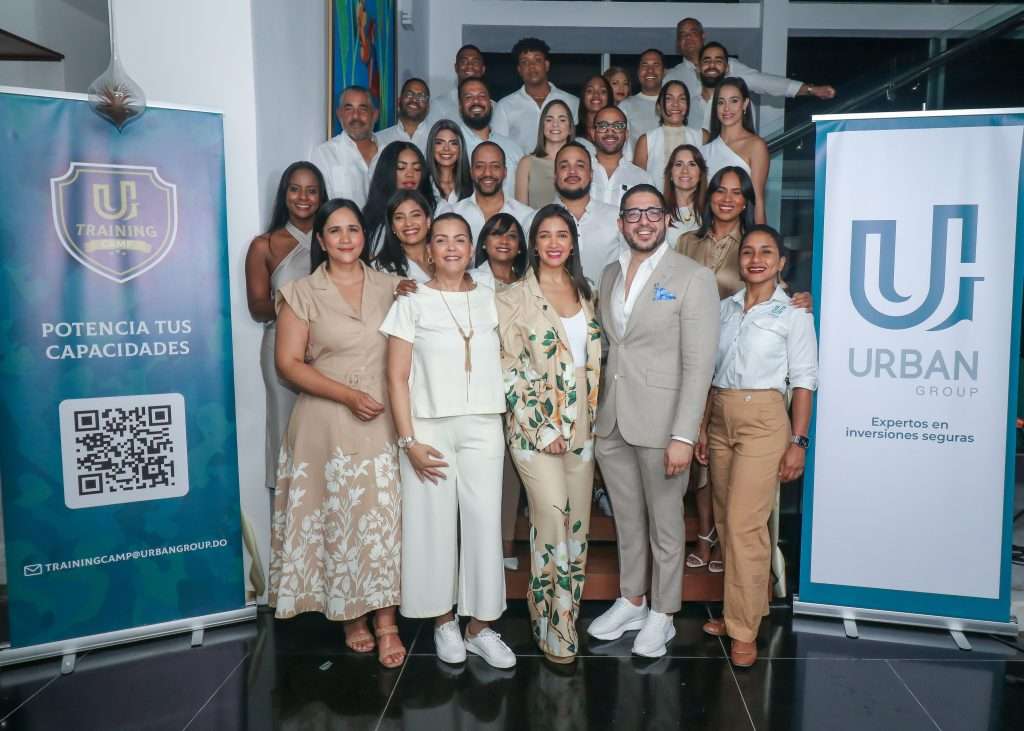
SANTO DOMINGO- The calendar marked the month of November 2015 when Urban Realty Group opened its doors with the goal of making a name for itself in the Dominican Republic real estate market.
Almost nine years after its creation, the company has directed its actions to leave its mark within the sector, both inside and outside the country.
Throughout this time, they have maintained their focus on adapting to market needs, ensuring that their services are fully personalized and of high quality.
To learn about their history and growth, it is necessary to go back to their past to learn about their first three years in the market and what they achieved in just two years.
During those years, 2018-2020, the company expanded its operations, opening new offices in downtown Santo Domingo, the Eastern Zone, Punta Cana, Santiago, and Las Terrenas.
But the coverage will not end there, because, as the leaders of the real estate firm, Luz Sarmiento and César Iván Santana, indicated, "the company has plans to continue expanding to cover more areas.".
The team from the new Punta Cana office with the firm's executives. (External source).
Currently, Urban Realty Group has a team of 150 associated real estate agents, focusing on providing comprehensive property management from buying and selling to renting properties.
During the pandemic, from 2020 to 2023, the company digitized its services by investing in a Customer Relationship Management (CRM) technology tool, allowing it to improve customer relationships and the management of its operations.
According to César Iván Santana, for the past two years, the company has been adopting a digital communication and signature management system in collaboration with construction companies by following current market trends.
This real estate firm, affiliated with the Association of Real Estate Companies and Agencies (AEI), has charted a course internationally through participation in international fairs to promote the Dominican Republic's real estate market.
“The company is internationalizing the Dominican Republic's real estate product, taking advantage of the numerous internationalization policies currently in place in the country. The Dominican Republic is positioning itself as one of the most attractive destinations in the Caribbean, and Urban Realty Group SRL is capitalizing on this advantage to attract global investment,” explained Luz Sarmiento.
This operator, which will celebrate its ninth anniversary on November 15 of this year, has developed social responsibility actions through significant contributions to foundations and institutions in the country.
Its leaders indicate that the company projects continued and healthy growth, focused on expanding its presence in the local and international markets. "The company remains focused on service excellence and adapting to market needs to maintain its leading position in the real estate sector," they conclude.
Cover photo: Luz Sarmiento and César Iván Santana cut the ribbon at the new Punta Cana offices. (External source).
Apordom reported that 42 cruise ships and nearly 140,000 visitors arrived in the country in August.
SANTO DOMINGO.-The Dominican Republic will receive 26 cruise ships this September, with Amber Cove (Puerto Plata) receiving the most vessels from its ports and anchorages, with 15; followed by Taíno Bay (Puerto Plata), with 7; La Romana, with 3; and San Souci (Santo Domingo), with 1.
The Dominican Port Authority (Apordom) specified that in August 42 cruise ships touched Dominican soil, with a total of 139,065 visitors arriving in the country through four of the maritime terminals.
He reported that, of the total number of vessels that arrived at Dominican ports, 16 were through the Amber Cove terminal, 12 through Santo Domingo Ferry, while Taíno Bay received 12 and La Romana 3, through which a total of 139,065 visitors arrived.
Jean Luis Rodríguez, executive director of Apordom, highlighted in a press release the importance of these cruise ship arrivals, with the aim of making the Dominican Republic the Cruise Hub of the entire Caribbean.
September
The arrival of the new ships began on September 1st with the following ships:
Valiant Lady on the 1st and 29th; MSC Seascape on the 2nd, 16th and 30th; Carnival Mardi Gras on the 3rd, 11th and 25th; Carnival Celebration on the 4th, 18th and 24th; Carnival Vista on the 5th, 19th and 23rd; Carnival Horizon on the 5th, 16th and 19th; Adventure of the Seas on the 9th and 23rd; Carnival Freedom on the 11th; Carnival Magic Cruise on the 17th, 26th and 27th; Carnival Sunshine on the 18th and World Explorer on the 29th.
According to the projected arrival schedule for visitors at the different cruise terminals, dates vary and changes occur due to weather conditions, route changes by cruise lines, and other factors that may decrease or increase the number of port calls.
SANTO DOMINGO.-The Central Bank of the Dominican Republic (BCRD) reported that, between January and August 2024, remittances received reached US$7,112.5 million, increasing US$342.6 million (5.1%) compared to the same period of the previous year.
The Central Bank of the Dominican Republic (BCRD) reported that remittances totaled US$952.3 million in August, a 10.7% increase compared to August 2023. "It is important to highlight that these resources provided by the Dominican diaspora abroad have a multiplier effect on consumption, investment, and financing for the country's most vulnerable sectors," the entity emphasized in a statement on Sunday.
The BCRD explained that the economic performance of the United States was one of the main factors influencing remittance flows, as 82.0% of formal flows in August, totaling US$713.5 million, originated from that country.
On the one hand, the overall unemployment rate in the United States was 4.2% in August, a slight decrease from the 4.3% recorded in July 2024, with the creation of 142,000 new jobs. Additionally, the Institute for Supply Management's (ISM) non-manufacturing Purchasing Managers' Index (PMI) registered a value of 51.5 in August, slightly above the 51.4 observed in July, indicating the expansion of the services sector, where a large part of the Dominican diaspora is employed.
The Central Bank of the Dominican Republic (BCRD) also highlighted the receipt of remittances through formal channels from other countries in August, such as Spain, which received US$59.1 million, representing 6.8% of the total. Spain is the second largest recipient of remittances from the Dominican diaspora abroad. Italy and Haiti followed, receiving 1.3% and 1.1% of the total flows, respectively. Other countries receiving remittances include Switzerland, Canada, and Panama.
Regarding the distribution of remittances received by province, the Central Bank of the Dominican Republic (BCRD) indicated that the National District received 43.0% during August, followed by the provinces of Santiago and Santo Domingo, with 11.8% and 7.6%, respectively. This indicates that almost a third of remittances (62.4%) are received in the country's metropolitan areas.
“Analyzing the recent evolution of the external sector, the Central Bank of the Dominican Republic (BCRD) anticipates a favorable trend in foreign exchange inflows during 2024, generating more than US$42.6 billion. Tourism sector revenues stand out, exceeding US$10.5 billion, with remittances bringing in a similar amount. Likewise, year-end estimates project foreign direct investment (FDI) flows above US$4.5 billion and exports from free trade zones exceeding US$8.4 billion. These foreign exchange inflows contribute to maintaining the current relative exchange rate stability, such that as of the end of August 2024, the national currency had depreciated by 2.8% compared to the end of 2023.”
The Central Bank reaffirms its commitment to monitoring the current economic environment and continuing to take the necessary measures to counteract the impact of the challenging international landscape on the Dominican economy, in order to guarantee price and exchange rate stability.
SANTO DOMINGO EAST - President Luis Abinader announced this Sunday the start and completion of several infrastructure projects for the residents of this district.
While presiding over a Council of Ministers and Directors in this municipality, along with the vice president, the president stated that the buildings analyzed during the council are fundamental for this municipality.
During the Council meeting, which lasted for 3 hours, each of the commitments that have been developed in these four years in the municipality of Santo Domingo Este was reviewed and discussed.
In this regard, the head of state reported that the Court of Justice will be completed by the end of this year.
In that same vein, he asked Mayor Dío Astacio to chair a commission to determine the works that could complement the services of the Court of Justice, in coordination with the Ministry of Public Works.
The president also announced that the groundbreaking ceremony for the construction of the extension of the Autonomous University of Santo Domingo (UASD), which will be built in the vicinity of Ciudad Juan Bosch, will take place next Tuesday.
He also said that the Santo Domingo Metropolitan Train is in the bidding process, which would start at Máximo Gómez with John F. Kennedy Avenue and cross the Duarte Bridge to Charles de Gaulle Avenue and then take the entire Ecological Avenue.
He also highlighted plans to build a general hospital in the municipality, three wastewater treatment plants, improve and rebuild the Santo Domingo East boardwalk, and deliver more than 10,000 property titles.
He highlighted that work has already been done in the municipality on an extension of ITLA, two Infotep facilities, and the construction of the Ecological Avenue, which will extend to Boca Chica, the Equestrian Avenue, and Colonel Fernández Domínguez Avenue. He added that they also have plans to improve the Mella Highway as far as San Isidro.
The Minister of the Presidency, José Ignacio Paliza, stated that the cost for the construction of the UASD will be approximately RD$1.5 billion and that Vice President Raquel Peña will break ground.
In October 1994, German archaeologist Klaus Schmidt embarked on a reconnaissance mission in southern Turkey. Schmidt had read a report by a University of Chicago archaeologist who, in the 1960s, had discovered a mound containing archaeological remains near a village close to Urfa. The archaeologist considered the site unremarkable, noting only the presence of a medieval cemetery and several flint tools. But Schmidt had a hunch and wanted to investigate further.
Schmidt and his team began searching for the site, initially without success. “We stopped without seeing any archaeological trace, only the tracks of flocks of sheep and goats.” Finally, 14 kilometers from the city of Sanliurfa, they located a mound that the locals called Göbekli Tepe, “potbelly hill.” Schmidt immediately realized that the mound was not natural, but the result of human activity. On its surface, they found scattered fragments of limestone and a large quantity of flint chips: “As we approached the hill, the surface began to glow […]. It was like a carpet of thousands of fiery crystals: fragments of man-made artifacts.”.
Pillars and reliefs
Within minutes, the importance of the discovery became clear. Archaeologistssoon stumbled upon fragments of large, carved blocks and also identified remains of sculpture. Schmidt's decision was made: "My plan, which was to visit many more Neolithic sites this autumn, quickly evaporated in light of this discovery. How could this place have gone unnoticed until now?"
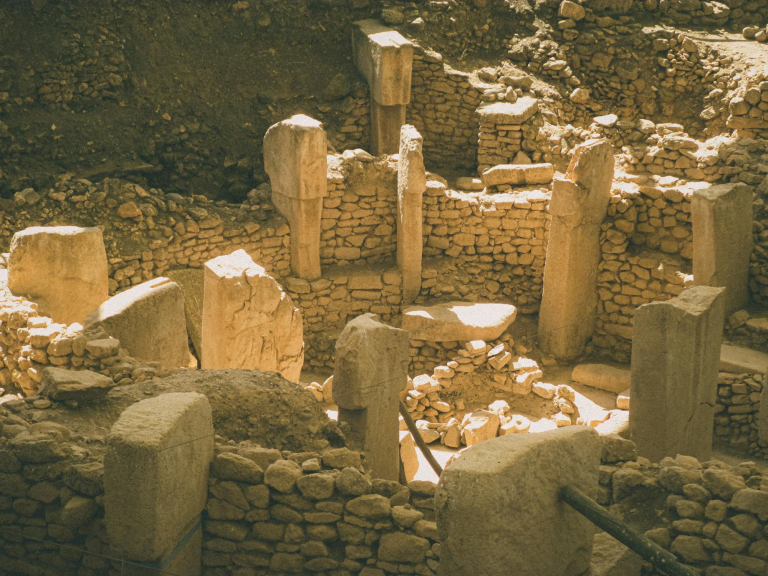
Excavations began the following year and unearthed impressive megalithic structures: at least twenty T-shaped limestone pillar circles, some bearing human-like features and decorated with a series of animal reliefs, some highly refined. Analysis revealed the site's remarkable age, dating back to around 9000-7500 BC, the heart of the Neolithic period.
The complex consists of several successive structures, built one on top of the other. Although it is not yet possible to establish a clear chronological sequence, an earlier phase is evident, characterized by larger, more elaborate pillars and richer reliefs. The largest monoliths (placed in the center of the structures) must have originally been 5.5 meters high and carved from a single piece that could weigh 40 tons. In the later phase, the size of the pillars was reduced, and they were anchored in the ground less skillfully. The reliefs were of lower quality, and the structures appeared surrounded by rectangular walls. Finally, activity at Göbekli Tepe ceased completely around 7500 BC.
Was it a sanctuary?
In 2000, Klaus Schmidt proposed the theory that Göbekli Tepe was a Neolithic religious center, which would make it the oldest temple in history; at least six millennia older than the megalithic complex of Stonehenge in Great Britain. According to Schmidt, the complex would have been built by groups of hunter-gatherers who periodically made pilgrimages from an area of up to two hundred kilometers around to celebrate rituals associated with the animal forces represented on the pillars of the complex.
Schmidt's interpretation is based on the reliefs carved on the pillars of Göbekli Tepe. These pillars—comparable to those of the nearby temples of Nevali Çöri, submerged by a recently constructed dam—resemble stylized, headless human figures with sculpted arms on either side, ending in hands that point toward the abdomen, covered by a kind of loincloth. They all face inward toward the circle, "as if at a gathering or a dance." According to Schmidt, they represent the underworld.
The missing heads could be related to the custom of removing skulls from graves. The burial of the structures is also intriguing: Did they lose their spiritual power over time? Or was the ceremony associated with a specific event or person, such as a clan chief?
Revolutionary theory
Schmidt believes that the discovery of Göbekli Tepe changes our understanding of Neolithic development. Contrary to the conventional view that the invention of agriculture led to a sedentary lifestyle, Schmidt argues that in the case of Göbekli Tepe, religion was the driving force behind the change. Semi-nomadic hunter-gatherer groups began settling in the area to store and defend their food sources in order to supply the temple.
However, scholars such as Ted Banning have questioned whether Göbekli Tepe was exclusively a religious center and not a settlement, and whether its builders were hunter-gatherers, since small mills and flint sickles, typical of farmers, have been found.
Geophysical surveys at Göbekli Tepe have shown that the site covered 90,000 square meters and that fifteen more enclosures remain buried. It appears that some of these could be older than the four excavated to date, dating back to the end of the last Ice Age, around 15,000 years ago; this would therefore predate the first evidence of agriculture by 5,000 years.
Before delving into the fascinating world of real estate in the Dominican Republic, it's important to clarify that this article focuses primarily on the purchase and sale of existing properties, or the popular "resales." If you're considering buying a property off-plan or under construction, some of these tips will be helpful, but keep in mind that this process has its own specific characteristics, which we'll address in a future article.
Now, let's talk about those houses, apartments, and plots of land that already have their own story…
Have you ever heard that real estate horror story where someone bought their dream home only to discover it was mortgaged to the rafters? Or the one where a seller lost the perfect buyer because their title deed had a typo? Well, brace yourself, because in the Dominican Republic's real estate market, these stories are more common than you think. But don't worry, we're here to prevent you from becoming the star of the next real estate trailer.
And if you think that's bad, wait until you hear what happened to Juan La Romana. He bought a beautiful beachfront villa, everything seemed perfect… until he discovered that the name on the title certificate belonged to someone who had died years before. Surprise! It turns out he was the third "owner" in a chain of sales that were never legally registered.
Or let's talk about Maria, who thought she'd made the deal of a lifetime in Santo Domingo Este. She signed the contract, paid, and when she went to register her new property… boom! She found out she was the fourth in a line of buyers, all with contracts in hand, but none officially registered.
And let's not forget Pedro, who, three years after buying his dream apartment, decided to sell it. Guess what? His marital status on the title certificate was wrong. A simple mistake turned into months of headaches and thousands of pesos in legal expenses.
Sounds like a thriller, right? But don't worry, we're not here to scare you, but to equip you with the knowledge you need to give your real estate story a happy ending. We're going to reveal the secrets that will turn you into an expert navigator of the turbulent waters of the Dominican real estate market.
1. The title certificate: your lifeline in the sea of properties
In the Dominican Republic, a degree certificate is like a life preserver at sea. If it's in good condition, it keeps you afloat. If it has holes… well, you can imagine, you'd better know how to swim.
Buyer tips:
Request a "Legal Status Certificate" from the Title Registry. It's like requesting the medical records of your future home. But wait, there's something even better: the "Priority Reservation Certificate." It's like a snapshot of the property's legal status. It tells you who the current owner is, if there are any legal issues (like mortgages or liens), and best of all, it "freezes" that information for 15 business days. Why is this great? Imagine you're about to buy a house. You request this certificate, and it tells you that everything is in order. During those 15 days, no one can register anything new about that property without your knowledge. It's like putting the property on pause while you complete your transaction. It's your insurance against last-minute surprises!
Verify that the seller is indeed the owner. And no, a faded photocopy of the title isn't enough. They should show you the original, and it must be the same person listed on the title.
Look for “liens,” “encumbrances,” “litigation,” or “preliminary notices.” These are like hidden debts on the property. You wouldn’t want to inherit someone else’s debts or litigation, would you?
Tips for sellers:
Review your title as if you were going to submit it to a spelling bee.
Is your name spelled correctly? Is your marital status up to date? Are all the digits on your ID number in the correct order?
If there are any mistakes, correct them before putting up the "For Sale" sign or giving it to a real estate agent. Remember Peter and his costly lesson about typos.
2. The chain of ownership: more tangled than a soap opera
This is where Juan and María's stories become relevant. It's not enough for the seller to have a piece of paper that says he's the owner.
Investigate the property's history like a detective. How many times has it been sold? Are all those transfers properly recorded?
If there's a chain of unregistered "sales contracts," it sets off all the alarm bells. There are taxes to pay, and even surcharges. It's like playing telephone, but with your money on the line.
Consult with a lawyer specializing in real estate law. Yes, it's an extra expense, but it's much cheaper than buying a property that's not registered or ending up in a legal battle.
3. Demarcation: when fences are more important than the garden.
Demarcation is like marking your territory, but legally. Law 108-05 considers it essential, and rightly so.
If the property isn't surveyed, consider having it surveyed. It's like tailoring a suit to your land.
Properly defining property boundaries prevents arguments with neighbors and future headaches when you want or decide to sell. Trust me, you don't want to discover your jacuzzi is in your neighbor's yard.
4. Investigate like you're Sherlock Holmes
Before signing any document, put on your detective hat:
Are the taxes up to date? Nobody wants to inherit someone else's debts, not even those owed to the government. Verify that the Property Tax (IPI) is paid. It's like buying a car and discovering it has years of unpaid registration fees; that's not the kind of inheritance you want.
Are all the utilities paid? Ask for proof of disconnection or transfer of the contract. Imagine moving into your new home only to discover that the previous owner owes six months of electricity, or that the water has been cut off for weeks because the previous owner didn't pay. It's like arriving at a restaurant and being told you have to pay the previous customer's bill. That's not the kind of surprise you want in your new property.
If it's an apartment, investigate the condominium's situation:
Are you up to date with your obligations?
Are there any outstanding extraordinary fees?
How is the building's reserve fund?
Are there any planned renovation projects that might result in extra fees?
Remember, buying an apartment also means buying a share of the common areas, with all their benefits and drawbacks. You don't want to move in and find your first gift is an extra fee to fix the elevator that's been out of order for months or the water pump that's stopped working.
If it's a house, check:
The state of the boundaries. Are they clear and respected?
Are there any conflicts with the neighbors regarding property boundaries?
Are all structures (such as fences or annexes) within the correct limits?
For land:
Make sure the boundaries are clearly defined and marked.
Check if there are any usage restrictions that might affect your future plans.
Investigate the history of the land. Have there been any attempted invasions or squatters?
In tourist areas or near the beach:
Verify that the property complies with specific local regulations.
Make sure there are no issues with environmental law, especially for beachfront properties.
Remember, in the Dominican real estate market, information is power. It's better to ask questions now than to be naive and regret it later.
5. The contract: where even the smallest comma matters.
This is where Law 108-05 comes into play. This law is like the umpire in Major League Baseball: it sets the rules of the game.
Describe the property as if you were talking to a blind person. Every detail counts.
The price and payment method must be clearer than the water on Cayo Levantado.
Make sure a good real estate lawyer drafts the contract. They're like the master of ceremonies for your purchase.
Establish who is responsible for what. It's like a prenuptial agreement, but for your home.
6. The grand finale: closing and registration
This is like the wedding ceremony of your transaction:
Pay the transfer taxes. The state always wants its share ofel inmobiliarioprofits.
Register everything with the Title Registry, and don't hide the contract under your mattress. If it's not registered, it's as if it never happened. You don't want your purchase to be the best-kept secret in the Dominican Republic, do you?
A golden tip: think of others
Here's a secret that few share: in a sale, everyone wins if everyone looks out for each other.
For sellers:
Be transparent about the legal status of your property. Honesty is not only the best policy, it also prevents future headaches.
If there's anything that needs correcting on your title, do it before putting the property up for sale. It's like fixing your car before selling it.
For buyers:
Be patient if the seller is correcting something on your title. Sometimes, bureaucracy is slower than traffic on Lincoln on a Friday afternoon.
Ask all the questions you can think of. There are no silly questions when it comes to investing your savings.
For real estate agents:
Be the bridge of knowledge. Your role goes beyond showing properties; you are the expert trusted by both buyers and sellers.
Do your own research. Before listing a property in your inventory, verify its legal status. It's better to uncover problems before your client does.
Stay up-to-date. Laws and regulations change; staying current makes you invaluable to your clients.
Cultivate a network of professionals. Keep trusted lawyers, appraisers, and other experts on hand. Sometimes, knowing who to call is just as important as knowing what to do.
Educate your customers. Don't assume they know everything. Explain the processes, risks, and opportunities. An informed customer is a satisfied, returning customer.
Always be ethical. Your reputation is your most valuable asset in this business. Trust takes years to build and seconds to lose.
Remember, in the real estate market, success is not measured solely in sales, but in successful transactions and long-term satisfied customers.
The moral of the story
Ignorance is not bliss, it's risk. Invest time in understanding the process, surround yourself with professionals (a good real estate lawyer is worth their weight in gold), and remember: in the Dominican Republic, a property bought or sold well is synonymous with long-term peace of mind.
So you know, before you sign on the dotted line, whether you're buying, selling, or advising, your goal should always be to conduct safe, transparent, and successful transactions.
The best investment is always in your own education and preparation.
Good luck with your next real estate transaction!
The author is: Real Estate Lawyer, specialist in tourism real estate investments, CEO and founder of Echenique Group, Secretary of the Board of Directors AEI, Certified Speaker, author and ethical reference in Real Estate.
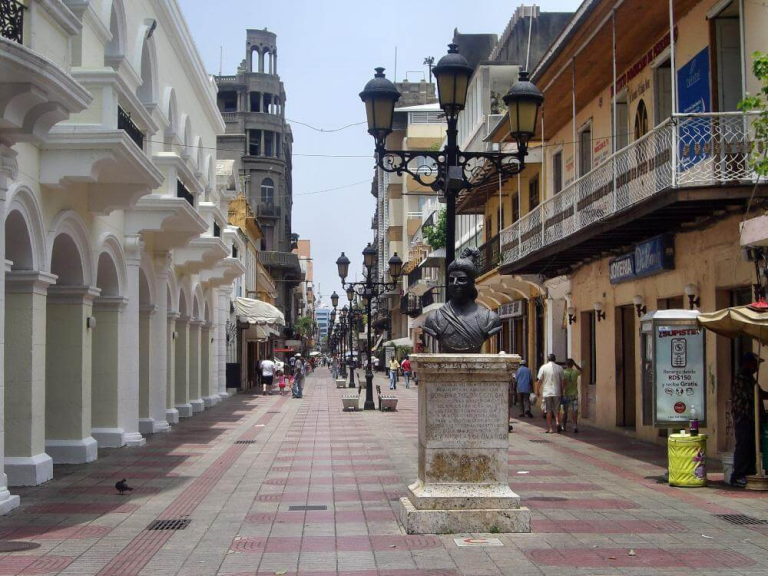
SANTO DOMINGO.-The Spanish ambassador to the Dominican Republic, Antonio Pérez-Hernández y Torra, announced that work is underway on the development of a virtual guide to the Colonial City, with the aim of promoting Dominican tourism.
He indicated that this virtual guide will include historical and thematic routes that will serve as a tool for the tourist promotion of the first city of America.
The diplomat spoke about the guide project during the launch of the book “Santo Domingo entre muros, memoria de una ciudad singular” by Banco de Reservas with the support of the National District City Hall and the Embassy.
He explained that the guide is part of this collaboration and highlighted the existing historical connection between Spain and the Dominican Republic.
“Within the framework of this collaboration, and with the aim of enhancing the tourist appeal of the Colonial City, we are working on a virtual guide that will include historical and thematic routes developed based on the documentation collected in this book,” he said
He said that the book's publication showcases the ties between Spain and the Dominican Republic. "We want to highlight the undeniable bonds that unite and connect Spain and the Dominican Republic, this time through knowledge of the first city founded in the Americas.".
“Santo Domingo entre muros, memoria de una ciudad singular” includes essays by authors such as Cruz Apestegui, Adolfo López Belando, José Enrique Delmonte, Miguel Reyes Sánchez, Risoris Silvestre Ortiz, Virginia Flores Sasso, Carlos Clemente, Elsy Zaldívar and José Guerreros.
The work offers a look at the impact of Santo Domingo on the expansion of the Kingdom of Castile in America and analyzes aspects ranging from colonial housing to the importance of religious and defensive constructions.
He stated that "state support can be better," as he believes it can be increased through public policies that create incentives or programs to achieve these actions.
Escarlin Pozo
El Inmobiliario
SANTO DOMINGO.- Several sectors are affected by the sargassum invasion in the Dominican Republic: tourism, the environment and public health, generating alert both in coastal areas and at a general level.
Once sargassum reaches the coasts, it affects the marine ecosystem, killing fish and turtles, and depriving corals and the marine ecosystem of sunlight and oxygen.
When it decomposes on the coast, it releases carbon and methane, which contributes to air pollution, affecting human health by causing respiratory problems in people who live near or visit the affected beaches.
Andrés Bisonó León. (External source).
As a result of this problem, the SOS Carbon. An initiative of engineer Andrés Bisonó León, originating at the Massachusetts Institute of Technology (MIT).
Through this idea, it seeks to mitigate this problem through the collection and processing of sargassum using advanced technologies that respond to the blue economy.
In an interview with the television program "El Día," Bisonó indicated that the project's first objective is to work hand in hand with the affected sectors, including tourism and power generators, in order to address this reality.
Furthermore, he explained that before the sargassum reaches the coast, it is collected, processed, and subsequently exported. He emphasized that the macroalga becomes a valuable raw material when it is fresh and in large quantities, allowing its use in various industries.
In the second step, which is processing, he specified that this stage results in their line of products for the agricultural sector. Among these, he highlighted a biostimulant called "Marine Symbiotic," which has been applied to 12 types of crops, including avocado, tomato, and rice.
During this treatment stage, he reported that different completely organic compounds are used, which eliminates any unpleasant odor and allows the product to be suitable for various uses.
Now, you might be wondering, what other uses can be given to sargassum once it's processed? This topic was addressed during the program. Andrés explained that, in Finland, for example, they produce cosmetics, noting that "they're doing quite well in terms of scaling up those products.".
The founder and CEO pointed out that they have exported sargassum to more than 10 countries in container shipments. In one specific case, he again mentioned Finland, highlighting that it is the country that has purchased the most, with shipments totaling up to 11 forty-foot containers.
Speaking about the project's progress, he explained that they have collaboration agreements with more than 30 institutions and have received support from the British and German embassies.
At the local level, he says that one of their main motivations is that problems arise from the academic institutions regarding research and development.
As a problem that affects territories in the Caribbean, this company has had an international reach by developing operations in Mexico, Puerto Rico and Antigua and Barbuda.
“We are the only ones authorized to collect the seaweed at sea before it invades American territory,” he said.
Finally, he stated that "state support can be better," as he believes it can be increased through public policies that create incentives or programs to facilitate these actions.
“So I believe that, indeed, our authorities still have a lot to do. They can work even more as a team with those of us in the field, not just focusing on theory, not just going around in circles, but also starting from what has already been validated and scaled up,” he stated.
CAP CANA- President Luis Abinader yesterday led the official opening of the El Dorado Park theme water park, located in the Cap Cana Destination City.
The facilities are based on assets managed by the investment fund manager Altio and will generate more than 350 direct and 500 indirect jobs.
The president of Dorado Park, Carlos Cobiella, said that Dorado Park aspires to be a milestone in Dominican Republic tourism, promoting the diversification of the current tourism profile and offering new employment opportunities.
Likewise, the Chairman of the Board of Directors of Cap Cana, Fernando Hazoury, thanked Banreservas for their support in the destination's projects and highlighted the creativity and persistence of the Dorado Park team.
It will be a success
Abinader expressed confidence that Dorado Park will be a great success and assured that the government will continue to support this complementary offering. He also highlighted the country's strengths, including the growth in health tourism and its rich culinary scene.
"We are going to announce similar projects to this one in terms of theme park projects from very powerful brands worldwide, who are very interested in participating and investing in the Dominican Republic, together also with Dominican investors. This is a sign that Dominican tourism is already going beyond hotels, that Dominican tourism is going beyond real estate development and that it is consolidating itself in theme parks," he explained.
Tourism Minister David Collado highlighted that during the four years of President Abinader's first term in office, sales in the Cap Cana Destination City have exceeded those of the previous ten years.
More than 16 attractions
El Dorado Park is an asset of the ALTIO II Closed Development Fund. It is the country's first themed water park, and boasts more than 16 attractions and an infrastructure designed to accommodate thousands of visitors. Together with its spectacular amphitheater, it is an example of innovation and sustainability in the region.
SANTO DOMINGO- Qik Banco Digital Dominicano, SA – Multiple Bank, a subsidiary of Grupo Popular and the country's first neobank, was awarded three recognitions at the Global Awards for Best Digital Bank for Consumers, organized by Global Finance magazine.
These awards recognize financial institutions that lead in innovative digital solutions and set new industry standards. Qik Banco Digital received awards for Best User Experience (UX) Design, Best Digital Marketing and Social Media Services, and Best Digital Lending Experience.
The selection of the winners considered aspects such as the user and consumer experience in the bank's app, innovation in digital financial products, growth of the customer base, and excellence in interaction through mobile applications.
A highlight of Qik's proposition was its 100% digital personal loan experience, which allows users to obtain a loan in a matter of minutes.
A bank that keeps pace with today's times
Since its launch in November 2022, Qik has distinguished itself as a banking institution that evolves with its customers, staying ahead of the curve by listening to their needs and providing innovative solutions. This is reflected in a streamlined user experience, simplified application processes, and fast approval times, offering its customers modern banking.
In terms of communication, the Dominican Republic's first neobank has adopted a close, direct, friendly, and creative approach to interacting with its customers through social media and other digital channels. It uses everyday customer stories to connect with them and provide them with the tools they need to take control of their finances.
Arturo Grullón F., executive vice president and general manager of Qik, expressed his pride in the achievements obtained, highlighting that these are the result of teamwork and a focus on offering customers innovative products that provide more benefits at lower costs.
"Together we are changing the Dominican banking landscape and building a more inclusive, agile and innovative financial future for all," the executive said.
Currently, Qik offers a portfolio of products that includes credit and debit cards, savings accounts, personal loans, and financial certificates.
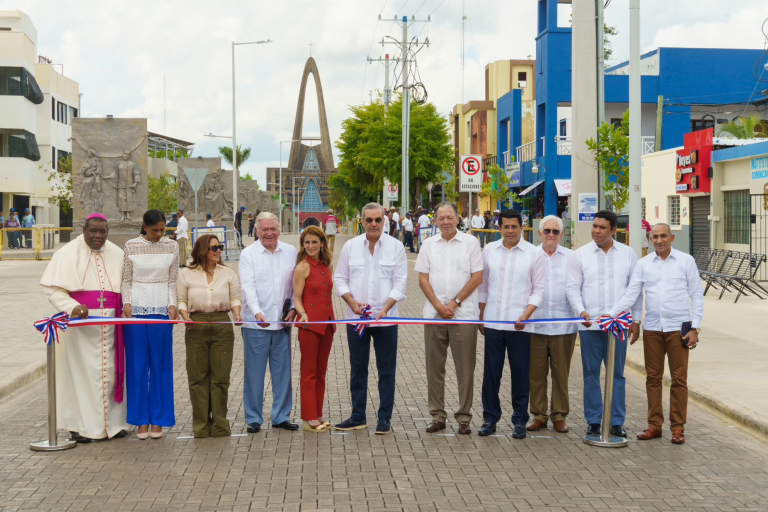
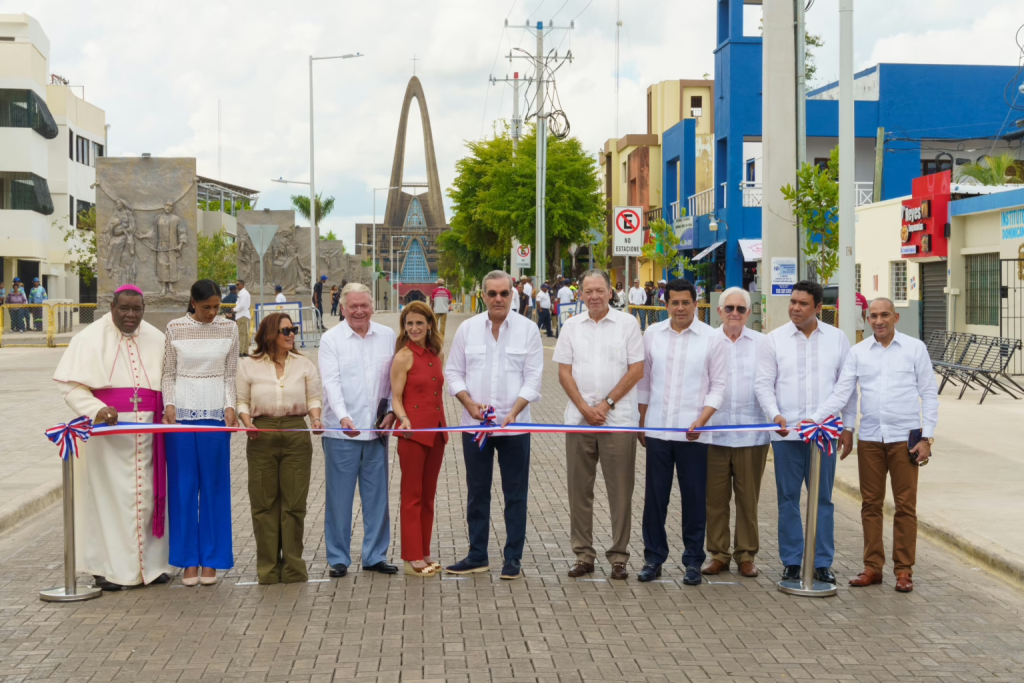
In Higüey, President Luis Abinader and Tourism Minister David Collado inaugurated the Pilgrimage Boulevard and the reconstruction of the streets surrounding the Basilica of Our Lady of Altagracia yesterday, Friday, with an investment of over RD$115,000,000.
The works, which represent a great boost for religious tourism in the country, comprised an intervention of 9,300 square meters, including the paving of 362 linear meters of the main access road to the Basilica, Agustín Guerrero Avenue.
It also has a system of drains and filters for effective management of rainwater drainage and conservation of the road, a press release highlights.
It also includes the construction of 5,120 meters of paved sidewalks and 904 linear meters of curb.
The Via Sacra project consists of the construction of approximately 14 stelae representing the Mysteries of the Sorrows and Joys of the Virgin, which will serve as a religious tourist route for devotees and tourists visiting the emblematic sanctuary.
The route will begin from the San Dionisio Sanctuary towards the Basilica of Our Lady of Altagracia.
The president said that these projects will have a great impact on religious tourism, as part of the diversified offerings of the eastern region, which receives the largest number of tourists visiting the country.
For his part, Collado highlighted the importance of these projects in the development and strengthening of religious tourism, which, he indicated, is increasingly important in the Dominican Republic.
“These works were a long-standing demand of the residents of La Altagracia province and also constitute a great boost for the development of religious tourism, especially here in the birthplace of the Virgin of Altagracia,” the official noted.
President Abinader and David Collado led the inauguration. (External source).
He stated that the new Via Sacra, which will promote the monument of the Basilica of Our Lady of Altagracia, will become the most important religious symbol in the entire region, bringing to Higüey a large part of the more than 5 million foreigners who visit the province each year.
Square meters
The works, developed by the Executive Committee for Infrastructure of Tourist Zones (CEIZTUR), also include the reconstruction of the Monsignor Adolfo Nouel park, which is 615 square meters.
In turn, the beautification of the newly inaugurated Via Sacra includes landscaping, equipment, lighting and underground work on high and medium voltage electrical wiring, as well as telecommunications and existing wiring.
It also has a system of drains and filters for effective management of rainwater drainage and conservation of the road.
Furthermore, it should be noted that the stelae were donated by the SID Group.
The opening ceremony for the works was attended by the main provincial, municipal and religious authorities of La Altagracia, as well as businessmen from the tourism sector.
They are making an urgent appeal to the relevant authorities to find a comprehensive solution that will allow procedures to flow smoothly and prevent a collapse and possible bankruptcy of a sector vital to the country's development.
SANTO DOMINGO.- Currently, the construction sector faces significant delays in obtaining authorizations and permits, despite being a pillar of the national economy, denounced the Association of Builders of Santo Domingo East (ASCODE) yesterday.
Construction business owners explained that due to poor management at the state level, they are experiencing delays in the construction schedule, increased expenses, higher financing and interest rates, and changes in delivery commitment dates.
In a press release sent to El Inmobiliario, they explain that the Ministry of Tourism (Mitur) presents the most problematic scenario, because according to the association, it issues approvals under a temporary decree that does not yet have the character of law and imposes restrictions that hinder the growth of the tourism and real estate sector and lack legal justification or clear regulations.
“The procedures can drag on for more than two years, without concrete solutions or objective approaches. This process should be in accordance with the law; the legal responsibility for issuing the no-objection to land use, as well as approving the density and height of projects, falls to the municipalities,” the entity stated.
They also complained that they lack local and foreign labor.
In the press release, the union states that institutions such as the Ministry of Housing, Habitat and Buildings (Mivhed) are experiencing delays in issuing construction permits that range from five months to a year, and are limited in issuing construction licenses in tourist areas, due to the lack of action by Mitur.
“On the other hand, the Ministry of Environment is facing delays of between three and six months, with some cases extending up to ten months,” ASCODE stated.
The Santo Domingo East construction association sees the government's commitment to reducing processing times in public institutions, in order to boost the country's economy, slipping away.
More problems
In addition to the delays in obtaining building permits from public institutions, ASCODE points to another difficulty: “In the city of Santo Domingo Este, especially in areas of greatest growth and vertical development, a new restriction has been implemented: the suspension of concrete pouring after 6:00 PM. This measure hinders the development of one of the fastest-growing areas. The bureaucratic process for pouring concrete is outdated in the face of current needs,” the association stated.
Urgent call
Engineer Riubell Montes de Oca, president of the association, made an urgent appeal to the competent authorities to find a comprehensive solution that will allow procedures to flow smoothly and prevent a collapse and possible bankruptcy of a sector vital to the country's development.
The Dominican Republic's Ministry of Tourism presented its new destinations in Miami, at an event attended by dozens of investors from North America, Europe, and Latin America.
The event, led by Minister David Collado, brought together top executives from airlines, luxury hotel chains, and investment funds across the continent, reaffirming the Dominican Republic's position as a leading luxury tourism destination in the Caribbean.
The event included the presentation of the new graphic and conceptual identities of Dominican luxury destinations, highlighting Miches, Samaná, Costa del Ámbar, among others.
Collado emphasized that the Dominican Republic is experiencing a period of solid economic growth and is ready to welcome investors seeking a vibrant destination with exceptional opportunities.
David Collado with businesspeople who participated in the meeting. (External source).
"This is the best time to invest in our country and take advantage of the dynamism of our tourism industry," the official emphasized.
In turn, Alejandro Reynal, Global CEO of Four Seasons, emphasized in his speech the importance of this strategic investment, stating: “The Dominican Republic has all the elements to be a luxury destination and for a brand like Four Seasons.”.
The event was sponsored by Banco Popular, Banco BHD, Banreservas and Grupo Puntacana, and concluded with a performance by the legendary Dominican artist Juan Luis Guerra, featuring his exquisite merengue music.
Attendees
Among the attendees were more than 45 CEOs, more than 40 presidents and decision-makers from major companies such as: Marriott International, Hilton, Grupo Posadas, Four Seasons, Intercontinental Hotel Group, Six Senses, The St. Regis Cap Cana.
In addition, Casa de Campo, AMANERA, Cap Cana, Grupo Punta Cana, Riverside Luxury Cruises, Virgin Voyages, Blue Diamond Resorts, Lopesan, Rosewood Hotels, Central Romana, Viva Wyndham, VH Hotels, Codelpa Hotels, Coral Gulf Assets.
Also, Coral Hospitality, Grupo Piñero, Punta Bergantin, Hodelpa, Grupo Martinon, Grupo Fuerte, United Airlines, American Airlines, Breeze Airways, JetBlue, Fly Select, Aeroméxico, Arajet, Sky High, Air Transat, Air Canada.
Other brands that attended the launch included Affluent Traveler, Travelwise, Bonvido, Forbes, Travel + Leisure, TIME Magazine, and CNN. This launch represents a crucial step in the country's strategy to consolidate itself as a luxury destination in the Caribbean, attracting high-end clientele and strengthening its position in the competitive international tourism market.
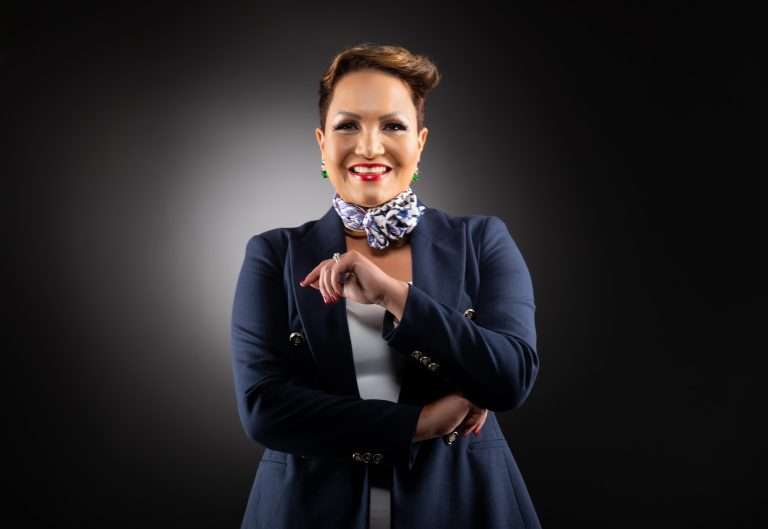
SANTO DOMINGO.- Nadia Tolentino is a marketing strategist. That's why she asserts that in such a competitive sector, real estate agents must stand out as authorities in their field, with their personal brand being the primary channel for communicating their expertise and building trust with their clients.
“The real estate sector urgently demands differentiation. With sustained market growth, agents need to adopt innovative tools that allow them to stand out. At the same time, it is crucial that they understand the changing and clear needs of the modern real estate client and that they can communicate their value strategically,” explained the advertising graduate, who will be one of the professionals taking the stage on Saturday the 21st of this month to speak at the “Master Agent” event, which will be held at the Dominican Fiesta Hotel.
Speaking to El Inmobiliario, the distinguished professional, a Cum Laude of the Autonomous University of Santo Domingo (UASD), considered that educating real estate agents has a profound meaning for her, as it gives her the opportunity to share key tools that are essential for effective management and the strategic positioning of their personal brands.
“Real estate agents participating in this event will gain a significant competitive advantage by training on the latest trends and advancements in real estate marketing. This will allow them to strengthen their market position and optimize the acquisition of qualified leads,” he explained.
He added that attendees will also learn the importance of designing clear and coherent strategies, where every action is aligned with specific objectives. “This strategic approach will allow them to act more consciously and with greater focus, transforming them into ‘Master Agents’—that is, highly trained professionals capable of successfully navigating the real estate market,” said Tolentino, who holds a master’s degree in Strategic Marketing.
Nadia Tolentino. (External source).
He opined that “Master Agent” is designed as the event of the year, with a 360º vision. “Our goal is to equip agents with a complete set of tools to face current market challenges and, most importantly, to stand out in an increasingly competitive environment,” he pointed out.
Professional profile
Nadia Tolentino is a marketing strategist with a strong academic background and extensive experience in brand management and consulting. A graduate in Advertising with Cum Laude from the Autonomous University of Santo Domingo, she complemented her education with a Master's degree in Strategic Marketing, solidifying her position as a highly qualified professional in her field.
His professional profile indicates that his specialization in sales and digital launches, along with his extensive knowledge in digital marketing, political communication and electoral campaigns, have allowed him to develop effective marketing strategies that drive the growth and positioning of brands.
“He also possesses managerial skills and a keen analytical sense, which allows him not only to create, but also to execute and supervise marketing strategies and manage sales teams in small and medium-sized enterprises.”.
In addition to her academic background, she has enhanced her professional profile with various specialized studies. These include a Diploma in Political Communication and Electoral Campaigns, another in Management Skills, and a third in Digital Marketing. She also holds international certifications in Digital Marketing and E-commerce, giving her a global and up-to-date perspective in the dynamic world of digital marketing.
“The combination of his solid academic background, practical experience, and constant updating on marketing trends and tools allows him to lead high-impact projects in today's competitive market,” he concludes.