



By Yermys Peña
Special for El Inmobiliario
Architecture and its limits: quantity or quality?
Recently, in an Asian city known for its dense urban development, a house was inaugurated on a seemingly unusable triangular plot of land. This ingeniously designed home optimized every available inch to create a unique living space. Such projects, while exceptional, prompt a broader reflection: to what extent should regulations be adapted to allow for creative solutions to spatial limitations?

The eternal debate: Quantity versus quality
The regulatory framework in architecture has been designed to guarantee basic standards of habitability, and is generally measured in terms of minimum surface area and dimensions. But when it comes to irregular contexts, where complying with these rules is impossible, the question arises: should we allow ourselves to relax the regulations to make way for innovation? This dilemma has no easy solution, but it clearly leaves room for debate.
Cities, with their irregular growth and the mix of styles they've developed over the years, create unique spaces that don't fit traditional regulations. In these cases, the only realistic solution seems to be architecture, understood as a tool for designing specific responses to particular problems.
The risk of limiting creativity
Regulations have a clear purpose: to protect the rights and well-being of citizens. However, when these rules are applied rigidly, they can stifle the creativity that architecture so desperately needs to evolve. Architects' ability to transform spaces lies not only in adhering to standards, but also in the imagination and innovation they can bring to each project.
For example, imagine an irregularly shaped lot in a traditional neighborhood that, according to current regulations, cannot be used for housing. If a well-thought-out design can transform that space into a functional, dignified, and safe home, why dismiss that possibility?
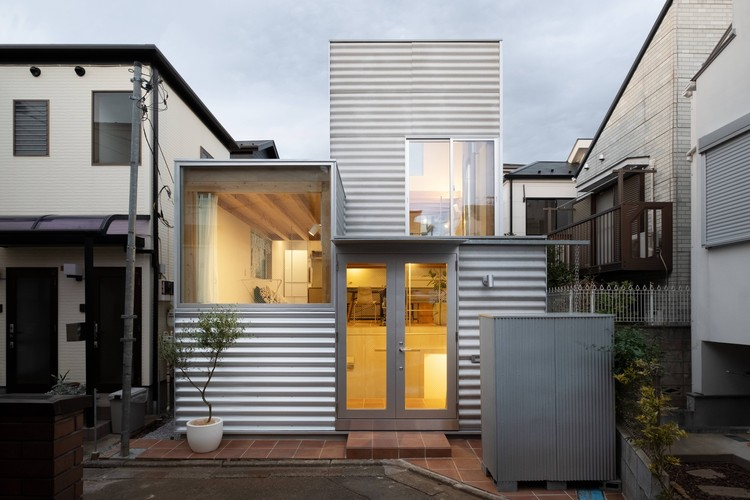
The "House Tokyo" is a single-family home designed by Unemori Architects in 2019. Located on a plot of just 26 square meters in Tokyo. Image: ArchDaily.
Architecture as a space for innovation
In some cases, regulations allow exceptions, such as construction on non-urbanizable land if there is a demonstrated public interest. This leads us to consider whether concepts like research and innovation should also be considered in the public interest. Projects that push the boundaries of the conventional could become design laboratories, always under rigorous quality and safety controls.
The challenge of redefining boundaries
It's true that relaxing the rules has its risks. For example, someone might argue that opening the door to these exceptions could lead to inadequate housing conditions. However, this doesn't mean we should abandon the idea altogether. With clear protocols and a responsible approach, it's possible to find a balance between creativity and regulation.
Towards a more flexible future
In a world where cities face constant challenges, it is essential that regulations evolve to reflect reality. When traditional solutions are insufficient, creativity must play a role. This does not mean ignoring the law, but rather adapting it to include flexibility that allows for addressing exceptional circumstances.
Ultimately, architecture aims to improve people's lives. Exploring how quality can compensate for the limitations of quantity offers an opportunity to move towards more inclusive, functional, and adaptable cities. Opening this debate is not only necessary, but also a sign that we are willing to evolve with the needs of our communities.
The author: She is an architect and a construction entrepreneur. Member of the Forbes Business Council.







