The creation of 74,794 regulated jobs during the second quarter of 2026 demonstrates progress in formalization, while the outsourcing of services emerges as an alternative to expand social protection and strengthen compliance with labor standards
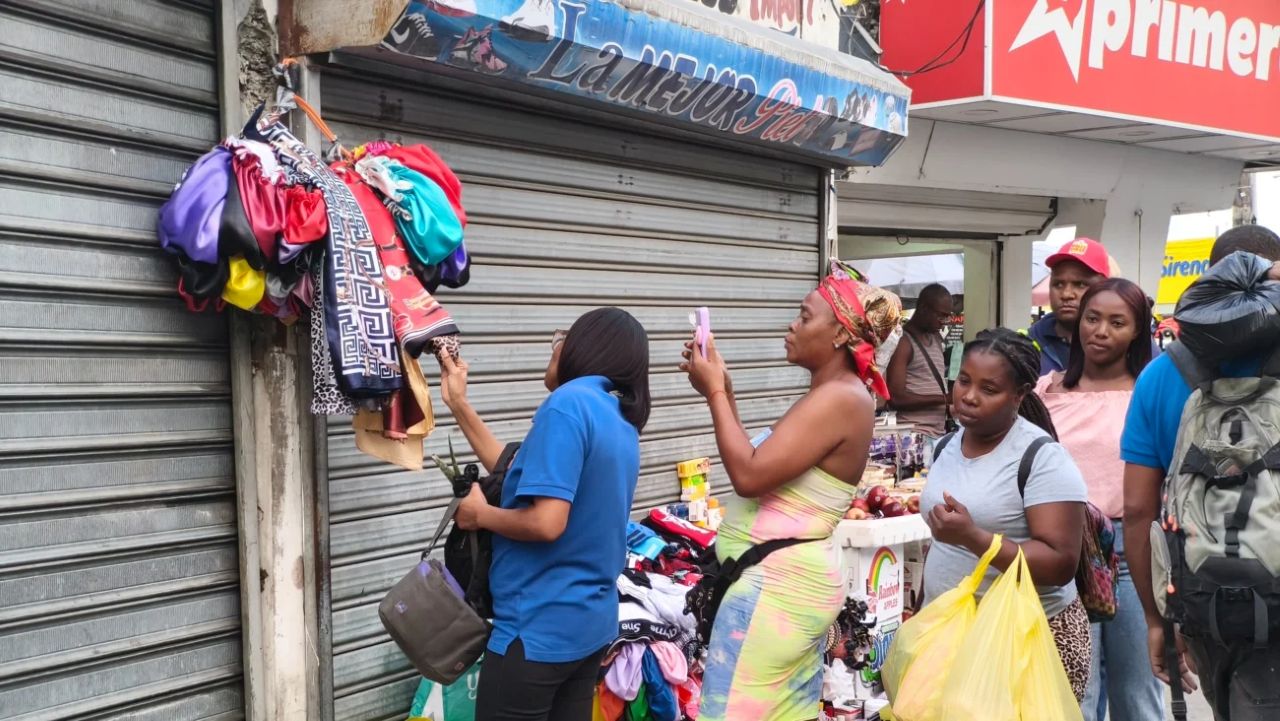
SANTO DOMINGO– Informality remains one of the main challenges facing the Dominican labor market, despite the growth in formal employment and the expansion of economic activity. At the close of the second quarter of 2026, the informal employment rate stood at 53.8%, according to the results of the National Continuous Labor Force Survey (ENCFT) conducted by the Central Bank of the Dominican Republic (BCRD).
Although the indicator fell below the historical average of 56.7% recorded since 2014, more than half of those employed remain in informal working conditions, which poses significant challenges in terms of social security, job stability and compliance with current regulations.
In this context, the Dominican economy registered 147,456 net new jobs year-on-year during the second quarter, of which 74,794 were in the formal sector, representing 50.7% of the total increase. This performance reflects a positive trend, although it also highlights the need to continue promoting mechanisms that facilitate access to properly regulated employment.
Informality, a challenge for the labor market
The persistence of informal employment poses a challenge to economic development, as many workers lack the guarantees associated with formal employment, such as social security affiliation and greater job stability.
This situation also presents difficulties for companies and authorities, especially regarding the protection of workers, the supervision of working conditions, and compliance with obligations established by Dominican legislation.
In that sense, economic growth, which accumulated an expansion of 4.5% between January and August 2026, according to the Monthly Indicator of Economic Activity (IMAE), constitutes an opportunity to promote new regulated positions and improve the quality of employment.
However, increased productive activity alone does not eliminate the conditions that foster informality. On the contrary, it requires entrepreneurial initiatives and hiring mechanisms that allow more people to be integrated into the formal system.
Formal outsourcing as an alternative
Given this scenario, formal outsourcing of services emerges as a tool to facilitate the integration of workers into regulated labor schemes. Through specialized providers, companies can contract operational services under structures that ensure compliance with labor obligations, social protection, and occupational safety standards.
According to the Human Resources and Operations department of the EULEN Group in the Dominican Republic, a company that manages approximately 2,200 employees in the country, the hiring of specialized services responds to the need to reduce legal and reputational risks, as well as to guarantee regulatory compliance.
"The increase in formal employment in the productive sectors coincides with a rigidity of institutional supervision and with international demands for environmental, social and governance (ESG) criteria," explains Eilin Díaz, general manager of the company.
Similarly, the formalization of outsourced activities can help certain traditionally informal or temporary occupations develop under more stable conditions, with access to benefits, training, and labor protection mechanisms.
Companies demand greater job security guarantees
Furthermore, the demands of multinational companies operating in the country are driving the demand for suppliers capable of demonstrating compliance with labor and social security regulations.
According to data provided by Grupo EULEN, approximately 40% of the demand for advanced auxiliary services comes from US and European corporations located in free trade zones or linked to the logistics sector. This latter point is particularly relevant given the 7.8% growth recorded by free trade zone activity in the IMAE (Monthly Index of Economic Activity), according to figures cited by the company.
"These corporations require that their entire supply chain guarantee strict compliance with Regulation 522-06 on Occupational Safety and Health, regular payment of Social Security, and the correct application of the new indexed nominal minimum wage ceilings in the private sector," Díaz points out.
Therefore, the formal contracting of services becomes important not only for companies seeking to maintain their operations, but also to strengthen the guarantees of those who perform support, maintenance, security and environmental management tasks.
More opportunities outside of major urban centers
The evolution of economic activity is also generating new needs for technical and operational personnel in different regions of the country. In particular, hubs such as Bávaro and Punta Cana, in the East, and Santiago, in the North, present opportunities linked to the expansion of specialized services.
Meanwhile, the 4.6% growth in the value added of Hotels, Bars and Restaurants reflects the dynamism of an activity that demands complementary services to maintain its operations.
Consequently, decentralizing recruitment can help expand job opportunities in different locations, provided that job creation is accompanied by suitable conditions and compliance with the corresponding obligations.
According to Díaz, the modernization of support services helps ensure business continuity and fosters the professional development of employees. Furthermore, ongoing training and gender equality in supervisory positions can strengthen career advancement opportunities within organizations.
The challenge of reducing informality
Despite the progress made in the creation of formal jobs, the informality rate of 53.8% shows that there is still ample room to improve hiring conditions in the Dominican Republic.
In this sense, expanding access to social security, promoting technical training, and fostering properly regulated labor relations are fundamental aspects for moving towards a more inclusive labor market.
"By transforming traditionally informal or temporary positions into permanent jobs, with access to continuous technical training programs and gender equity in supervisory areas, formal outsourcing acts as an institutional buffer that absorbs skilled labor and accelerates the sustainability of the Dominican labor market," Díaz concludes.
Thus, the sustained reduction of informality will depend on the economy's ability to generate formal job opportunities and on both companies and service providers contributing to consolidating jobs with higher levels of protection, stability, and compliance with labor legislation.
Recommended readings: