


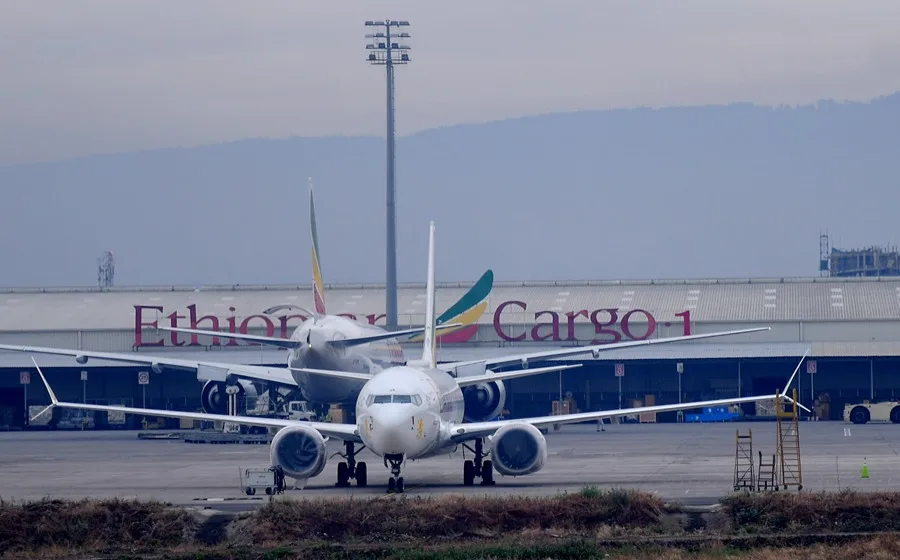
The disruption affects one of the main connections between the region and the rest of the country, particularly with Addis Ababa
Ethiopia. Forces linked to the Tigre Popular Liberation Front (TPLF) took control of the three main airports in the Tigre region of northern Ethiopia on Wednesday, in a new escalation of tensions with the federal government headed by Prime Minister Abiy Ahmed, according to the EFE news agency.
The operation included the airports of Mekelle, the regional capital, as well as those of Axum and Shire. A commander of the Tigrin forces confirmed to EFE that the takeover of the facilities was a decision deemed necessary by his group.
Similarly, a Mekelle resident also told EFE that FPLT forces had blocked access to the airport and ordered citizens to leave the area. The witness claimed to have seen federal police officers being held inside the facilities.
The situation has led to restrictions on air transport and increased uncertainty about the future of the region, which is still facing the consequences of the war that took place between 2020 and 2022.
Ethiopian Airlines suspends operations
Ethiopian Airlines announced the temporary suspension of its flights to and from Mekelle, Axum and Shire due to the security situation in Tigre.
The disruption affects one of the main connections between the region and the rest of the country, particularly with Addis Ababa. The airline did not provide further details on how long the disruption will last.
The takeover of the airports comes just days after seven armed and opposition organizations, including the FPLT, announced the creation of a coalition intended to challenge the federal government.
In fact, the Tigrin movement had already increased its differences with the central authorities in May, when it announced the restoration of the pre-war regional government. This decision came after the PFLT rejected the extension of the mandate of the Provisional Administration created after the Pretoria Peace Agreement.
Disputes over the peace agreement
The agreement signed in November 2022 with mediation from the African Union ended two years of clashes between Tigrin forces and the Ethiopian Federal Army, which was backed during the conflict by local militias and Eritrean troops.
However, the implementation of the agreement has faced numerous obstacles. Authorities in Tigray accuse the federal government of failing to uphold its commitments and have reported airstrikes in the region.
Abiy Ahmed's government, for its part, accuses the PFLT of maintaining military ties with Eritrea and of participating in an opposition alliance whose objective would be to challenge the central government.
A region still marked by war
The war in Tigre left a profound humanitarian crisis and caused hundreds of thousands of deaths. The African Union mediator, former Nigerian President Olusegun Obasanjo, estimated the death toll during the conflict at at least 600,000
Although the Pretoria agreement brought a halt to the main fighting, political and territorial disputes have continued. The recent takeover of the airports represents one of the most significant episodes in the current escalation and has once again brought the stability of northern Ethiopia under international scrutiny.
Ethiopia also faces conflicts in other parts of the country, including Oromia, where government forces are fighting the Oromo Liberation Army, in a context marked by persistent political and ethnic tensions.
Recommended readings:






