The measure seeks to preserve inflation expectations
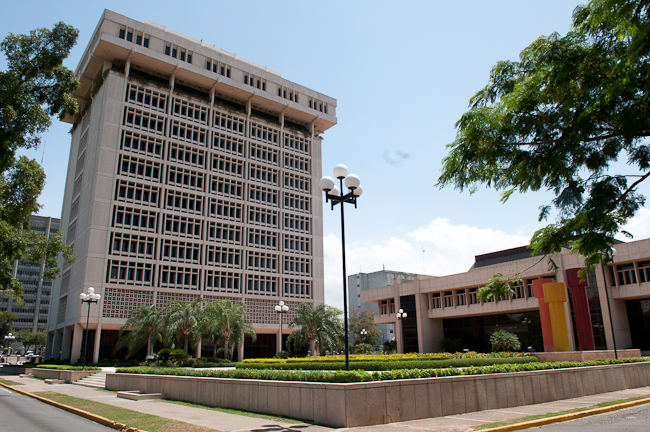
SANTO DOMINGO- The Central Bank of the Dominican Republic (BCRD) announced a 25 basis point increase in its monetary policy interest rate (TPM), which went from 5.25% to 5.50% annually, after the meeting corresponding to September 2026.
The entity also indicated that the rate of the permanent liquidity expansion facility (overnight repos) increased to 6.00% annually, while the rate of remunerated deposits (overnight) rose to 4.75%.
The agency explained that the decision is preventive in nature and seeks to preserve the anchoring of inflationary expectations, as well as avoid second-round effects on prices, in a scenario marked by various supply shocks that have shown greater persistence than expected.
Oil and international conflicts increase the pressures
The Central Bank of the Dominican Republic (BCRD) noted that inflationary risks increased during September, mainly due to the rise in oil and petroleum product prices, associated with the evolution of the armed conflict in the Middle East.
Added to this are disruptions in international freight transport and adverse weather conditions, factors that could generate new pressures on the costs and prices of certain goods.
The institution also warned that international financial conditions have become more restrictive, in a context where major economies maintain a monetary stance aimed at containing price pressures.
The US maintains its growth, while price pressures persist
In the United States, the economy continues to show resilience and, according to Consensus Forecasts projections cited by the BCRD, it would register an expansion of 2.1% during 2026.
However, year-on-year inflation stood at 3.4%, still above the 2.0% target, while job creation rebounded in August.
Given this scenario, the Federal Reserve raised its benchmark interest rate by 25 basis points during its September meeting and hinted at the possibility of another increase before the end of the year.
The Eurozone also faces higher-than-target inflation
In the Eurozone, growth prospects have improved. Consensus Forecasts projects an expansion of 1.0% by 2026.
However, year-on-year inflation rose to 3.2% in August, exceeding the 2.0% target set by the European Central Bank (ECB).
In that context, the ECB increased its monetary policy rate by 25 basis points during September, while market analysts anticipate another upward adjustment towards the end of the year.
Latin America faces pressures due to the energy component
For Latin America, estimates point to regional growth of 2.0% in 2026, according to Consensus Forecasts.
The Central Bank of the Dominican Republic (BCRD) stated that inflation remains above targets in several economies in the region, influenced, among other factors, by the behavior of energy prices.
In this scenario, most Latin American central banks have opted to keep their benchmark interest rates stable, although analysts anticipate possible increases in some economies before the end of 2026.
Oil surpasses US$100 during September
In the commodities market, the price of a barrel of West Texas Intermediate (WTI) oil registered a notable increase during September due to the escalation of the conflict in the Middle East.
According to the Central Bank, WTI exceeded US$100 per barrel in the middle of the month, before moderating to around US$90 at the end of September.
The institution also highlighted that refined fuels have experienced increases greater than those observed in the price of crude oil.
On the other hand, the value of gold moderated during the month and settled around US$4,200 per troy ounce, a behavior related to the increase in yields on US Treasury bonds.
Dominican inflation continues to approach the target range
At the local level, the Central Bank of the Dominican Republic (BCRD) reported that year-on-year inflation maintains a gradual trajectory of convergence towards the target range of 4% ± 1%.
The indicator fell from 5.67% in June to 5.13% in August. Meanwhile, core inflation, which excludes the most volatile goods in the consumer basket, declined to 4.76% during the same period and remained within the established range.
The entity attributed part of this evolution to the application of subsidies by the Dominican Government, through which the impact of the increased cost of refined petroleum products on domestic prices has been partially mitigated.
The Central Bank of the Dominican Republic (BCRD) anticipates a return of inflation to the target range
The Central Bank's forecasting system projects that year-on-year inflation will return to the target range of 4.0% ± 1.0% during the fourth quarter of 2026.
The agency also noted that medium-term inflation expectations of economic agents remain anchored around the center of the target set in the Monetary Program.
However, he warned that the outlook remains subject to upside risks, especially due to the effects of armed conflicts and the impact of weather phenomena on food prices.
Private credit grows 7.5%
Given the international volatility scenario, the Central Bank of the Dominican Republic (BCRD) stated that it will continue to actively manage the liquidity of the financial system to ensure adequate conditions.
Meanwhile, private credit in local currency registered year-on-year growth of close to 7.5% at the end of August, driven mainly by financing directed to the productive sectors.
Dominican economy accumulates expansion of 4.5%
National economic activity has also maintained a favorable performance during 2016. According to the Central Bank, the Gross Domestic Product (GDP) accumulated an expansion of 4.5% during the first eight months of the year.
The institution highlighted that this performance was mainly supported by the construction, financial intermediation and hotels, bars and restaurants sectors.
Looking ahead to the coming months, the organization estimates that the boost from investment and the resilience of the external sector will favor growth of around 4.5% for the whole of 2026, one of the highest rates projected for Latin America.
The Dominican peso has appreciated by around 6%
The dynamism of foreign exchange generating activities has also contributed to maintaining relative exchange rate stability.
In that regard, the Central Bank of the Dominican Republic (BCRD) indicated that the Dominican peso had accumulated an appreciation of close to 6% by the end of September 2026.
At the same time, international reserves reached approximately US$15.4 billion at the end of August, equivalent to about 11% of GDP and around five months of imports.
The entity maintained that these levels exceed the metrics recommended by the International Monetary Fund (IMF).
The Central Bank will maintain vigilance over the international environment
Finally, the Central Bank of the Dominican Republic (BCRD) stated that the Dominican economy has solid fundamentals, a robust financial system, and a resilient private sector, elements that, together with the coordination of monetary and fiscal policies, will allow it to face the complex international landscape.
The institution assured that it will continue to monitor the evolution of the global economy and its possible repercussions on the country.
He also indicated that he will adopt the measures he deems necessary to contribute to achieving the inflation target and preserving macroeconomic stability.
Recommended readings: