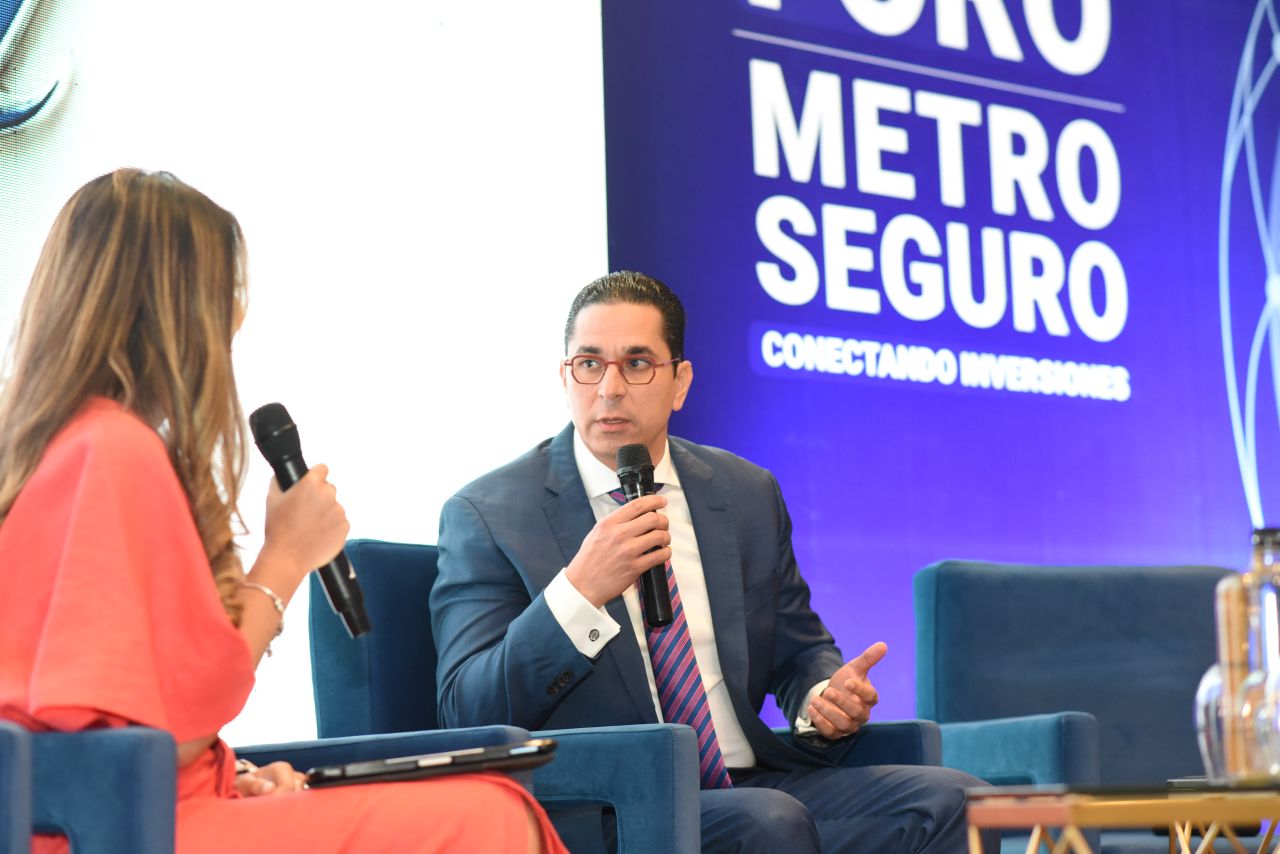
He stated that tourism development should be viewed as an ecosystem and called for strengthening legal security to attract investment
SANTO DOMINGO.– The president of Cap Cana, Jorge Subero Medina, highlighted the importance of legal security, urban planning, and infrastructure development as fundamental elements to sustain the growth of this tourist and real estate destination and continue attracting national and international investment.
Medina argued that the development of that destination and the country should be viewed as an ecosystem in which private investment, legal security, economic conditions and public policies converge.
“What we have achieved in Cap Cana and in the country must be seen as an ecosystem. We cannot view it in isolation,” he stated during his participation in the Safe Metro Forum: “Connecting Investments.”.
Legal certainty as a factor for investment
Subero Medina pointed out that one of the elements they have sought to strengthen within Cap Cana is legal security, especially through the timely delivery of titles and the regulations that accompany the development of the projects.
He explained that when there is a delay in the processes related to the registration of titles and the condominium regime, the effect affects both the developer and the final buyer.
“When you have that legal certainty, you cannot, again, isolate it with the Dominican Republic,” he stated.
The executive also highlighted the existence of internal regulations within Cap Cana that establish parameters for developers and buyers, including those related to density and the characteristics of the constructions.
In his view, these provisions function as complementary norms to local regulations and allow for the establishment of common rules for those involved in the development of the destination.
More than 120 million square meters
Referring to the territorial dimension of Cap Cana, Subero Medina indicated that the property has about 120 million square meters, while the master plan contemplates the progressive development of different areas.
He specified that during the first stage, around 35 million square meters have been developed and explained that the master plans must adapt to economic and geopolitical changes and market demand.
“Master plans are living entities that adapt according to the economy, geopolitics, and market demand,” he said.
The president of Cap Cana also highlighted the infrastructure works carried out during the years of development of the destination, including more than 130 kilometers of paved streets, more than 40 kilometers of roads, underground electrical networks and energy generation systems.
He also indicated that Cap Cana has 40 megawatts of generation capacity and 5.1 megawatts from solar panels.
Similarly, he highlighted the design of the new boulevard, which avoids left turns and uses U-turns as part of its road scheme.
Cap Cana seeks to consolidate itself as a destination city
Subero Medina explained that the concept of Cap Cana is not limited to a tourist project or a place to vacation, but seeks to consolidate itself as a city where people can live, work and carry out their daily activities.
“We are working to make this coexistence as smooth as possible so that we can enjoy the Dominican Republic,” he said.
In that regard, he highlighted the growth of the resident community and noted that currently more than 3,000 families live in Cap Cana, while a school in the destination brings together students from 27 nationalities.
The executive linked this process to the growth of the eastern region of the country and to greater participation of Dominicans in local tourism.
He stated that the evolution of Cap Cana and the region has been related to the commitment of Dominicans to explore and consume the country's tourist destinations.
Market diversification
Regarding the international strategy, Subero Medina indicated that Cap Cana maintains its focus on attracting investors and residents of different nationalities, in line with the diversification that the Dominican tourism market is also experiencing.
He mentioned the growth of markets such as Argentina, Colombia and Central America, as well as other international markets.
The president of Cap Cana indicated that part of the strategy consists of strengthening the work with Dominican embassies and consulates in different countries to facilitate contact with potential investors.
“We are focused on all investments, regardless of nationality, that want to invest in the Dominican Republic,” he stated.
The challenge of attracting different generations
Looking ahead, Subero Medina stated that one of Cap Cana's main challenges will be adapting the city's offerings to the needs of different generations.
He explained that baby boomers, millennials, Generation X, and Generation Z have different characteristics in terms of housing, work, mobility, and lifestyle.
In that context, he considered it necessary to develop spaces that allow the integration of young people seeking job opportunities, sports activities and healthy lifestyles, as well as alternatives for retired people who demand other types of services and housing.
“Attracting those four generations is the great challenge for the Cap Cana Destination City in the future,” he concluded.
Recommended readings: