Economic experts addressed economic stability, legal certainty, financing, public-private partnerships, and the labor market
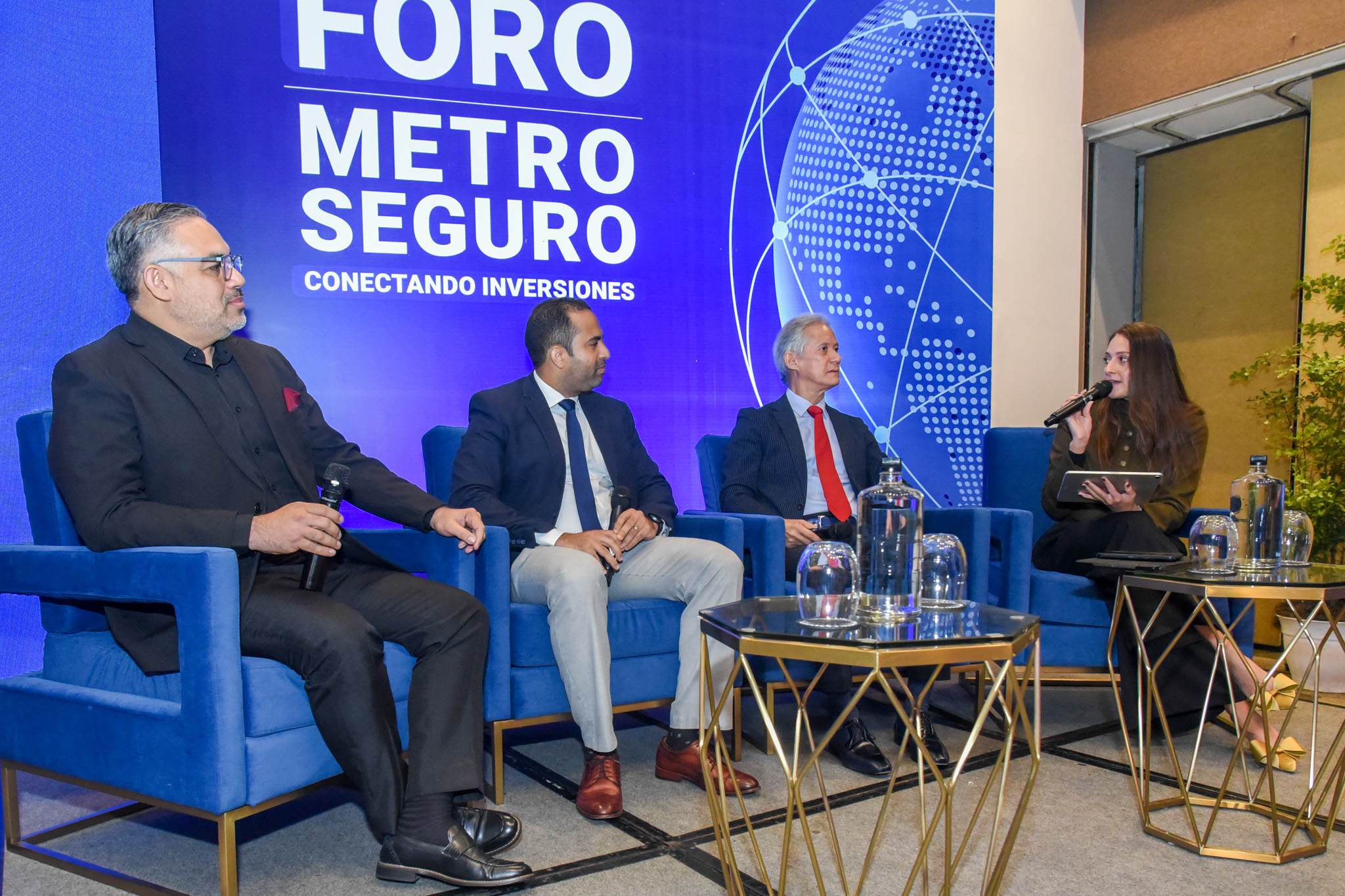
SANTO DOMINGO.– The conditions that make the Dominican Republic an attractive destination for national and foreign investment were analyzed during a panel held at the Catalonia Hotel, within the framework of the Metro Seguro “Connecting Investments” forum.
The meeting included economists Hernando Gómez, Haivanjoe Ng Cortiñas, and Francisco Tavares, who answered questions related to the behavior of the Dominican economy, investment conditions, sources of financing, legal security, public-private partnerships, and the characteristics of the labor market, based on their respective areas of expertise.
During his speech, Haivanjoe Ng Cortiñas explained that there are macroeconomic and microeconomic factors that influence investment decisions.
Among the first he mentioned the stability of the exchange rate, inflation, interest rates and prices, in addition to other indicators that allow the evaluation of the behavior of an economy.
He also noted that investors look at variables such as economic growth, unemployment, inflation, exchange rates, and country risk.
Regarding microeconomic aspects, he emphasized the importance of legal certainty and the productivity levels of businesses. He also indicated that the specific conditions of each sector of the economy must be taken into account.
Ng Cortiñas added that the financial system and the stock market are part of the conditions that developers, investors, and project generators must consider when structuring their investments.
Hernando Gómez highlights the growth of the economy
Hernando Gómez explained that investment decisions are made based on expectations, but that these are influenced by the present and past behavior of the economy.
In that context, he noted that over the past 20 years the Dominican Republic has registered an average growth of the gross domestic product of close to 5% annually.
Gómez argued that maintaining that pace over a prolonged period is a relevant element when analyzing the behavior of the Dominican economy.
He also referred to foreign direct investment and noted that over the past 10 years it has maintained an important share in the national economy.
Based on these indicators, he explained that numerous investors have shown interest in the Dominican Republic and have made decisions considering the country's macroeconomic and microeconomic variables.
However, Gómez stated that the challenge lies in ensuring that this investment process is sustainable and contributes to the economic and social development of Dominican society.
Legal certainty and effectiveness of the rules
When addressing legal certainty, Haivanjoe Ng Cortiñas established a difference between the current legal framework and effective regulation.
He explained that the legal framework is made up of laws, regulations, rules and decrees, while effective regulation has to do with the application and compliance with those provisions.
In that sense, he argued that a country's institutional progress depends not only on having a solid legal framework, but also on ensuring that the rules are effectively enforced.
Ng Cortiñas pointed out that the Dominican Republic has foreign investment legislation that allows for free convertibility and the transfer of profits.
He also indicated that there are sector-specific laws designed to promote investment in areas such as the electricity sector, free trade zones, tourism, and film, among other activities.
The importance of the investment remaining
The economist also stressed that the goal should not be limited to attracting foreign investment, but rather to ensure that the capital that comes into the country remains and is reinvested.
He explained that the composition of foreign investment includes both new investments and reinvestments, and considered it important that investors already operating in the Dominican market find conditions to continue developing their activities.
In that regard, he argued that policymakers should pay attention to the conditions that allow foreign companies to put down roots, expand their operations, and continue investing.
Ng Cortiñas argued that, to achieve this, it is not enough to have a strong legal framework, but it is also necessary to have effective regulation and compliance mechanisms that are less bureaucratic.
Public-private partnerships and infrastructure
When referring to public-private partnerships (PPPs), Francisco Tavares explained that these constitute mechanisms in which the public and private sectors participate jointly.
Tavares stressed that the Government must act with transparency in these types of processes and pointed out that PPPs can serve to attract private investment towards real estate initiatives, infrastructure and other projects.
He highlighted the importance of productive infrastructure for economic growth and noted that there are still investment needs in this area.
He explained that maintaining growth requires continuing to improve the productivity of capital and labor, which can also contribute to improving the living conditions of Dominicans.
Reduce bureaucracy and transaction costs
Tavares also referred to the need to reduce transaction costs associated with structuring and executing projects.
In particular, he argued that processes should be more streamlined and that it is necessary to reduce the bureaucracy that can affect investment decisions.
During his speech, he also mentioned that there are initiatives aimed at modifying the regulatory framework related to public-private partnerships, with the goal of streamlining the processes for implementing projects through this mechanism.
Stock market and new financing alternatives
Regarding the sources of financing, Haivanjoe Ng Cortiñas explained that traditionally projects have been financed through banks and contributions from the entrepreneurs or investors themselves.
However, he indicated that this structure has evolved and that the Dominican financial system currently has additional alternatives.
Among them, he highlighted the stock market, which he defined as an alternative, competitive and complementary mechanism to the banking system.
Ng Cortiñas pointed out that this market allows access to different financial instruments and mentioned among them securitizations, corporate bonds and other securities.
He also highlighted the role of investment funds as a source of resources for developers, promoters, engineers, builders, and contractors.
Profitability and risk
The economist warned that investment decisions should not be analyzed solely from the perspective of profitability.
He explained that each financial instrument has particular characteristics and risks, and that the capital structure does not respond to a single formula applicable to all projects.
Among the risks mentioned during his presentation were credit, exchange rate, inflation, political, macroeconomic and sectoral risks.
Ng Cortiñas pointed out that profitability should always be analyzed in conjunction with risk and explained that every investment decision also involves an opportunity cost.
Traditional sectors and emerging activities
When discussing the sectors that are showing dynamism in the Dominican economy, Hernando Gómez identified several traditional activities that have played an important role in the country's growth.
Among them he mentioned real estate construction, tourism and industrial activity.
He also highlighted the role of agribusiness and trade as activities linked to economic dynamics.
Gómez also pointed out that there are sectors that are gaining more relevance, including the financial sector, technology, and artificial intelligence.
He also mentioned opportunities related to business and logistics, particularly in areas that have developed significant tourism and real estate activity.
What do investment funds evaluate?
Gómez explained that international investment funds make informed decisions and that, before analyzing a specific project, they evaluate the general conditions of the country.
Among the variables that, he indicated, are considered are the gross domestic product, inflation, devaluation and country risk.
He added that the conditions of the macroeconomic and microeconomic environment are also taken into account, as well as the possibilities of financing and leverage with local capital.
The economist also highlighted the importance of projects having adequate feasibility studies and a risk management structure.
As he explained, investment funds need to know the conditions of each project and how the associated risks will be managed.
Labor market and human capital formation
In the final part of the panel, Francisco Tavares addressed the conditions of the Dominican labor market and the need to respond to the new demands related to technology and advanced services.
The economist highlighted the importance of having an increasingly technologically skilled workforce.
In that regard, he pointed out that universities, research centers and training institutes have an important role in preparing workers and adapting their skills to the needs of the productive sector.
Tavares also raised the need to make progress in formalizing employment and micro and small businesses.
He explained that facilitating the formalization process would allow these companies and their workers to access credit mechanisms and other benefits associated with formality.
He also linked this process to access to the social security system and to greater financing possibilities for investment.
An agenda that requires coordination
During the panel it was also suggested that sustainable development requires the coordinated participation of different sectors.
The participants referred to the importance of interaction between the Government, the private sector, the academic and scientific community, and the social sector.
In this regard, the proposals presented pointed to the need to maintain stable macroeconomic conditions, strengthen legal security, expand financing alternatives, improve infrastructure, reduce bureaucratic obstacles, and strengthen the preparation of human capital.
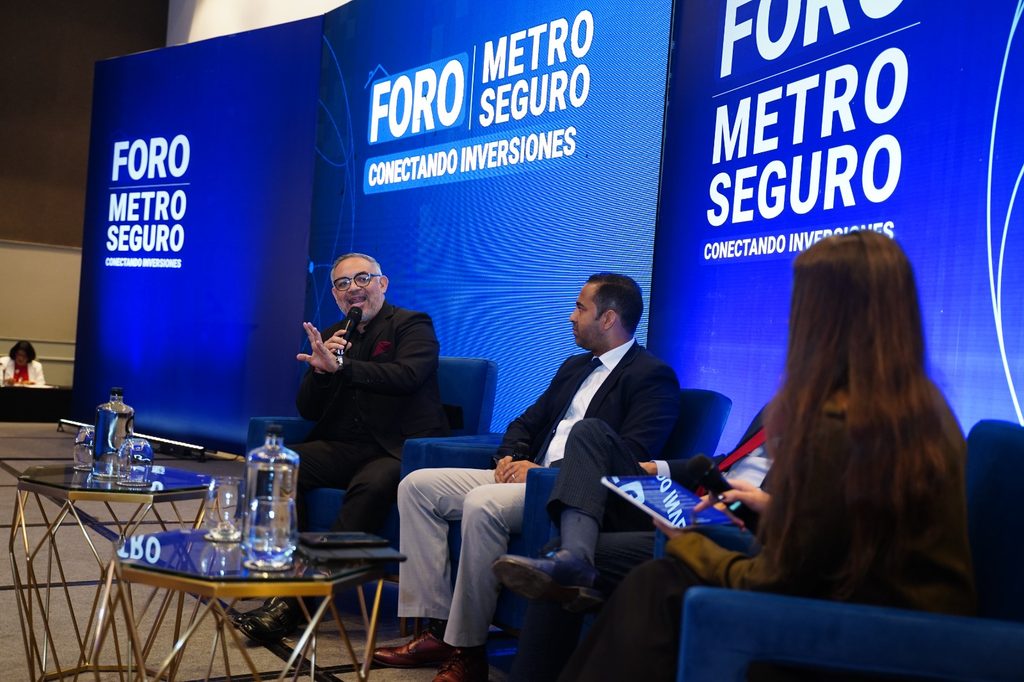
The panel, made up of economists Hernando Gómez, Haivanjoe Ng Cortiñas and Francisco Tavares, was part of the Metro Seguro forum “Connecting Investments”, held at the Catalonia Hotel, where the conditions, opportunities and challenges related to investment and economic development in the Dominican Republic were analyzed.
Recommended readings: