


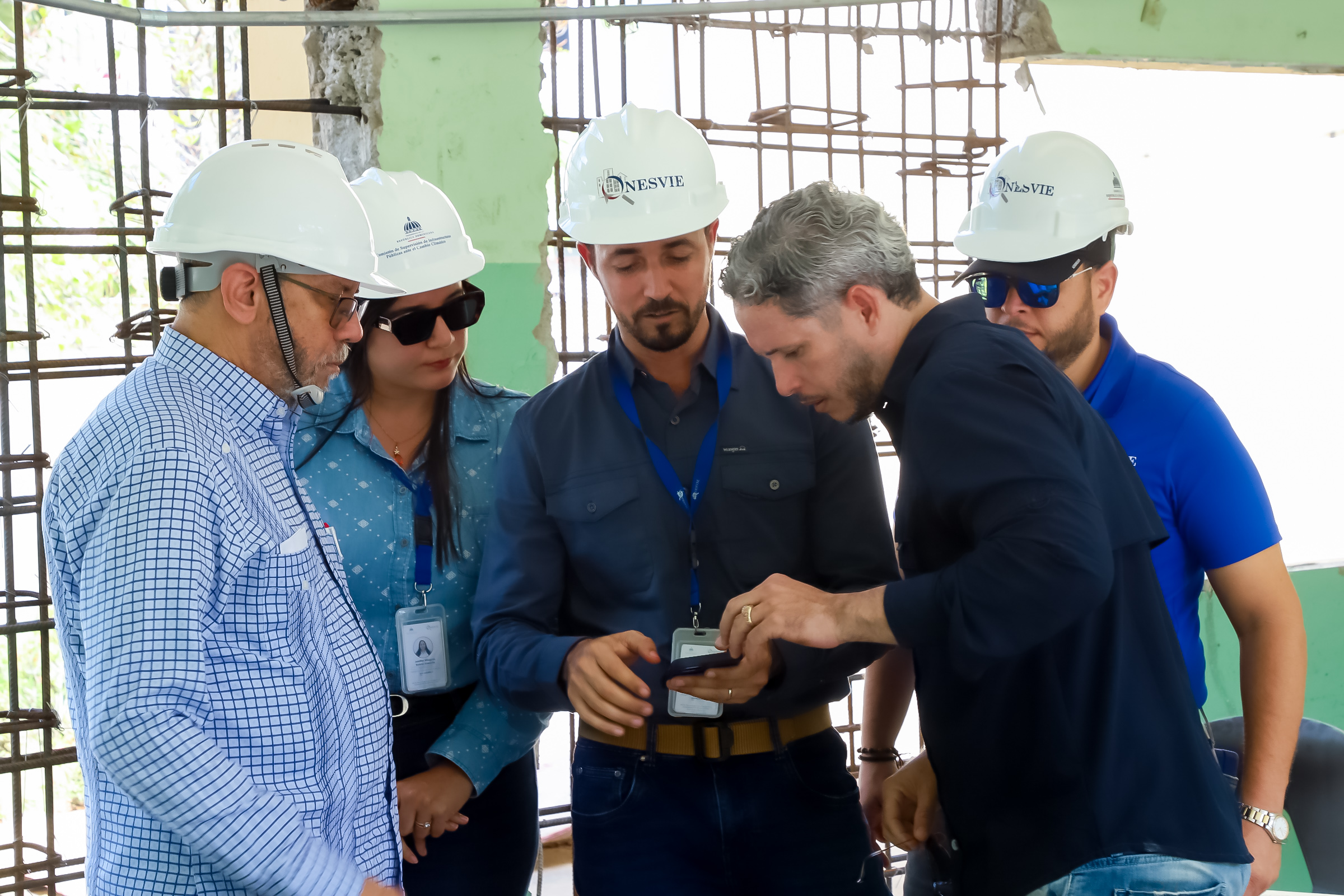
Specialists examine the condition of buildings, infrastructure, and lifelines to determine if they show deterioration or characteristics that may represent any danger.
SANTO DOMINGO. The National Office of Seismic Evaluation and Vulnerability of Infrastructure and Buildings (ONESVIE) reported that, from Tuesday, September 29th to Friday, October 2nd, professionals in training from the Dominican Network of Structural Evaluators (REED) will carry out field practices in different areas of the Naco sector, in the National District.
The institution indicated that the workshops are part of the technical training program for new specialists and aim to strengthen skills in evaluating buildings, as well as contribute to the prevention and reduction of seismic risk in the country.
Inspections will not require entering private properties
The entity explained that the exercises will consist of external visual inspections of the structures, so it will not be necessary to enter homes, buildings or other private properties.
He also specified that participants will be properly identified with institutional badges featuring QR codes, which will allow for verification of their credentials. Furthermore, the teams will have security personnel present during the activities.
Practical sessions will be held in the morning
The entity indicated that the evaluations will be carried out from 9:30 a.m. to 12:00 p.m., during the days established for the training session.
The institution expressed its gratitude to the residents of Naco for their collaboration and understanding during these exercises, while reiterating its commitment to training specialized professionals and strengthening a culture of earthquake prevention in the Dominican Republic.
What is REED?
The Dominican Network of Structural Evaluators (REED) is a group of engineering and architecture professionals certified by the National Office of Seismic Evaluation and Vulnerability of Infrastructure and Buildings (Onesvie), whose function is to determine damage and risks in buildings before and after an earthquake.
In that sense, the members of this organization have specialized training to carry out technical inspections and establish the condition of the buildings in the face of possible seismic events.
What is the role of structural evaluators?
The professionals who are part of REED have among their main responsibilities examining the safety conditions of buildings and establishing possible damages after an earthquake.
They also develop diagnoses that allow them to determine whether a building can continue in use or if it needs some type of intervention, taking into account the findings identified during the review.
They analyze buildings and infrastructure
Specialists examine the condition of buildings, infrastructure, and lifelines to determine if they show deterioration or characteristics that may represent any danger.
In this sense, these studies allow obtaining technical data on the level of damage to the properties and facilitate the identification of those that require priority attention.
They determine and quantify the risks
REED also helps to establish the level of danger associated with potential disasters, in order to identify which facilities need assistance most urgently.
According to this criterion, the results obtained serve as a tool to organize the response to an emergency and direct resources towards the areas or buildings that present higher levels of vulnerability.
They support the State during emergencies
Trained specialists collaborate with emergency and civil protection agencies during times of crisis, providing technical reports that support decision-making.
Furthermore, their work allows for the collection of specialized data on the condition of buildings after an adverse event, which facilitates the planning of response actions.
They receive specialized training
Members of the network receive training through specialized diplomas and field practices, with the support of academic institutions such as the Technological Institute of Santo Domingo (INTEC).
In this sense, this process seeks to strengthen the capabilities of professionals to carry out structural diagnoses in a technical and organized manner in the face of emergencies.
The training includes both specialized knowledge and practical field exercises, with the goal of enabling experts to act appropriately in scenarios of damage caused by natural phenomena.
Recommended readings:






