



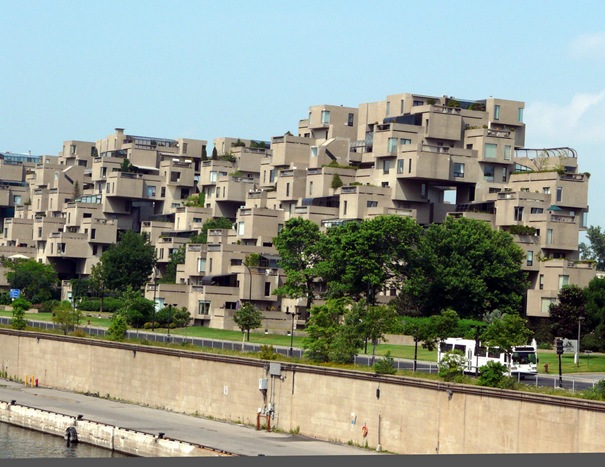
Expo 67, one of the world's largest world expositions, was held in Montreal in 1967. Titled "Man and His World" after the memoirs of writer Antoine de Saint-Exupéry, it featured housing as one of its main themes. From its inception, the complex became a thematic pavilion admired and frequented by thousands of visitors from around the globe, as well as serving as a temporary residence for many dignitaries visiting Montreal.
Designed by Moshe Safdie, this spectacular complex is the official legacy of Terre des Hommes/Man and His World. Its creation aimed to integrate the variety and diversity of dispersed private dwellings with the economy and density of a modern apartment building. Interlocking modular concrete forms define the space, and its design sought to create affordable housing within close-knit yet private neighborhoods, each equipped with a garden. The building was believed to illustrate the new lifestyle that people would experience in increasingly populated cities around the world.
Located in Cité-du-Havre, a century-old artificial peninsula that was expanded for Expo 67, the building enjoys stunning views of the river, downtown Montreal, and the Old Port.

Charming, fascinating, and powerful
Habitat 67 has the stature of a historical monument. Extravagant in its modernity, aestheticism, and minimalism, praised worldwide, it is a true emblem of innovative housing, marking the Montreal landscape for half a century and reconciling quality of life and urban context by redefining the design of living spaces.
Simplicity, modernity and dazzling architecture
The modular unit is the foundation, the means, and the end of Habitat 67. Three hundred and fifty-four magnificent gray-beige modules are stacked one on top of the other to form 148 residences, nestled between sky and earth, city and river, vegetation and light. Everything converges into a gigantic sculpture of futuristic interiors, connecting pathways, pedestrian streets and suspended terraces, aerial spaces, skylights at different angles, vast esplanades, and monumental elevator pillars. Habitat 67 is an invitation to contemplation.
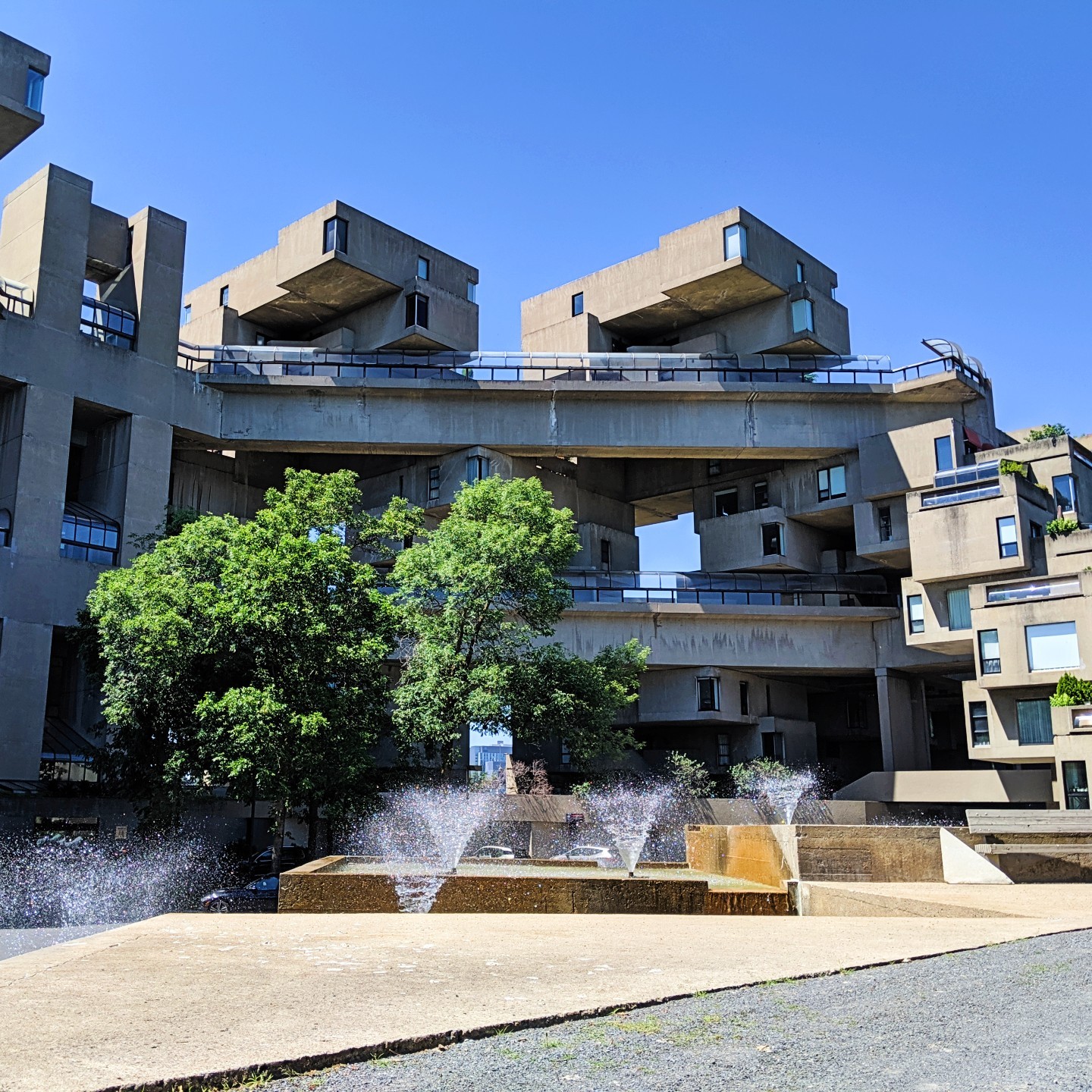
Its architect created a unifying work that continues to inspire, more than fifty years after its construction. The building originated from Moshe Safdie's university thesis while he was a student at McGill. It is a reflection on the function and role of architecture in a high-density urban environment.
“Habitat 67 is the astonishing achievement of Moshe Sadie’s youth. The principal quality of all his work is to confer upon things a character of eternity. He emphasizes the everyday life of architecture: the way spaces are used, the building’s behavior in its climate, the real desires of future residents. In many ways, the essence of his work is a dichotomy: simultaneously a struggle and a meditation between the universal and the specific, between the ideal and the real.”
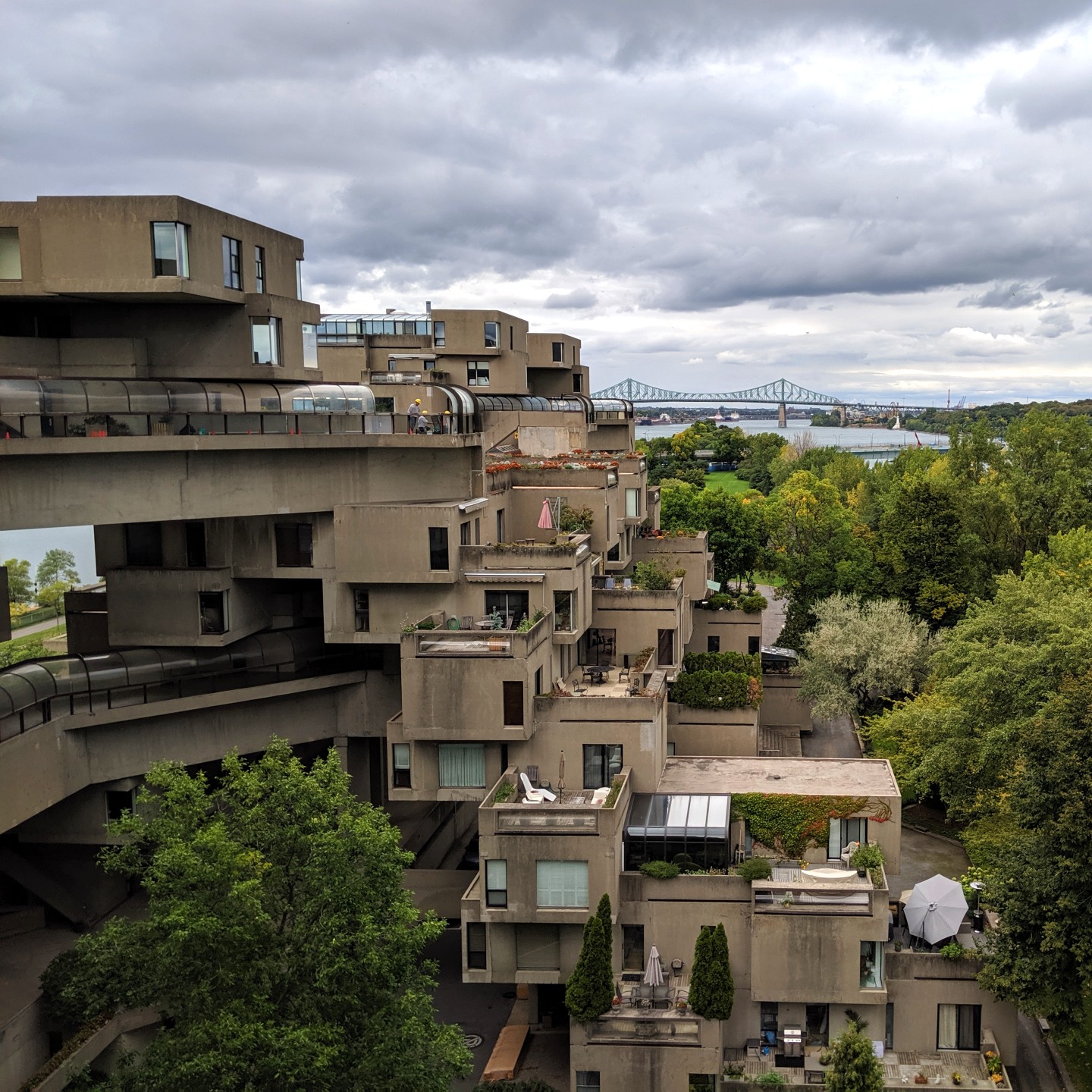
Its terraces offer unparalleled views: the city lights, the silhouettes of the bridges, and the beauty of the maple, oak, and poplar trees. Add to this idyllic setting the gentle sound of the river and the famous Habitat 67 wave, the sea breeze, and the sky as far as the eye can see. Located near St. Helen's Island, Old Montreal, and the Montreal Casino, this hybrid of tranquility and vibrant living redefines the urban residential experience with style.
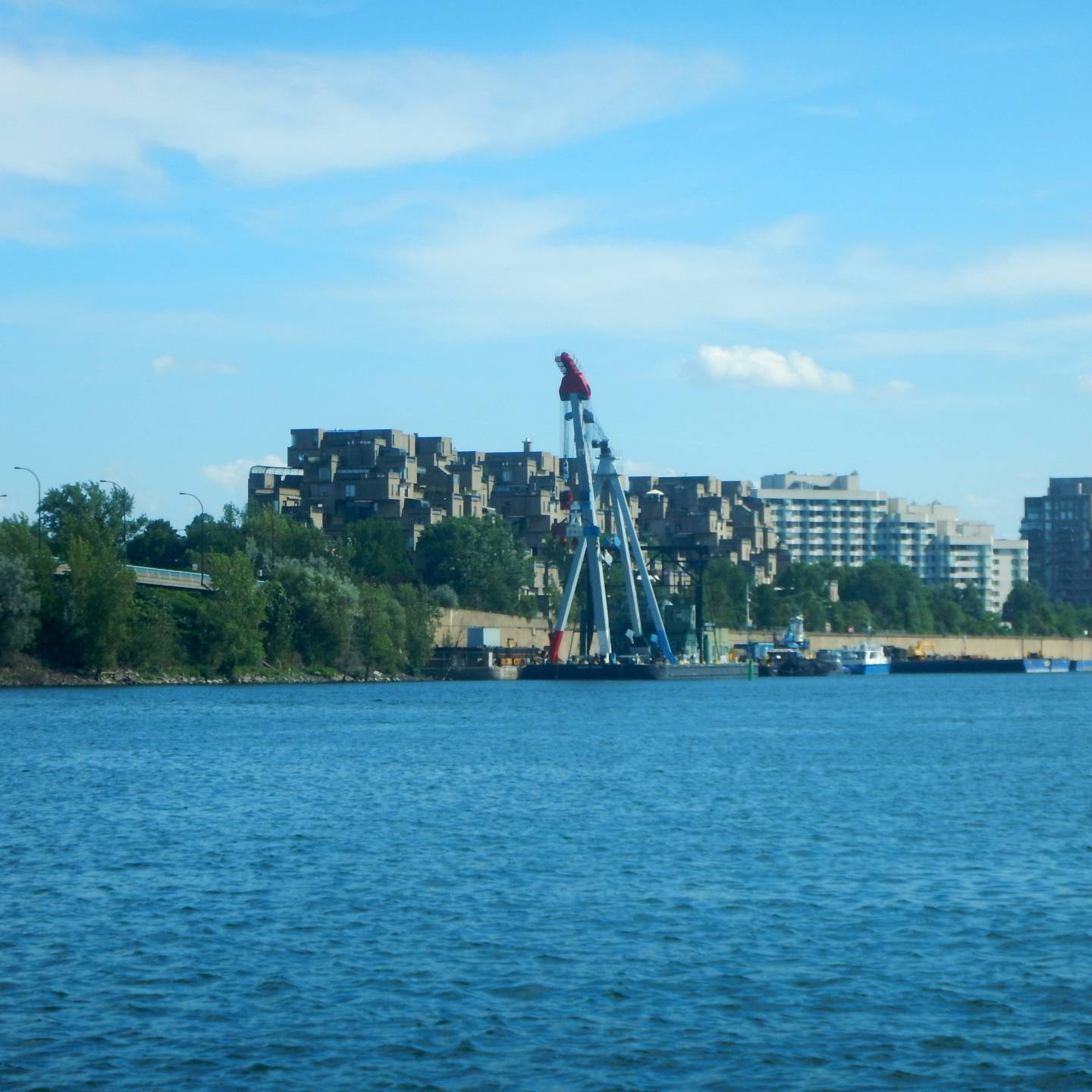
The iconic building is a favorite among photographers. Its architectural beauty makes it a perfect film set and photo shoot location. Over the years, numerous photo shoots and films have been filmed there, from Celine Dion to Leonard Cohen, Quebec, and international brands.
Source: Habitat 67, famous buildings of the world







