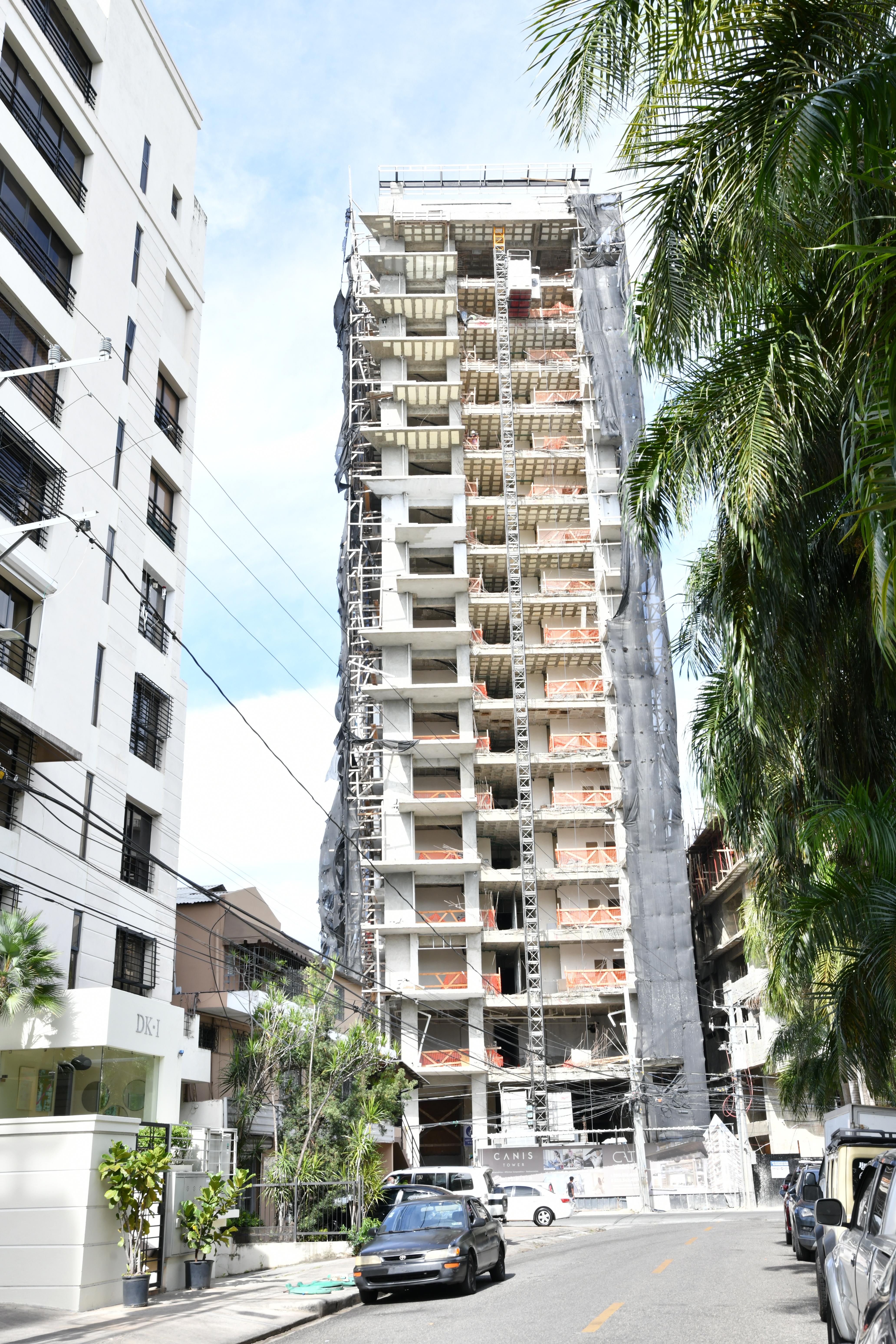
The block and cement industry is recovering from a challenging 2025 that ended with discouraging numbers
SANTO DOMINGO. – The latest report from the Central Bank of the Dominican Republic places the construction sector in full expansion, with figures reflecting anexpansive behavior during the first seven months of 2026, leading the growth of the economy with a year-on-year score of 8.1.
The agency highlighted that credit allocated to construction grew 18.2% year-on-year at the end of July, equivalent to more than RD$28 billion more than in the same period of the previous year. This growth is attributed primarily to the execution of projects and the increased dynamism of public investment, as well as the positive impact of institutional improvements that streamlined and increased transparency in the approval processes for new projects.
In this way, the block and cement industry is recovering from a challenging 2025 that ended with negative numbers, with labor being one of its main challenges, which registered an increase of 7.14%, the largest increase among the components of the Direct Housing Cost Index, with a generalized behavior in all types of housing and associated with the demand for qualified workers and salary adjustments.
During 2025, construction has maintained a mostly positive trajectory and has positioned itself among the sectors with the greatest drive for economic growth.
January: grows 7.6% and starts the year with momentum
The trajectory began in January with a year-on-year increase of 7.6%, boosted by greater execution of public sector capital spending and by the dynamism of private investment in residential, commercial and tourism projects.
This behavior was complemented by more favorable financial conditions, with active interest rates that helped to stimulate the financing of new works.
January-February: accumulates 5.8%
During the first two months, construction accumulated a growth of 5.8%, in a context in which the Dominican economy registered an average expansion of 3.7% between January and February.
The result confirmed the positive start of the sector and its contribution to economic activity during the first months of the year.
March: accelerates and reaches 8.0%
In March, activity accelerated its pace and grew 8.0% year-on-year, driven mainly by the greater dynamism of private investment.
The reduction in active interest rates favored access to credit, while sales of inputs such as cement and metal structures also showed progress compared to the same month in 2025.
April: registers a contraction of 1.8%
The trend changed in April, when construction recorded a year-on-year drop of 1.8%.
However, this result did not significantly alter the overall trajectory of the sector, which maintained an average cumulative growth of 4.6% during the first four months.
During that period, privately funded commercial and tourism projects continued to be developed, as well as residential works that were already underway.
Financing for the sector also showed strength. At the end of April, credit for construction registered a year-on-year growth of 26.1%, reflecting the financial system's support for the industry.
May: growth resumes with 7.1%
In May, the sector returned to positive territory with an expansion of 7.1%, supported mainly by the execution of commercial, residential and tourism projects of private capital.
Credit continued to support this trend. As of the end of May, financing for construction grew 23.7% year-on-year, equivalent to more than RD$35 billion more compared to the same period in 2025.
This behavior was accompanied by an increase in sales volumes of the main materials used in construction, reflecting greater activity in the sector.
June: registers its biggest boost with 14.9%
The biggest jump occurred in June, when construction recorded an expansion of 14.9% year-on-year, the highest monthly growth of the period analyzed.
The result was associated with a greater execution of both private and public investment projects, as well as financial conditions that facilitated access to resources for the development of new works.
Financing for the sector also maintained a positive trend. As of the end of June, credit allocated to construction increased 22.6% year-on-year, with more than RD$34 billion additional compared to June 2025.
June's performance allowed construction to contribute approximately 30% of the growth of the Monthly Indicator of Economic Activity (IMAE) for that month, placing it among the activities with the greatest impact on the economic result.
July: maintains its pace with 8.1%
In July, construction moderated the strong advance recorded in June, but remained in positive territory with a year-on-year growth of 8.1%.
The growth was driven by the execution of private projects and by increased public investment. Furthermore, the activity was accompanied by an increase in sales of the main inputs used in construction.
These factors were complemented by institutional improvements aimed at streamlining and making more transparent the processes for approving new projects.
Although financing grew at a slower pace than in previous months, it continued to expand. As of the end of July, credit for construction increased 18.2% year-on-year, equivalent to more than RD$28 billion more compared to July 2025.
A sector with greater weight in the economy
The results show that the construction sector will reach the second half of 2026 with a consolidated presence within the Dominican economy. The growth recorded in the sector for most of the year adds to the business weight achieved in 2025, when some 9,160 formal employers were linked to the sector, equivalent to 7.2% of the national total.
Added to this is the close relationship with real estate activities, which at the end of 2025 represented 6.1% of formal employing companies, some 7,760 companies, reflecting the joint importance of both sectors for investment, employment and the development of new projects.
The 2026 trajectory also demonstrates a capacity for recovery from periods of slower growth. After the 1.8% contraction recorded in April, construction resumed growth in May and reached its highest expansion of the year in June, at 14.9%, before moderating to 8.1% in July.
With public and private investment, increased financing, and the continuation of residential, commercial, and tourism projects, construction maintains a relevant role in the performance of the Dominican economy and consolidates the weight achieved within the business fabric.
Recommended readings: