Experts discuss the lack of planning, the scarcity of green areas, and
the deterioration of infrastructure as urgent challenges in urban development.
By Pedro Ardon
El Inmobiliario
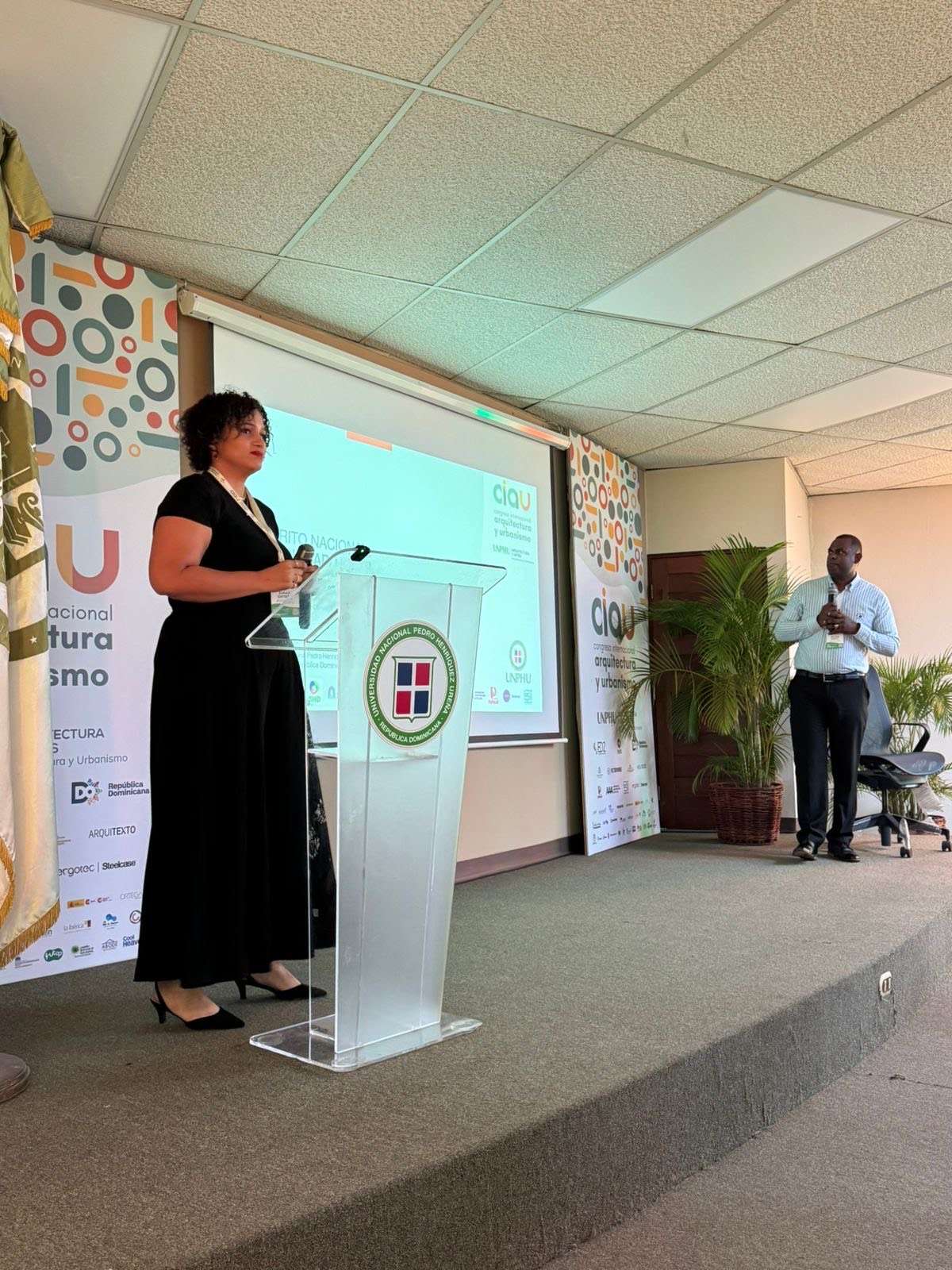
SANTO DOMINGO.-In a recent conference held at the first International Congress of Architecture and Urbanism (CIAU), organized by the Pedro Henriquez Ureña University (UNPHU), architect Sarah Vanessa Batista and engineer Héctor García raised the profound urban and social challenges facing the National District, emphasizing in their intervention the importance of understanding the urban evolution of the city in order to transform its problems into practical and sustainable solutions.
In presenting the talk "National District: A hostile city", the specialists highlighted that, although the National District constitutes the most relevant territorial unit of the Dominican Republic, it presents great economic and urban contrasts.
They explained how current urban planning policies and practices, often ineffective, allow situations that affect both the aesthetics and functionality of the city.
They mentioned, for example, the existence of pedestrian crossings that end at electrical towers and the lack of consistency in the application of regulations in different sectors of the city.
For both of them, the city's difficulties are not limited to aspects specific to the city itself, but also reflect problematic citizen behaviors.
Architect Sarah Vanessa Batista and engineer Héctor García. (EXTERNAL SOURCE).
“The urban hostility we are talking about is not only due to infrastructure and regulatory problems, but also to the behavior of citizens who do not respect their environment,” they stated, emphasizing the importance of fostering a culture of responsible citizenship.
Among the main problems facing the National District, Batista cited the poor management of urban planning instruments. He indicated that only 43% of the district's territory is regulated, and that only 3% of constructions comply with the required permits.
In his opinion, the lack of planning has fostered spontaneous growth and the self-production of spaces, which leads to the proliferation of informal settlements, especially in district number three.
Batista and García also pointed out the marked lack of public spaces and green areas. They cited the World Health Organization (WHO) as stating that a healthy city should have at least 9 square meters of green space per inhabitant, while the National District barely reaches between 4 and 5 square meters, a figure that is even lower in informal settlements.
Furthermore, the basic services infrastructure in the National District is outdated. Despite having an infrastructure plan, experts highlighted that investment in these services has decreased, falling from 4% of GDP in the 1980s to a current average of less than 2.8%.
“Understanding our problems is the first step to solving them. A city that is not designed for its citizens is definitely doomed to failure,” Batista and García concluded, reiterating the need for a comprehensive change in the way the National District is planned and managed to offer a more inclusive and functional urban space.