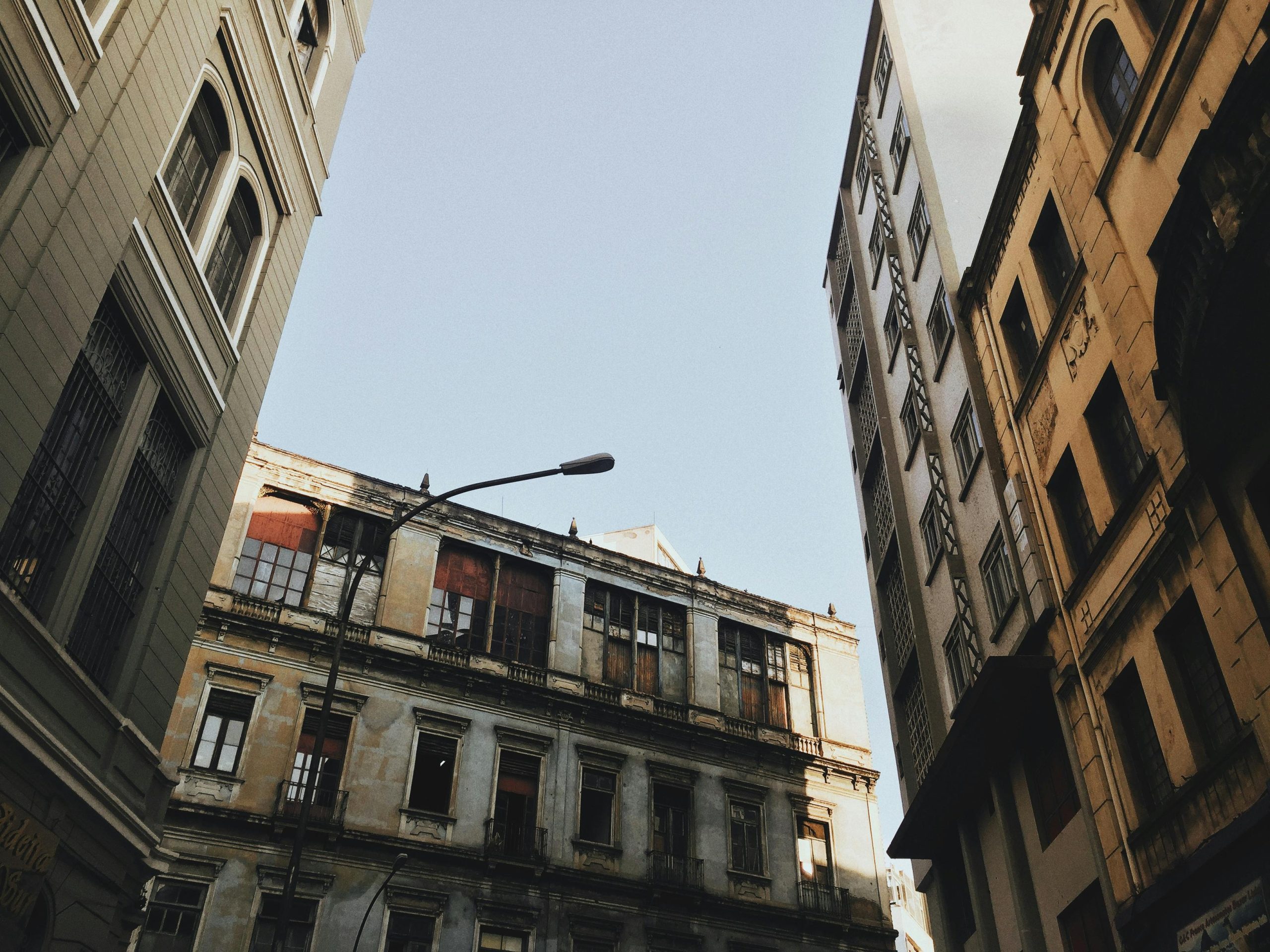
Walk through any city in the Caribbean or Central America and look at the facades. Buildings that are 5, 8, 10 years old look like they're 30. Peeling paint. Black damp patches. White efflorescence. Rust seeping down from the structure. Cladding that's coming off. Open joints. Decay that shouldn't be there, not at that rate, not on buildings that are supposed to be new.
The facade is not decoration. It is the skin of the building. It is the first barrier against water, sun, wind, and salt air. And when that barrier fails, everything behind it—structure, insulation, installations—is exposed to accelerated deterioration.
Why does it fail so quickly? Three reasons that are repeated in almost all cases.
First: materials are specified that aren't designed for our climate. Paints formulated for temperate climates that can't withstand the UV radiation of the tropics. Coatings that expand and contract with thermal cycles of 20 degrees Celsius difference between day and night. Sealants that degrade with salt exposure in coastal areas. The material exists for every condition—but it costs more, and the budget almost always wins.
Second: the surface preparation is inadequate. A facade paint might be the best on the market, but if it's applied to a substrate that wasn't properly cleaned, has residual moisture, or wasn't primed, it will fail. Preparation takes time. Time is money in construction. And that's where the shortcut is taken.
Third: the facade drainage system is not designed. Water running down the surface of a building needs a controlled path—drippers, gutters, drip edges, and sealed expansion joints. When these elements are missing, water accumulates in the most vulnerable areas, penetrates, and begins the cycle of deterioration from within.
The cost of properly specifying a facade—materials appropriate for the latitude, rigorous preparation, and drainage details resolved—can be 15% to 20% higher than doing the bare minimum. The cost of repainting, repairing, and refurbishing that same facade every three to five years far exceeds that initial investment in less than a decade.
If you're a developer: the facade is the first impression of your project after 10 years. If it's damaged, everything you invested in the lobby and amenities loses credibility. If you're a buyer: ask what facade system your building has, what paint was used, and what warranty it offers. And if no one can answer you with specifications, you'll know the level of attention given to the skin of your investment.
Recommended readings: