


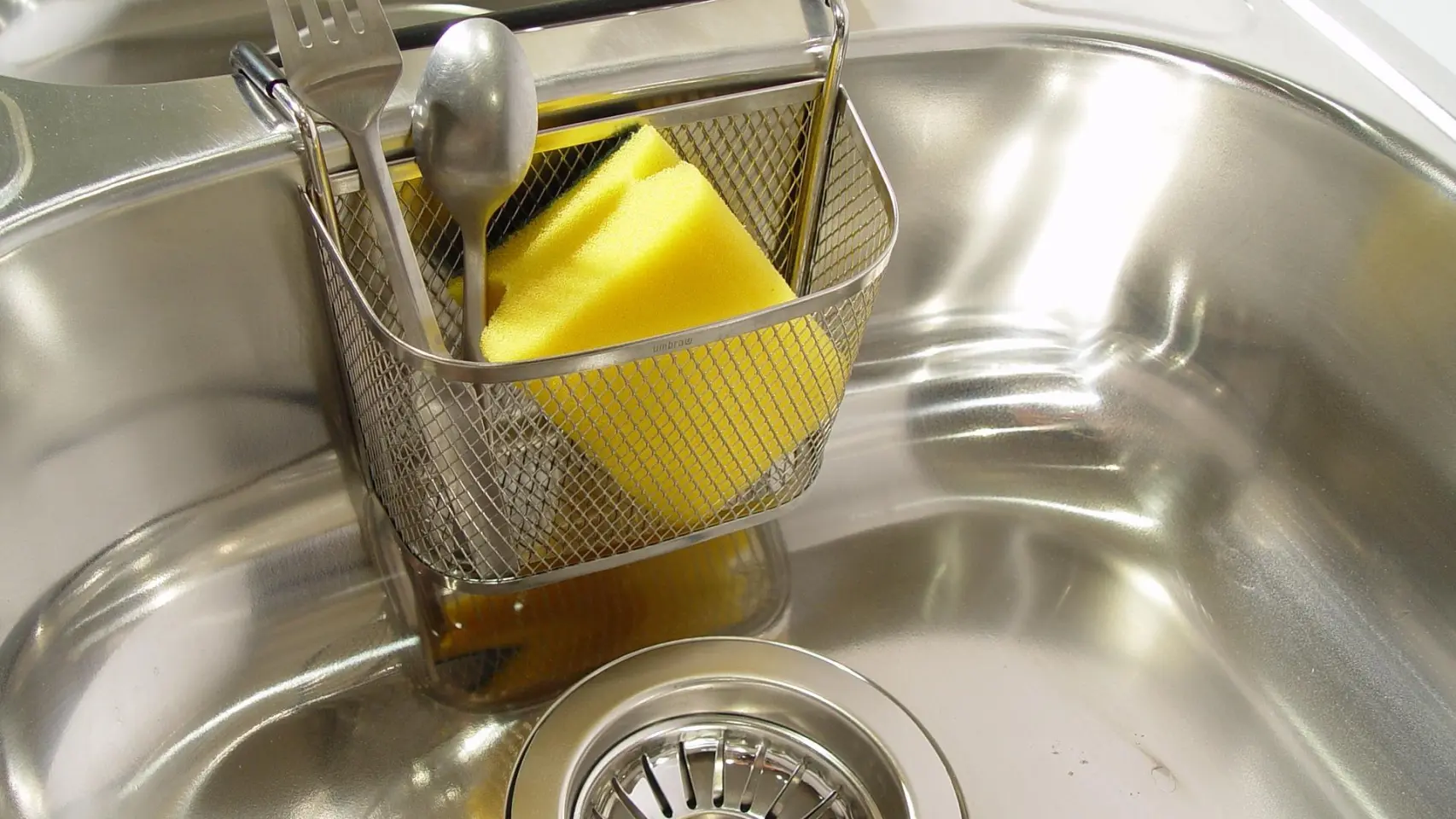
That moment of satisfaction and peace of mind that you experience when you finish washing the dishes and see the sink clean is not always so complete when limescale starts to build up and dull the metallic shine of the steel.
In areas with harder water, this happens very quickly. Paradoxically, limescale stains are caused by cleaning itself, since it is the limescale dissolved in the wash water that, when it evaporates, adheres to surfaces, forming stains or even a whitish patina that covers the entire surface that has been wetted with that water.
The effects of limescale should not be underestimated, because although on surfaces its unwanted effects are only aesthetic, in appliances such as washing machines, dishwashers or coffee makers it can be deposited on the heating elements or on the interior walls of the pipes through which the water circulates inside, compromising their operation and shortening their useful life.
Of course, household appliances have built-in measures to prevent this. Specific descaling products are available on the market for maintaining these appliances in hard water areas. For surfaces, there are also numerous limescale removers that prevent the appearance of those unsightly efflorescence deposits that dull the natural shine of objects like tiles, sinks, and faucets. In the case of stainless steel, besides losing its shine, limescale can even leave white stains.
Fortunately, these stains and this loss of shine are reversible, and there are simple ways to restore their luster without spending more money on cleaning products. Today we'll see how to get stainless steel surfaces like pots, pans, faucets, and sinks—which are the most susceptible to these stains because they have the most daily contact with water—to shine.
Limescale is cleaned with acid
Learning to use different cleaning products is like going back to a high school chemistry class, and when it comes to cleaning limescale, remembering acids and bases is incredibly helpful. Bases are alkaline substances.
When we have an alkaline stain, such as limescale, a cleaner that is also alkaline (such as baking soda or degreasers) will not work, or at least it will not work efficiently, as we will have to scrub practically the same as if we were not using one.
For a basic (alkaline) stain like the one we're dealing with, what helps is an acid that can react with it, loosening it from the surface so we can remove it without much effort. This means that limescale stains clean well with vinegar, lemon juice, or even ketchup (although the pigments in the tomato can leave other reddish stains, which is why it's not common to use ketchup to clean surfaces unless they're made of copper).
Mixing an acid with baking soda won't help much either, even though the fizz might make it seem like it will. What actually happens is that the baking soda will react with the acid, resulting in a neutral salt that won't do anything to the stain.
Using only baking soda is a very effective way to clean grease from surfaces, so if we want to use these products to clean the kitchen, they will be more efficient if used separately.
So let's see how to carry out an ultra-simple cleaning of the sink and faucets.
It's very easy to do. You can use just vinegar or just lemon juice, but it's best to use a mixture of both, because vinegar is much cheaper, but adding a little lemon juice leaves a pleasant smell.
So, you're going to need:
- White or cleaning vinegar, 1/2 glass
- Warm water, 1/2 glass
- Juice of 1 lemon
- Bottle of at least 250 ml with sprayer
Step 1: Mix all the ingredients in the bottle and spray the mixture over the entire surface of the sink and faucet, making sure the product reaches all corners and focusing on areas with visible stains.
Step 2: Leave on for 15 minutes.
Step 3: After this time, the dirt will have softened considerably, and we can proceed to scrub with a brush. Nail brushes work well for this, and they are somewhat more convenient than brushes with handles.
Step 4: Once the stains have been removed, rub everything with a scouring pad with a few drops of soap until it foams.
Step 5: Finally, rinse well and dry everything by rubbing with a dry, lint-free cloth.
Source: https://www.elespanol.com/







