SANTO DOMINGO – For many Dominicans, Corpus Christi is a date associated with rest from work and family gatherings. However, behind the holiday lies a celebration with more than seven centuries of history that occupies a central place within the Catholic faith.
The Solemnity of Corpus Christi, whose Latin name means “Body of Christ,” is dedicated to honoring the presence of Jesus Christ in the Eucharist, considered by the Catholic Church to be the most important sacrament of Christian life. The feast commemorates the institution of the Eucharist during the Last Supper and reaffirms the belief that Christ remains present among the faithful under the appearances of consecrated bread and wine, according to information from the Global Catholic Television Network (EWTN).
Each year, millions of Catholics around the world participate in masses, moments of worship, and processions to commemorate a date that transcends the liturgical calendar and represents one of the fundamental pillars of their faith.
A celebration centered on the Eucharist
For the Catholic Church, the Eucharist is much more than a symbol. During the consecration at Mass, the bread and wine are transformed into the Body and Blood of Christ, a mystery known as transubstantiation, EWTN explained in its article.
This belief is based on the account of the Last Supper, when Jesus shared bread and wine with his disciples and asked them to repeat this gesture in his memory. Therefore, the Eucharist is considered the source and culmination of the Christian life, as it represents the abiding presence of Christ among believers.
The solemnity of Corpus Christi seeks precisely to highlight this dimension of faith, dedicating a special day to the adoration and veneration of the Blessed Sacrament.
The origin of a centuries-old tradition
The celebration has its roots in the 13th century and is closely linked to Saint Juliana of Liège, a Belgian nun who promoted the creation of a festival dedicated exclusively to the Eucharist.
According to Catholic tradition recorded by the Barcelona City Council and the Archdiocese of Santo Domingo, Juliana experienced a vision in which she understood that a specific celebration was needed to honor the Body and Blood of Christ. Her proposals were accepted by ecclesiastical authorities of the time, and in 1246, Bishop Robert de Thorete authorized the celebration of the feast in the diocese of Liège, Belgium.
The initiative continued to expand until, in 1264, Pope Urban IV officially instituted the solemnity for the entire Church through the bull Transiturus. According to the Encyclopaedia Britannica, cited by National Geographic, this event marked the definitive incorporation of Corpus Christi into the Catholic Church calendar.
The traditional processions
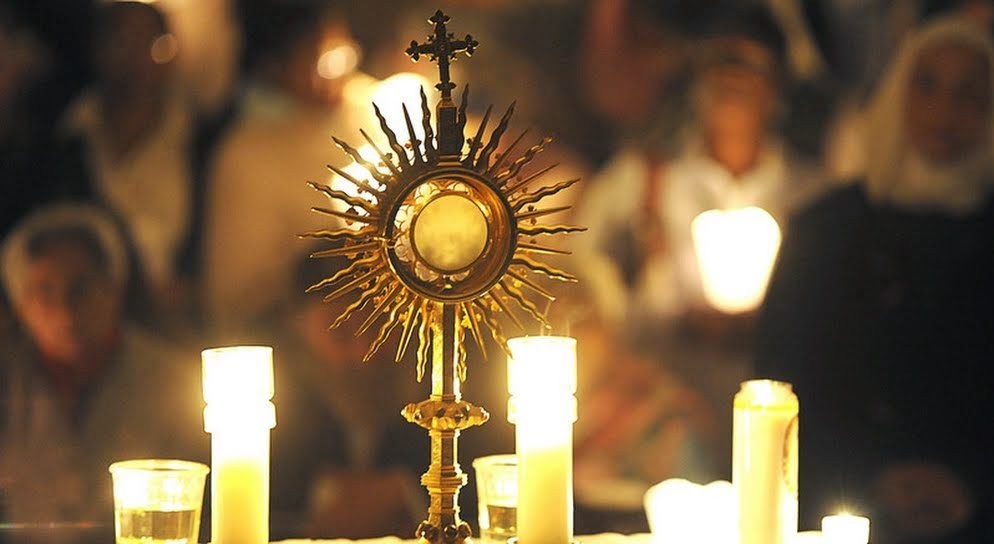
One of the most characteristic elements of Corpus Christi is the Eucharistic processions. During these public displays of faith, the Blessed Sacrament is carried in a monstrance through streets, squares, and communities while the faithful pray, sing, and accompany the procession.
These processions began to gain popularity in Europe during the 14th century and, over time, became one of the most visible expressions of Eucharistic devotion. The Archdiocese of Santo Domingo notes that this practice was promoted by popes and ecclesiastical authorities as a way to publicly express the importance of the Eucharist.
In many countries with a Catholic tradition, communities decorate streets, organize religious activities, and participate in solemn processions that seek to publicly express the importance of the Eucharist within Christian life.
More relevant than ever
Although its origins date back to the Middle Ages, Corpus Christi continues to be a celebration of great importance to millions of people around the world.
Beyond the holiday, the date invites believers to reflect on the meaning of the Eucharist and on the idea of Christ's abiding presence among the faithful. For this reason, every year parishes and dioceses organize special activities to commemorate a solemnity that, more than seven centuries after its inception, continues to hold a central place in Catholic tradition.
For those who profess this faith, Corpus Christi is not simply a day off on the calendar, but an occasion to remember and celebrate one of the essential foundations of Christianity.
Recommended readings: