


SANTO DOMINGO- After the first half of the year, Christmas plans emerge and become a must-discuss topic in many families and nations that celebrate the special time and the end of the year.
Christmas decorations are one of the characteristic traditions that keep the Christmas spirit alive. For many, they are simply part of family tradition, or perhaps a cultural aspect.
Others look forward to Christmas to fill their homes with color, stir up emotions, and it's even common to hear that some people do it as therapy to improve their mood.
Christmas is a mixture of feelings that connects us with memories, longings, nostalgia, joys, and it is the time when we miss our absent loved ones the most.
Their bright lights have filled the centuries and have been the legacy of countless generations. But what is the story behind the Christmas decorations we display in our homes? We'll tell you.
The ornaments that decorate the traditional Christmas tree, as we know them today, were created in the 18th century by Bohemian glassblowers and constitute an evolution of the elements with which primitive peoples adorned their sacred trees, from which they have inherited their symbolism.
For many ancient peoples, the Christmas tree—especially the oak—represented nature spirits and was worshipped as a symbol of fertility and immortality. Two thousand years ago, Germanic tribes celebrated the winter solstice around a tree they illuminated in an ancestral rite that symbolized the end of short days and long nights. Today, children's gifts are placed at the foot of the tree.
In the mid-8th century AD, the ritual was Christianized. There is evidence that by the 16th century, the Christmas tree custom was well-established in Alsace, a region in eastern France. The tradition arrived in England in the 18th century and became popular during the reign of Queen Victoria. Later, it spread to other countries, such as France and the United States. In Spain, it began to gain popularity in the 1960s.
Meaning
The traditional colors: Red symbolizes birth, green symbolizes nature, both symbolize growth and resurrection.
The balls or garlands
These symbolize the apples that hung from the sacred trees of antiquity, which brought about the return of nature and fertility on planet Earth.

The bells
These bells ring symbolically to announce the birth of the baby Jesus and his message of peace and hope for the new year. It is said that in ancient times they were used to ward off evil spirits.
The candles
The tradition of lighting candles dates back to when the Virgin Mary gave birth to the baby Jesus in the manger, by candlelight. In ancient times, candles were used to make wishes for the coming year. In many homes, colored candles are lit, each with a different meaning: yellow is used to attract money and work, red for love, blue for tranquility, green for hope, and white represents peace and quiet. Today, these have been largely replaced by lights.
The crowns
They originated in Germany and symbolized the power and dignity of the families who displayed them at the entrances of their residences. Their round shape represents eternal life.

Los Angeles
An angel announced to the Virgin Mary that she would give birth to the Messiah. For this reason, the angel is placed at the top of the Christmas tree to symbolize his love and kindness.

The star
Thanks to the light of the Star of Bethlehem, the three Wise Men found the manger to worship the Christ Child. For this reason, stars are used to symbolize light and hope.
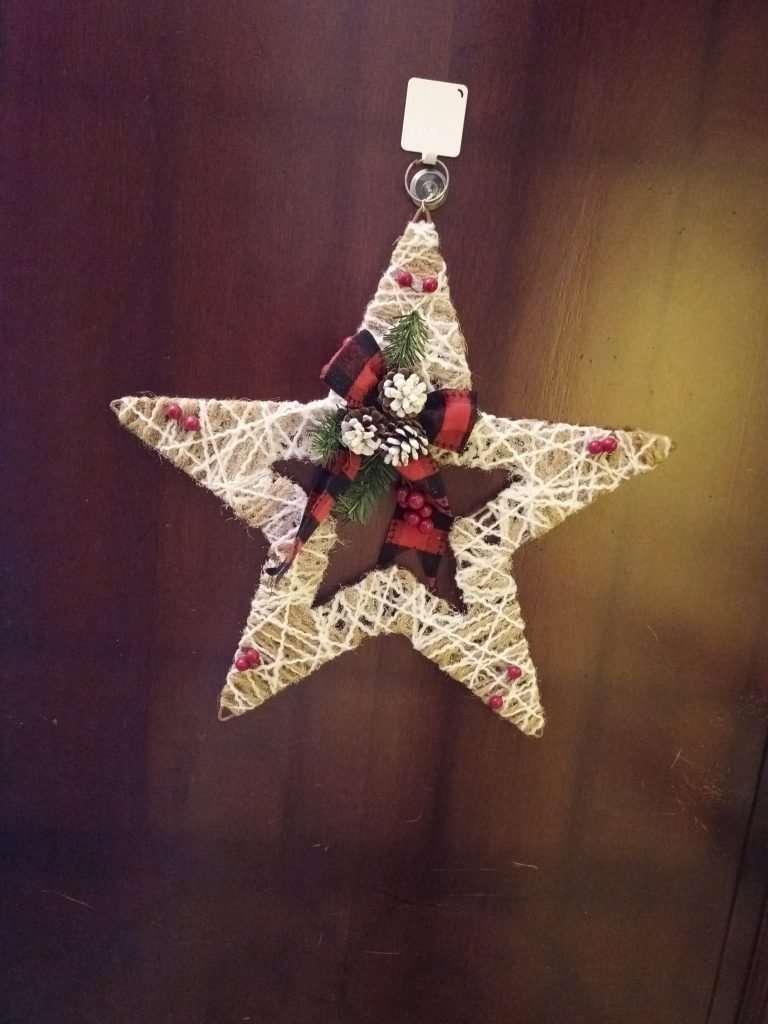
The Christmas tree
It symbolizes the tree of eternal life. Its triangular shape represents the Holy Trinity. In ancient times, it represented the tree of paradise, from which Adam and Eve ate the forbidden fruit, giving rise to original sin.

The Nativity or manger
It was invented by Saint Francis of Assisi in 1223. His idea was that the Nativity scene would help the parishioners attending Midnight Mass to meditate on the mystery of Christmas. At that time, people and animals were used to bring the scene to life.








