


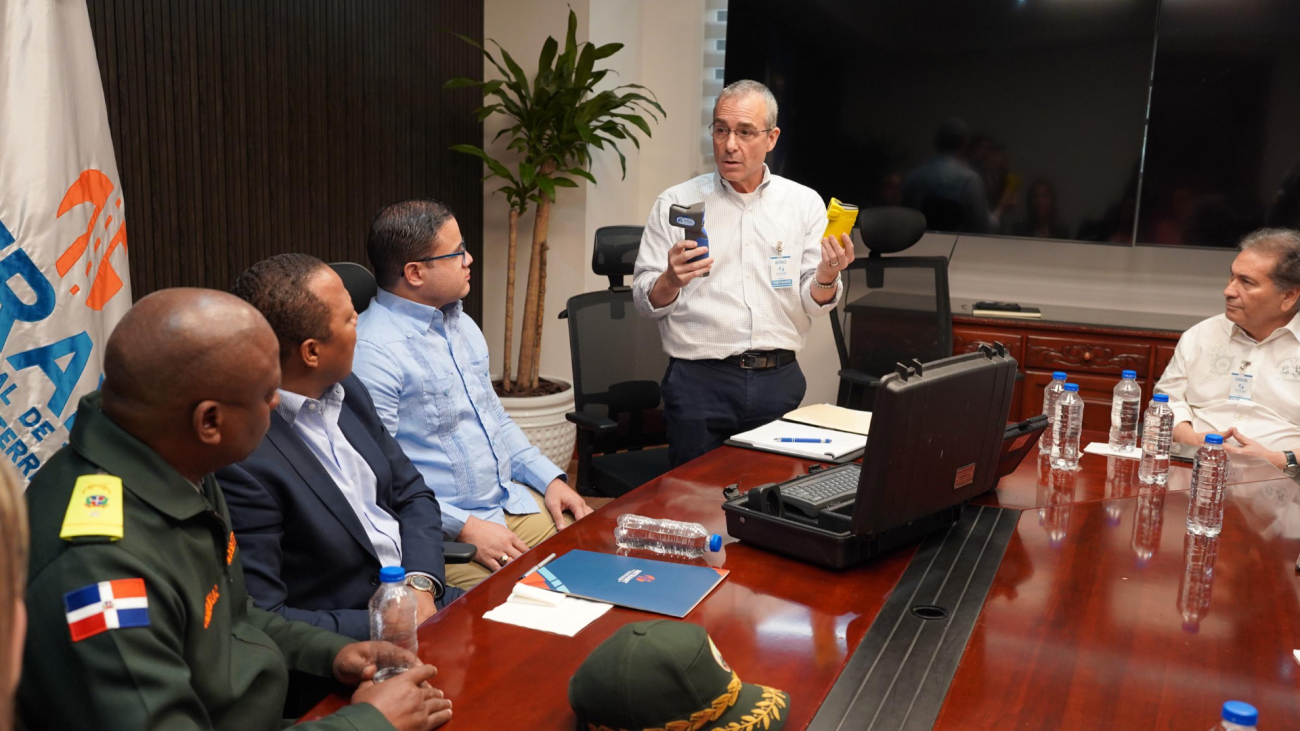
The activation of the breathalyzer checkpoint pilot program is scheduled for next Friday, October 25, from 9:00 p.m. to 4:00 a.m., in the National District.
SANTO DOMINGO.– The National Institute of Transit and Land Transportation (Intrant) and the General Directorate of Traffic and Land Transportation Safety (Digesett) will again implement the use of breathalyzersto regulate that drivers do not travel while intoxicated on the roads.
The operation includes the training of some 40 Digesett agents, who will be trained by an international specialist in the use of the Alco-Sensor VXL, Point of Arrest and Alco-Sensor FST, used to measure blood alcohol levels.
When addressing the issue, the executive director of Intrant, Milton Morrison, indicated that the implementation of breathalyzers aims to prevent traffic accidents, thereby saving lives.
Morrison added that this initiative comes at a time when meetings are being held with different actors in society to reach a consensus on a major National Road Safety Plan, promoted by President Luis Abinader.
Meanwhile, the director of Digesett, General Francisco Osoria de la Cruz, stated that the main interest is to achieve good results and that they will train their best agents to put them at the service of the citizens.
In this regard, the activation of the breathalyzer checkpoint pilot program for next Friday October 25, from 9:00 p.m. to 4:00 a.m., in the National District.
The resumption of this operation is part of a strategic public-private alliance with the alcoholic beverage industries and the International Alliance for Responsible Drinking (IARD), as well as the collaboration of the Dominican Institute for Quality (Indocal), which will be in charge of calibrating the equipmentto ensure it remains in optimal condition.
“This is a project that will save the lives of many in the country, and the benefits will be seen from its inception; at Indocal we are committed to guaranteeing the quality of this equipment, with the implementation of a system to verify the equipment twice a year,” highlighted the director of Indocal, Néstor Julio Matos Ureña.
Currently, the country has eight evidential breathalyzers and 32 screening breathalyzers, donated by the International Alliance for Responsible Drinking (IARD), and the regional and local alcoholic beverage industry, whose application was scheduled to begin in 2018.
This project was halted in 2020, due to the COVID-19, globally, as a health measure because of the implications of the process.
Currently, a technical working group is being formed with Indocalto ensure the proper use of the devices; with Digesett for staff training ; and soon with the Ministry of the Interior and Policeto create an Alcohol Testing Unit within Digesett's organizational structure.
Regarding the protocol at breathalyzer checkpoints
Dominican legislation allows for random breathalyzer tests on drivers or pedestrians, preventively, either circumstantially or as part of operations on people who are in public places and intend to drive a motor vehicle.
“When the breathalyzer test is positive, the Digesett agent may keep the driver under surveillance for up to four (4) hours. However, the driver may leave immediately if a family member or relative appears and takes responsibility for taking him to his destination,” as established in article 259 of Law 63-17.







