


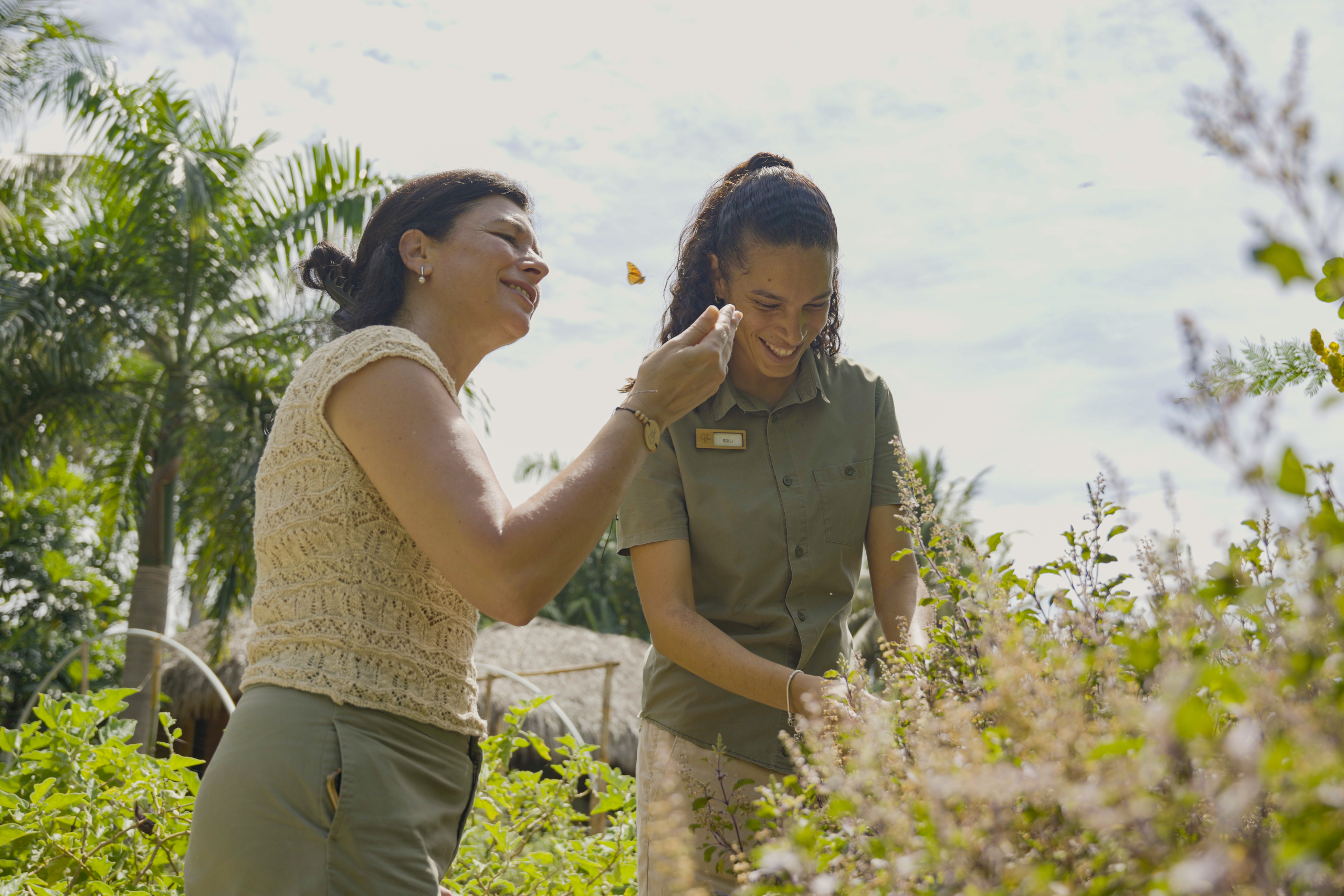
Grupo Piñero reported that it made an investment of $2.6 million in 2024 for environmental initiatives, with the aim of consolidating a regenerative and responsible tourism model, according to the 2024 Sustainability Report, which also highlights the company's firm commitment to the environments and society of the destinations in which it operates.
The document highlights that the company continued last year, reinforcing its sustainability strategy with the design of its new ESG 2025-2028 roadmap, a plan that consolidates the commitments made and is firmly aligned with the European Sustainability Reporting Directive and the United Nations 2030 Agenda.
In this context, Andrés Rosselló assumed the position of Chief Sustainability Officer, with the aim of continuing and boosting the work developed so far and leading the implementation of this new stage, a press release highlights.
Encarna Piñero, CEO of Grupo Piñero, said that “2024 has been a key year in consolidating our sustainable strategy. With the implementation of the ESG 2025-2028 roadmap, progress in decarbonization, circularity, and support for local communities, we continue to demonstrate that tourism can and should be an engine of regenerative development.
Advances in circularity and resource management
As part of its commitment to circularity, in 2024 the tourism firm stated that it promoted biogeneration and composting projects, as well as the continuation of the separation of recyclable waste, which made it possible to reduce organic waste and increase the valorization of resources.
The company also developed its first Landscape Master Plans for all its Caribbean hotels and residences, focused on creating resilient and biodiverse ecosystems. This resulted in a 15% increase in the vegetated area of the beaches where the company operates, thanks to the planting of native species that enhance biodiversity and coastal resilience. Furthermore, through the "One Person, One Tree", the Group planted 14,000 trees, reinforcing its commitment to the regeneration of local ecosystems.
These programs were complemented by a new climate change adaptation plan and a more precise carbon footprint calculation system. This included beginning to measure Scope 3 carbon emissions, reducing Scope 2 emissions, and reducing water-related emissions. Among the most significant milestones were the 70% reduction of the carbon footprint at Bahia Principe Coral Playa, far exceeding the 60% reduction target set for 2030; the installation of photovoltaic panels at hotels in Spain (Mallorca and Tenerife); and progress on the detailed design for the expansion of the wastewater treatment plant in Mexico , a key initiative within its water circularity strategy.
In terms of conservation, the results for 2024 were particularly significant. Through its Eco-Bahia Foundation, Grupo Piñero protected more than 103,000 sea turtle hatchlings, safeguarded over 1,200 nests , and cared for more than 1,500 wild animals in Mexico and the Dominican Republic. One of the most symbolic milestones was the first sea turtle nesting on Cayo Levantado beach, tangibly demonstrating the positive impact of the conservation measures implemented.
Commitment to people and communities
In 2024, Grupo Piñero intensified its social action in the destinations where it operates, increasing investment and the number of initiatives, allocating a total of $411,142 to projects in education, health, culture, and support for vulnerable families in Spain, the Dominican Republic, Mexico, and Jamaica. These initiatives included aid to those affected by the DANA storm in Spain, collaboration with the Mexican Red Cross after Hurricane Beryl, and support programs for vulnerable groups in Jamaica and the Dominican Republic.
In addition, $235.09 million has been invested in purchases from suppliers. This commitment to local socioeconomic development is reflected in the fact that 95% of their suppliers are based in the destinations where they operate. These actions demonstrate the importance of companies actively contributing to the well-being of communities and the development of the territories in which they are present.
In parallel, the company maintains its commitment to the well-being of its more than 16,300 employees through the Healthy Company program, to which it allocated $991,549 and which is used in the Dominican Republic, Jamaica, and Mexico. This is complemented by the launch of the Grupo Piñero Virtual Campus, which has represented a significant leap forward in the development of internal talent. In total, Grupo Piñero has allocated more than $8.2 million to training programs, reinforcing its commitment to the ongoing training of its employees. With these initiatives, the Group strengthens its commitment to health, equality, and continuous training as pillars of its growth.
Responsible governance and business ethics
They have also reinforced their commitment to ethics and integrity, adhering to the UN Tourism Global Code of Ethics for Tourism and approving, for the first time, a Code of Ethics for Business Partners. This new regulatory framework complements the company's updated Code of Ethics and ensures that suppliers, strategic partners, and employees share the same values regarding sustainability, transparency, and respect for human rights. In this way, Grupo Piñero ensures that its entire value chain moves in the same direction and under a framework of responsible action, consolidating a governance model that strengthens trust and positive impact in all the communities where they operate.







