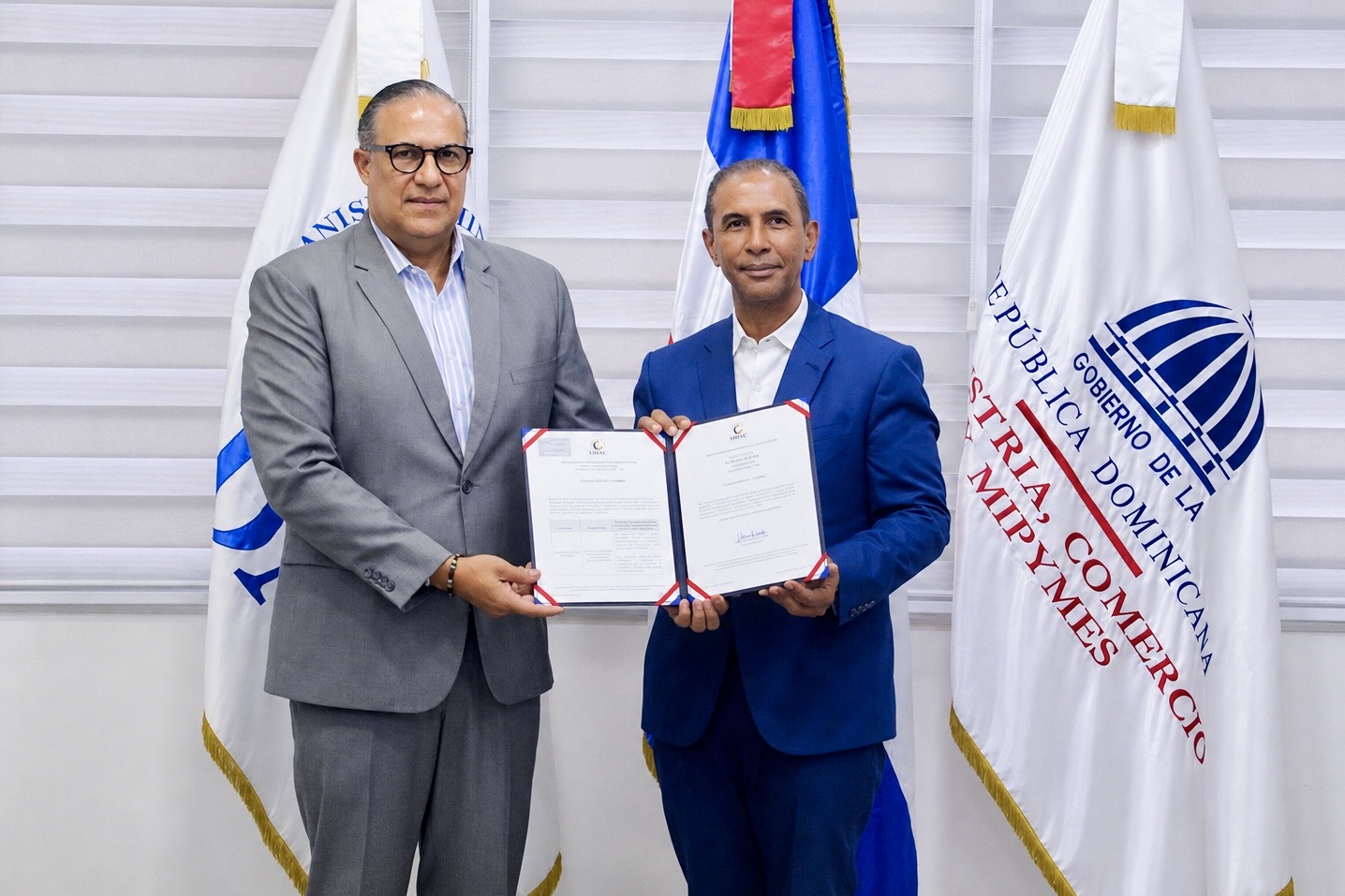
SANTO DOMINGO.- As international markets tighten environmental requirements for sectors such as aviation, the Dominican Republic is beginning to prepare its technical infrastructure to respond to these new rules before they become mandatory.
According to information from the Dominican Accreditation Body (ODAC), the expansion of the scope of the accreditation granted to the Atabey Innovation Center (CI-Atabey) will allow the country to verify the Emission Unit Cancellation Reports contemplated in the CORSIA scheme, a mechanism created by the International Civil Aviation Organization (ICAO) to reduce the climate impact of air transport.
Although currently no Dominican air operator is required to carry out this type of process, the authorities believe that having this technical capacity now puts the country in a more favorable position in the face of future regulatory requirements that are beginning to spread in international trade and aviation.
Prepare before the market demands it
According to ODAC, the new accreditation represents a strategic tool for the Dominican Republic to adapt more quickly to international carbon emissions compensation mechanisms.
In addition to facilitating compliance with future regulations, the measure will allow verifications to be carried out locally, reducing the need to contract foreign agencies for this type of specialized service.
The institution believes that this capacity strengthens the confidence of investors, international organizations, regulatory authorities and productive sectors in the technical skills developed by the country.
A step that also strengthens competitiveness
The executive director of ODAC, Ángel David Taveras Difo, stated that the strengthening of these capabilities responds to a transformation that international markets are already experiencing.
As he explained, having organizations accredited under international standards allows for greater trust, facilitates entry into new markets, and creates better conditions for the development of economic activities linked to the environmental transition.
“This accreditation reflects that the country continues to develop the technical capabilities necessary to meet the demands of international markets and move towards a more sustainable economy. Having internationally recognized expertise builds confidence, boosts competitiveness, and opens new opportunities for national development,” the official stated, according to ODAC.
Carbon, aviation and new international standards
The expansion incorporates the verification of reports corresponding to the CORSIA scheme (Carbon Offsetting and Reduction Scheme for International Aviation), an initiative promoted by ICAO to ensure that the growth of international air transport is accompanied by carbon emissions compensation mechanisms.
According to ODAC, this system will become increasingly relevant for operators conducting international flights, as environmental obligations within the aviation industry increase.
An opportunity to develop new specialized services
The president of the Atabey Innovation Center, Domingo Contreras, pointed out that this expansion will strengthen the verification processes related to emissions compensation and will contribute to developing new technical capabilities within the country.
According to the executive, having accredited national bodies increases the credibility and traceability of these processes, while opening up opportunities for the growth of markets linked to emissions management.
An infrastructure designed for the future
The ODAC indicated that, although the country does not yet have operators subject to cancellations of emissions units under the CORSIA scheme, having this accreditation represents an early advantage in the face of the evolution of international standards.
The institution believes that strengthening the quality national infrastructure will allow the Dominican Republic to respond more quickly to regulatory changes that are already beginning to transform sectors such as aviation, international trade, and environmental services.
Recommended readings: