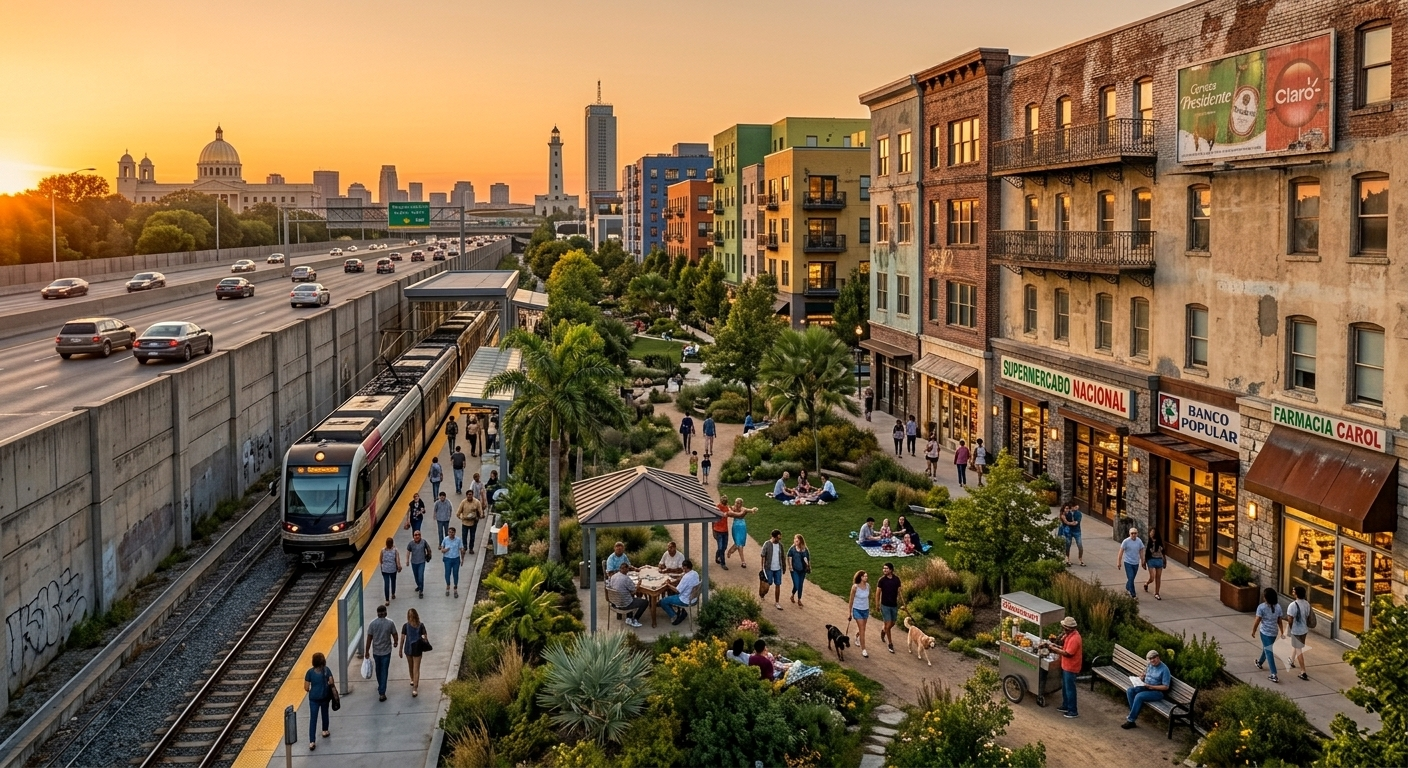
SANTO DOMINGO.- A new highway, a shopping center or a transportation station can represent much more than an infrastructure project: in many cases, they can become factors capable of transforming an area and modifying the value of the properties that surround it.
While location has traditionally been considered a key factor in determining a property's price, experts point out that this concept has evolved. Today, it's not just where a property is located that matters, but also how well it's connected to essential services, economic centers, and major transportation routes.
According to an analysis published by Aesval on the impact of transport infrastructure on property valuation, proximity to efficient transport networks can increase the attractiveness of a property due to reduced travel times and greater ease of access to other parts of the city.
In this sense, infrastructure begins to form part of real estate value because it modifies the daily experience of those who live in or use a space.
The location changes when the city changes
In an opinion piece published on July 19 in El Inmobiliario, architect Edgar J. Martínez argued that infrastructure and connectivity represent "the invisible foundations" that determine the success of a real estate investment.
The specialist explains that, in addition to visible elements such as design, amenities or price, there are external factors such as road networks, basic services and ease of connection that directly influence the present and future value of a project.
An area that previously had little demand can become more attractive when it receives new road connections, better services, or infrastructure that facilitates access.
The effect of a new road
Roads and highways often have a direct impact on real estate dynamics because they reduce distances and allow connecting sectors that previously had less accessibility.
According to Number One Property, new transport infrastructure can boost urban renewal in previously less developed areas, generating greater economic activity, new services and opportunities for real estate projects.
However, the impact is not always the same for all properties.
The analysis indicates that multi-family residential properties, such as condominiums located near transportation hubs, can benefit due to demand from people seeking ease of mobility.
Meanwhile, homes located too close to roads with high traffic levels may face negative factors such as noise, pollution, and loss of privacy, elements that can affect their appeal to certain buyers.
Shopping malls as new development centers
The arrival of a shopping center can also change the perception of an area.
Beyond the space designated for commerce, these projects often attract restaurants, offices, services and new developments around them, creating points of economic concentration.
According to Asre 's analysis , infrastructure that facilitates access to services and commercial activities generates greater appeal for buyers and investors, as it improves the quality of life and reduces the time needed to carry out daily activities.
For this reason, many areas experience real estate growth processes after the arrival of new shopping centers.
Public transport enhances urban appeal
Public transport stations represent another element that can influence real estate value.
According to El Economista, properties close to efficient transportation systems tend to be in higher demand because they offer a time-related advantage: they allow residents to move more easily to their workplaces, schools, or essential services.
The analysis highlights that accessibility has become an increasingly valued attribute for buyers, especially in urban markets where travel times represent an important factor in the purchase decision.
Not all infrastructure generates automatic appreciation
Although a new construction project can boost real estate development, experts warn that its impact will depend on how well it integrates into the surrounding environment.
According to Aesval, factors such as the type of infrastructure, the distance of the property, the level of traffic generated and the characteristics of the sector determine whether the effect will be positive or negative.
A road that improves the connection to a commercial area can increase real estate interest, but a road with excessive noise or congestion can reduce the attractiveness of some residential properties.
Infrastructure as a sign of the future
For real estate investors, analyzing a property doesn't just mean looking at its current value, but also studying the growth potential of the area where it is located.
As the report by Mundo Pisos suggests , a good location today should be understood as the combination of accessibility, efficient services, physical connectivity and future development capacity.
Infrastructure, although often left out of the initial analysis of buyers, can become one of the factors that determines whether a property maintains its value, increases its demand, or becomes an investment opportunity.
Because in the real estate market, a new road doesn't just connect places: it can also connect an area to its next growth cycle.
Recommended readings: