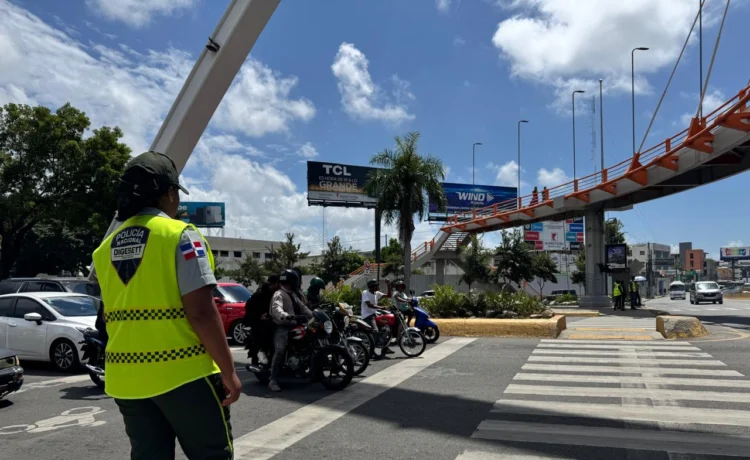
SANTO DOMINGO. The celebration of the XXV Central American and Caribbean Games Santo Domingo 2026 will not only transform the Dominican capital into the epicenter of regional sport. For just over two weeks, the city will operate under a special mobility plan that will modify vehicular traffic at strategic points, reorganize public transportation, and establish new rules for accessing the main sports venues.
According to information provided by the Presidency, the measures will be in effect between July 24 and August 8 and are part of a plan coordinated by the institutions responsible for traffic, transportation and road infrastructure to facilitate the movement of athletes, delegations, volunteers and spectators, without paralyzing the dynamics of the city.
The Olympic Centre will have controlled access
One of the main changes will be concentrated in the area surrounding the Juan Pablo Duarte Olympic Center, considered the heart of the Games.
As established by the Government, parking will be prohibited both inside and in the immediate vicinity of the sports complex during the competition. Vehicles that violate this regulation will be towed by the Parquéate RD program.
Likewise, the boarding and disembarking of passengers will only be permitted at the entrances enabled by Ortega y Gasset, 27 de Febrero and John F. Kennedy, while the entry of private vehicles to the premises will remain restricted.
As an alternative, the authorities enabled parking areas in the Plaza de la Cultura, the Palacio de Bellas Artes, the Parque del Este, the Faro a Colón and the Sambil shopping center, the latter with a set rate of RD$50.
Changes in traffic and temporary restrictions
According to reports, the operation will include partial closures and temporary detours on various roads, special traffic regulation operations and restrictions for cargo vehicles, as well as limitations on work that involves occupation of public roads in the areas of influence of the competitions.
The General Directorate of Traffic Safety and Land Transportation (Digesett) will reinforce the presence of agents at sports venues and on corridors with higher traffic flow to expedite circulation and guide drivers and pedestrians.
Authorities indicated that the changes will be communicated in a timely manner through official channels and recommended that the public plan their journeys in advance.
Special runners for athletes
The mobility strategy also includes a unique scheme for the transport of sports delegations.
According to official information, the TRAE program units will use certain tunnels and overpasses in Santo Domingo and Santiago on a scheduled basis to reduce travel times between the different competition venues. These routes will be escorted by Digesett officers and monitored in real time from the TRAE Control Center.
Meanwhile, the National Institute of Transit and Land Transportation (Intrant) will maintain permanent traffic monitoring through its Traffic Control Center and will manage the operation of the traffic light network in the corridors with the highest demand.
Public transport with special measures
As part of the operation, the Government reported that accredited athletes, volunteers and collaborators will be able to use the Santo Domingo Metro, the Cable Car and the OMSA corridors free of charge throughout the Games, by simply presenting their official badge.
In addition, the Metro Central American and Caribbean Games Card will be put into circulation , costing RD$100 and including 14 trips, equivalent to one day a day during the competitions.
OMSA will also enable special routes to the main sporting venues to facilitate the transport of participants and attendees.
A city that adapts to a regional meeting
According to the Presidency, the operation involves the Transportation Cabinet, Intrant, Digesett, OMSA, the Metropolitan Transportation Company, the Mayor's Office of the National District and the Ministry of Public Works and Communications (MOPC), among other entities.
The actions seek to ensure that the celebration of the Central American and Caribbean Games takes place with the least possible impact on urban mobility, during a period in which Santo Domingo will receive thousands of athletes, officials, technical staff and visitors from different countries in the region.
Recommended readings: