


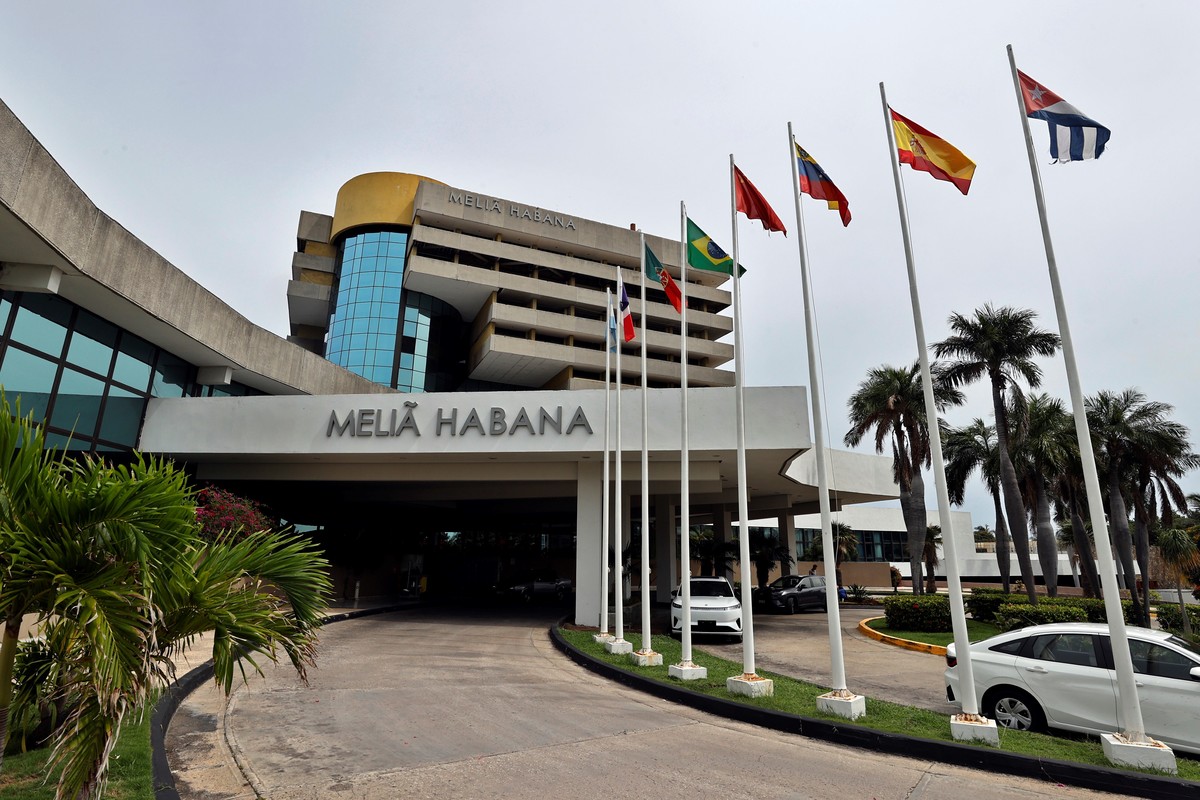
The chain, which at its peak operated 34 hotels and 14,053 rooms in Cuba—the largest foreign hotel presence ever recorded on the island—is closing the 19 hotels it still had open
SANTO DOMINGO. – The Spanish hotel chain Meliá will completely cease its operations in Cuba starting this Friday, July 24, as confirmed by the company this Tuesday to the National Securities Market Commission (CNMV) of Spain.
The decision, carried out through its Portuguese subsidiary Ilha Bela Gestao e Turismo, the vehicle through which it manages its hotels on the island, puts an end to one of the longest-standing and most symbolic business relationships between Spanish capital and Cuban tourism.
The statement sent to the regulator attributes the departure to "the significant operational, legal, economic and financial difficulties" that, according to the company, persistently affect the Cuban environment and make "minimal operational stability" impossible in its activities.
The decision encompasses not only hotel management, but also the use of Meliá brands, inbound operations, and the local supply chain linked to the establishments, the company explained.
With this closure, Meliá abandons the 19 hotels it still had open on the island, after having announced on June 3 the immediate departure of another 15 establishments.
Overall, the withdrawal represents the loss of about 15% of the company's global hotel portfolio, which once operated 34 hotels and 14,053 rooms in Cuba, the largest foreign hotel presence ever recorded on the island, according to figures reported by the company itself at the beginning of the year.
In February: “It is not our intention to withdraw in any way”
The definitive departure marks a shift from the position publicly held by Meliá's president and CEO, Gabriel Escarrer, just months ago.
Last February, during the presentation of the company's annual results, Escarrer stated emphatically that Meliá was not considering leaving Cuba: “We have no intention of withdrawing from Cuba. We feel very comfortable with our current operational structure,” he declared at the time, according to the specialized website Hosteltur.
The executive described the evolution of the business on the island during the last quarter of 2025 and in January of this year as "very positive," compared to the previous period.
Those statements came amid one of the many energy crises that were already part of the chain's operational routine in Cuba, and with a hotel occupancy rate of just 40.2%, according to figures from the company itself cited by the 14ymedio website, well below the rest of its markets, although clearly recovering compared to the previous year.
The scenario changed rapidly starting in June, when the United States set a deadline, June 5, for foreign companies to sever ties with GAESA, the business conglomerate of the Cuban Armed Forces, under penalty of being excluded from the US financial system.
In mid-July, in an interview with El Confidencial cited by the Periódico Cubano website, Escarrer himself admitted the uncertainty: “The truth is that we don’t know what’s going to happen. We are following the instructions of the U.S. State Department.” Days later came the announcement of the complete cessation of operations.
Pressure from sanctions and collapse of tourism
The Associated Press, which covered the announcement from Havana, noted that Meliá's decision comes after the United States expanded its sanctions on July 13 to include the Cuban Ministry of Tourism, a business partner of more than a dozen hotels that the chain still operated on the island, on a blacklist.
According to an analysis cited by the agency, the policies of Donald Trump's government are "methodically and systematically closing every source of foreign currency for the Cuban government," in the words of Paolo Spadoni, a professor at Augusta University in Georgia.
The French agency France 24 and the Spanish agency EFE, cited by media outlets such as La Región and La Prensa of Panama, placed Meliá's departure in a context of reinforced trade blockade, energy crisis with blackouts of more than twenty hours a day, and a drastic loss of air connectivity: airlines such as Iberia, Air France and Turkish Airlines suspended their routes to the island, while Air Europa maintains a limited presence.
The result, according to these sources, has been a drop of more than 55% in visitor arrivals during the first four months of 2026.
Figures released by Meliá and compiled by the CiberCuba portal confirm the deterioration: the chain's hotel occupancy on the island stood at just 34.1% in the first quarter of this year, well below the company's global average of close to 59%, and in 2025 Cuba received only 1.81 million international visitors, the lowest figure since 2002, not counting the pandemic years.
Meliá is not the only chain to withdraw. According to press reports, Iberostar has ceased operating 12 hotels linked to Gaviota, another company within the Cuban military network, and Blue Diamond Resorts has announced its own departure, in a pattern that the digital media outlet OnCubaNews describes as the end, “at least for now,” of 36 years of ties between Spanish capital and Cuban tourism.
The company, which had a global turnover of €2,096.6 million in 2025, has indicated that it is evaluating the financial impact of this exit, including a possible review of the book value of its assets on the island, the details of which will be disclosed along with the results for the first half of 2026.
Recommended readings:







