


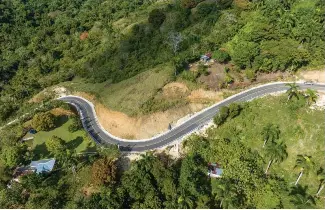
SANTO DOMINGO. – The diagnosis of the Territorial Planning Plan (POT) of Verón-Punta Cana identified 5 square kilometers occupied within a mining concession, in the area known as Los Higos.
A review of the resolution that granted that concession makes it possible to specify which land it is about and, above all, reveals that there is already a legal mechanism in place to resolve this type of overlap, although there is no public evidence that it has been applied.
The concession: who, how much, and since when
The Los Higos or El Higo area is part of the "La Tinta" mining concession (Resolution R-MEM-CM-039-2023), granted on November 21, 2023 by the Ministry of Energy and Mines (MEM) in favor of J. de Moya Constructora, SRL (RNC 1-31-09071-2), represented by Joel Arturo De Moya Santelises.
The application had been submitted since November 5, 2019 and its processing extended for four years, in accordance with the procedures of Mining Law No. 146 of 1971.
The concession, granted for the exploitation of limestone, covers 901,207 mining hectares distributed in three places: El Burén de tres piezas, La Jarda, and Los Higos or El Higo, within the municipal districts of La Otra Banda and Verón Punta Cana, in the sections El Salado, Cruz de Isleño and Verón.
It was granted for a term of 75 years, the maximum provided for by the Mining Law for this type of adhesion contract with the State.
Before granting the concession, the Ministry of Environment and Natural Resources certified, through communication no. 001075 of July 24, 2020, that there were no overlaps between the requested lands and the boundaries of the National System of Protected Areas in effect at that time. In other words, at the time of processing, the concession did not conflict with any area under environmental protection.
The legal framework already anticipates the conflict that the POT now documents
What the concession resolution itself cannot foresee is the subsequent human occupation of the land, and it is precisely this point that the POT's diagnosis highlights. However, Mining Law 146 and its Implementing Regulations (Decree 207-98) already address this scenario with two specific provisions:
First, Article 30 of the Mining Law and Article 13 of its regulations expressly prohibit carrying out mining extraction work within land classified as urban or urban extension, as well as in the vicinity of towns, homes and communication routes.
Second, the concession resolution itself, in its sixth clause, literals "f" and "g", obliges the concessionaire to agree with the owners or legitimate occupants of the land the amount of compensation for foreseeable damages before starting any work, depositing with the General Directorate of Mining the corresponding contract or the written authorization of the owner or occupant, with a signature legalized by a notary.
In other words: the very legal framework under which this concession operates already requires that, if there are occupants on the land before the exploitation work begins, the company must negotiate and formalize compensation with them.
Meanwhile, neither the POT nor the concession resolution makes it clear whether this compensation process has been initiated or completed in the Los Higos area, or whether the settlements identified by the territorial diagnosis remain unresolved while the concession is still in effect.
Recommended readings:







