Population growth, demand for services, and a new vision of urban development are driving projects that seek to bring commerce and offices closer to where people live
SANTO DOMINGO.— For a long time, living in Arroyo Hondo was a paradox. Its streets offered tranquility, spacious residential areas, and a strategic location within the National District, but much of daily life took place outside its boundaries.
Anyone needing a business meeting, an office, a restaurant, a cafe, a supermarket with a wider selection, or certain specialized services almost always ended up taking the same route: crossing John F. Kennedy Avenue towards Naco, Piantini, or one of the main commercial corridors of the capital.
It was a dynamic that seemed natural, until the sector's own growth began to call it into question.
Over the years, Arroyo Hondo ceased to be merely a place to live. The increase in housing projects, the consolidation of a middle, upper-middle, and upper-class population, and the growing demand for goods and services began to reveal a different need: the area needed to develop its own central hub.
It was no longer enough to just build houses. It was also necessary to bring closer the spaces where people work, consume, play, and carry out a large part of their daily activities.
This change in vision explains the emergence of a new generation of commercial developments that seek to accompany residential growth and reduce the historical dependence on other urban centers.
As a community matures, its needs also change
Cities evolve in stages.
First come the houses. Then come the schools, health centers, and supermarkets. Later, offices, restaurants, entertainment venues, and specialty shops appear. It's a process that responds less to an isolated investment strategy and more to the natural behavior of a community that begins to demand increasingly convenient services.
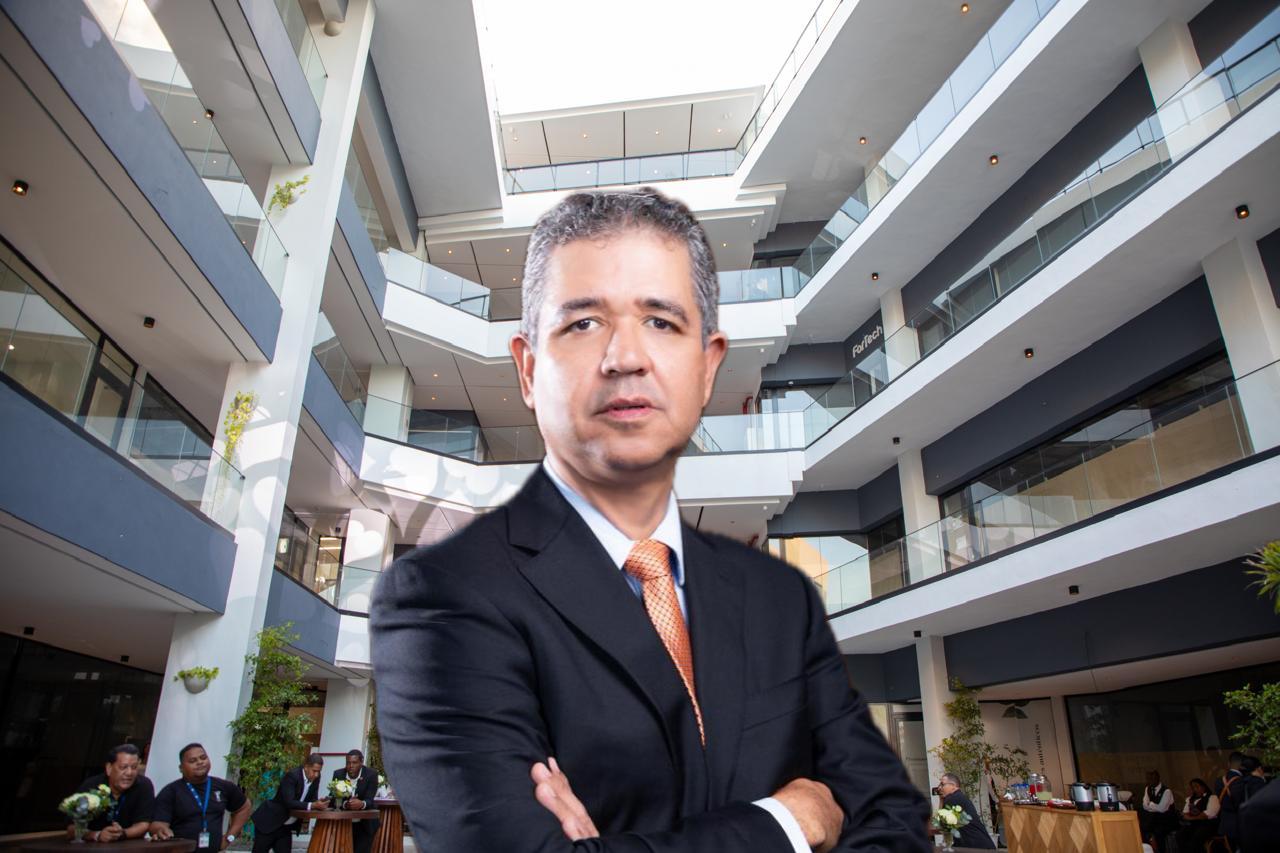
For Héctor Bretón, general manager of Porto Town Center by La Marquesa, that was precisely the reality they encountered before developing the project.
"Arroyo Hondo is a thriving sector of the National District. A large number of middle, upper-middle, and upper-class families live here who traditionally had to move to sectors like Naco or Piantini to meet their consumption needs and access office spaces."
Observation goes beyond a business opportunity.
It also reflects an urban transformation: when a community reaches a certain level of consolidation, it begins to demand that the commercial supply evolve at the same pace as its residential growth.
Less commuting, more city life
For decades, much of urban planning focused on separating functions.
There were areas for living.
Others to work.
Others to buy.
And others for entertainment.
That model ended up increasing dependence on cars and turning daily commutes into an inevitable part of the urban routine.
Today the logic begins to change.
The new developments aim to bring services closer to where people already live, reducing travel times and strengthening neighborhood life.
Bretón believes that this is one of the main transformations that Arroyo Hondo will undergo.
"After Porto Town Center, Arroyo Hondo will never be the same."
His explanation doesn't revolve around a building, but around a new way of experiencing the area.
Residents, he says, will be able to meet a significant portion of their needs without leaving the community: setting up offices, meeting around a coffee shop, accessing supermarkets, enjoying restaurants, finding specialized services, or sharing family spaces.
Each of those journeys that previously required crossing Kennedy Avenue is now moving towards the very environment where thousands of families live.
In a city marked by traffic congestion, that proximity acquires a value that transcends the commercial aspect.
It also represents time recovered.
Commerce follows people
It has traditionally been said that housing drives urban development.
However, once a sector reaches a certain population density, the reverse process occurs: commerce begins to follow the people.
Developers are no longer asking where to build, but are starting to ask where people who still lack sufficient services near their homes live.
Arroyo Hondo seems to be precisely at that turning point.
According to Bretón, the orderly growth of residential projects will continue to drive demand for offices, shops and service spaces in the coming years.
That means the transformation of the sector is just beginning.
It is not just about building new buildings, but about accompanying residential development with commercial infrastructure capable of responding to an ever-growing population.
A new way of understanding business projects
The traditional image of a square as a place exclusively for shopping is also beginning to change.
Current developments seek to become spaces where work, gastronomy, services, recreation and community life coexist.
That vision was also present in the design of Porto Town Center.
More than 155 parking spaces, open areas, well-lit spaces, and architecture designed to facilitate circulation are part of a proposal that, according to Bretón, seeks to integrate into the environment rather than compete with it.
"We believe that real estate projects should be integrated into the environment, and that has been our philosophy."
The statement summarizes a principle that is gaining increasing relevance in contemporary urban development: projects can no longer be understood as isolated elements, but as pieces that contribute to building cities.
Recommended readings: