Each branch of science and the arts has in its legacy the names of virtuosos who dedicated their lives to creating wonderful works that changed the course of society in one way or another.
Engineers represent a community of professionals who, by the nature of their work, have the ability to influence and modify the way in which entire nations and civilizations prosper and advance.
We invite you to meet some of these engineers who, through their work and knowledge, managed to change history, marking a before and after due to the scope and consequences of their ideas.
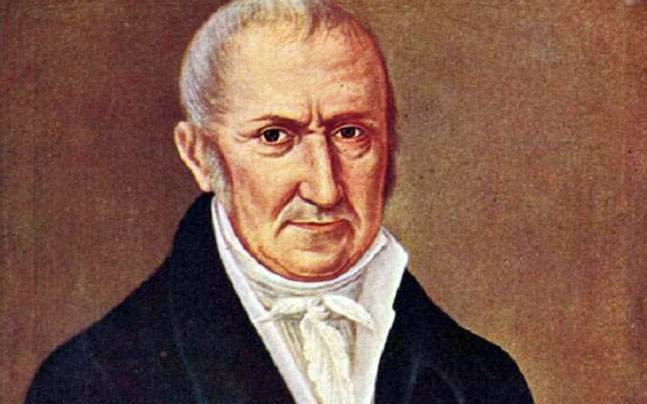
1. Alessandro Volta
The history of electricity is somewhat complicated; however, engineering would not be what it is if we could not manipulate this type of energy.
Although it was the joint work of many people, including the American politician Benjamin Franklin, Alessandro Volta was possibly the engineer who contributed the most to the standardization of electricity.
This engineer's career was brilliant, as he was the first scientist to invent a machine capable of transferring electricity. Over time, his research led him to manipulate it in the form of direct current and eventually to the creation of the battery.
World-renowned, his prestige led him to attain important positions and the praise of world leaders. He spent the last years of his life as director of the University of Padua, in Italy.

2. Alfred Bernhard Nobel
This engineer's name is now synonymous with science, but his legacy goes far beyond simply being the name of the world's most famous science awards.
Possibly his most important invention was dynamite, and while one might think that it is not something truly important, however, it is not only about the war use that can be given to it; the use of explosives significantly changed the way the industry works today.

3. Guillermo González Camarena
It might seem strange, but one of the engineers with the greatest impact on human life today is Mexican. A graduate of a prestigious Mexican engineering institute, this man is responsible for enabling people around the world to watch color television.
Guillermo Gonzalez Camarena was an electrical and mechanical engineer who, in the 1940s, invented not one, but two systems for transmitting video signals. Following this discovery, many countries around the world began adopting these systems, making color television a part of people's daily lives.

4. Alan Turing
Perhaps one of the most tragic stories on the list is that of Alan Turing. However, it may also be one of the most influential, especially when considering life today.
Although this famous engineer's research was only focused on devising a machine that could perform mathematical calculations automatically, he would never have imagined that it would become the precursor to the computer, and with it the arrival of the digital age to the modern world.
Homosexual and of German origin, during the world war his discoveries and inventions were used to encrypt secret messages that would keep communication exclusively between sender and recipient.
Unfortunately, due to the complex and traditionalist situation of the time, the discrimination and social pressure he faced led him to suicide. Who knows what other wonders he might have created had he not met such a tragic end?.

5. Nikola Tesla
This engineer of Serbian origin had a life full of controversies and unusual situations; in addition, there were other scientists in his time whose research was focused on solving the same problems as his.
After a failed attempt to study in Europe, Tesla moved to New York City to work alongside Thomas Edison at his company. However, many of his discoveries and proposals contradicted what was considered correct at the time, which made his career much more difficult.
In a world convinced that direct current was the best option, Nikola Tesla dared to assert that alternating current was a more viable solution. And as is the case with many of history's most brilliant minds, his genius wasn't recognized until long after his death; it was years later that the world acknowledged his work and discoveries.
Although electricity was already in common use around the world, by the time Tesla conducted his research, the electrical systems of most of the world's largest cities were not yet fully developed. Therefore, he laid the foundation for the electrical appliances we use daily, as well as the way in which the electrical energy we use daily is transmitted.
Source: Unitec Blog